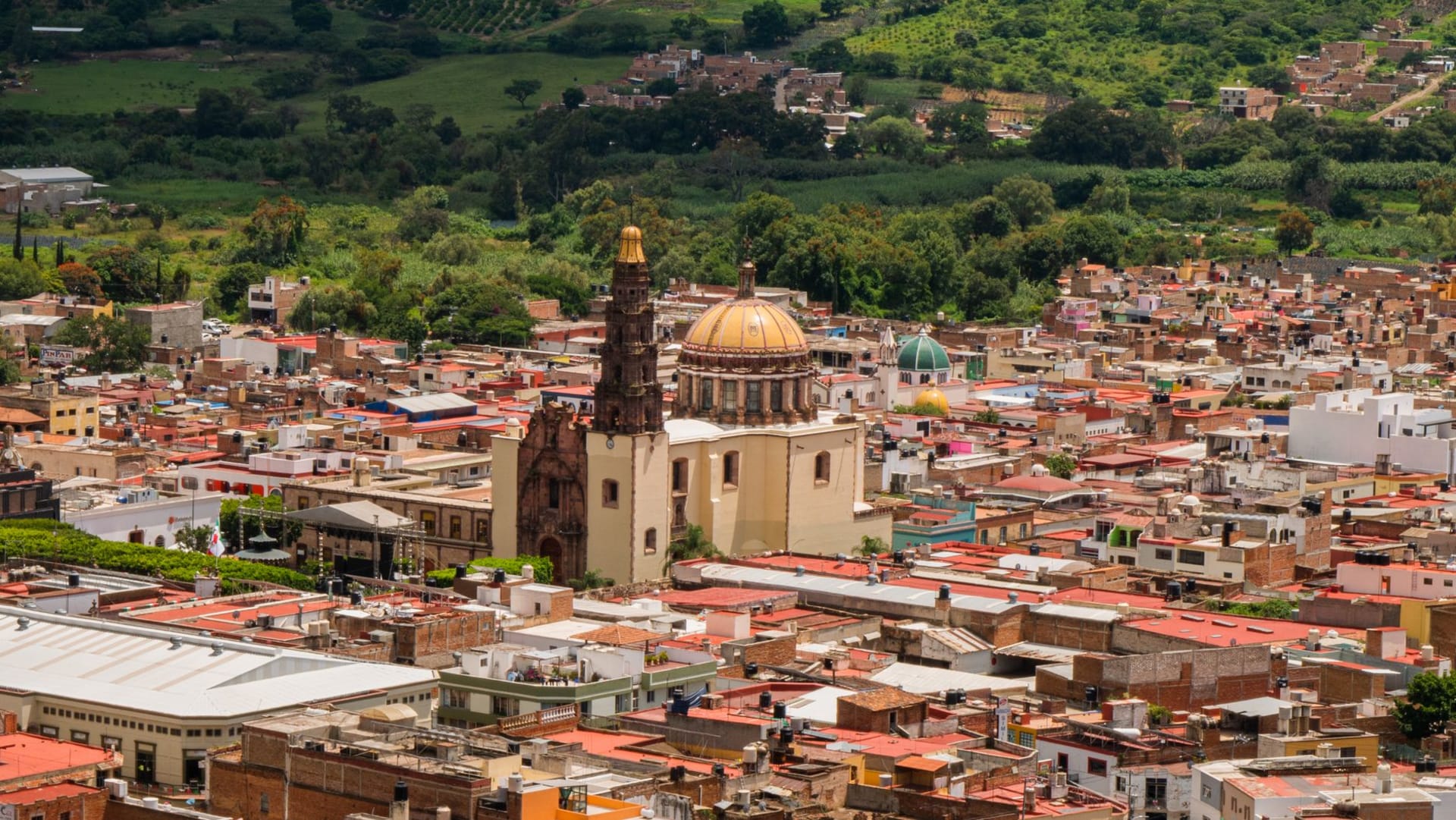
Tlaxcala City
"Every Mexican history tells the story of the Conquest. Tlaxcala is the only place I've been that tells its own part in it without flinching."
Tlaxcala is the smallest state in Mexico, and its capital is the smallest state capital. This is the first thing people say about it, stated as if smallness were a verdict. It took me a while to understand that this is not smallness as poverty or smallness as obscurity, but smallness as a particular kind of concentrated provincial existence — a city that is entirely legible, that can be walked in a morning, that does not require a map after the first hour, and that has, in its compact historic center, one of the most extraordinary buildings in Mexico and a history that the rest of the country has been arguing about since 1521.
The Tlaxcalteca were an indigenous confederation of city-states — the people who had successfully resisted Aztec imperial expansion and maintained their independence in the highland valleys of what is now Tlaxcala state. When Hernán Cortés arrived in 1519, the Tlaxcalteca did something the historical record is clear about and the interpretation of which has never settled: they allied with him. They provided warriors, logistics, and knowledge of Aztec territory and tactics. The Aztec empire fell in part because Cortés had an allied indigenous army.
The History That Doesn’t Flinch
This is the history that the Museo Regional de Tlaxcala presents with unusual directness. In most Mexican historical narratives — the school curriculum, the state museum explanations, the murals on government buildings — the Tlaxcalteca alliance is either minimized, contextualized into near-invisibility, or framed as a tragic betrayal of indigenous solidarity. The Museo Regional in Tlaxcala, perhaps because it is in Tlaxcala and the people whose ancestors made the decision are still here, presents it differently.
The argument the museum makes — implicitly, through the sequencing and framing of its exhibits — is that the Tlaxcalteca were not betraying indigenous Mexico but making a rational political decision based on their own interests and their own history of conflict with the Mexica empire. Whether this exonerates or complicates or simply describes is a question the museum doesn’t pretend to answer. It presents the evidence and leaves you with it.
I spent two hours in that museum. I came out with more questions than I arrived with, which is the correct outcome.
Ocotlán
The Basílica Menor de Nuestra Señora de Ocotlán stands on a hill above the city, a twenty-minute walk from the center or a short taxi, and it demands a separate trip rather than a passing glance.
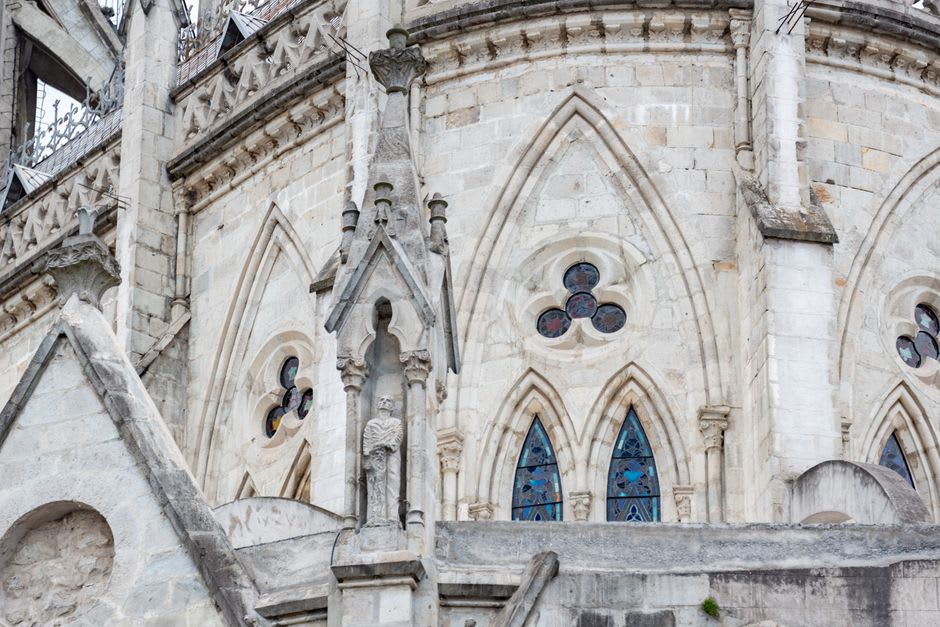
It is, bluntly, one of the most elaborate buildings I have seen in Mexico, which is a country where baroque architecture regularly achieves extremes of ornamentation that French classicism would find excessive. The exterior is white stucco — completely white, dazzling against the Tlaxcala sky — with two octagonal towers and a Churrigueresque portal that is not so much decorated as encrusted: saints in niches, scrollwork, volutes, plant forms, geometric patterns, all of it executed in carved stucco over a period from roughly 1670 to 1780, when the artisans simply stopped adding things.
The effect is not quite like the French baroque, which tends toward grandeur and symmetrical dignity. This is additive, accumulative, almost delirious. Standing in front of it, I found myself thinking of the Gothic cathedrals of southern France — Albi, Sainte-Cécile — which also have the quality of excess that somehow becomes coherence. The Ocotlán basilica works because it commits completely. Every square centimeter has been thought about.
Inside, the camarin (the chamber behind the main altar where the image of the Virgin is kept) is, if anything, more ornate than the exterior — an octagonal space covered floor to ceiling in gilded Poblano tile and carved wood, built specifically to house one statue. The statue itself is small and serene in the middle of all that elaboration, which is either the point or the irony.
The Colonial Center
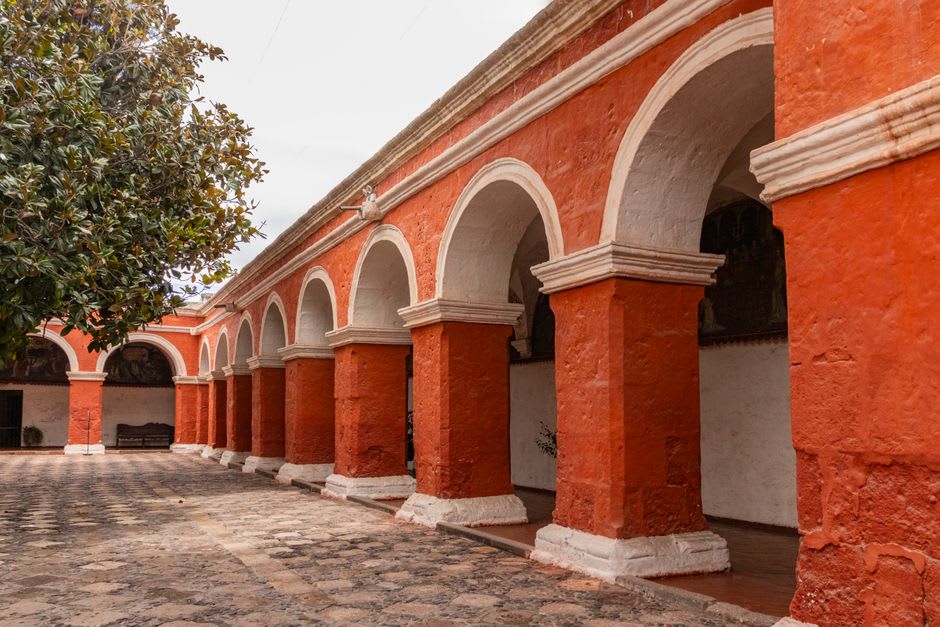
The main plaza of Tlaxcala City is one of the oldest in the Americas — the ex-convent of San Francisco, attached to the city’s main church, dates from 1524, only three years after the fall of Tenochtitlan. Walking through the convent’s cloistered garden, with its colonial arches and the sound of someone practicing what seemed to be a military march on a tuba somewhere in the building, I felt the compressed time of these places: the conquest, the conversion, the three centuries of colonial administration, all of it happened here, in this small city in the smallest state, and then Mexico became independent and Tlaxcala was still here, still small, still itself.
Tlaxcala City is ninety minutes from Mexico City and two hours from Puebla. Most people who visit come as a day trip from one or the other, which is reasonable — the city is small enough to see in a day. But the Museo Regional deserves unhurried time, and Ocotlán deserves a return visit for the evening light on those white towers. If you have two days, spend them.