Tlaxcala
"The Tlaxcalans allied with Cortés to defeat the Aztecs. They were right about the Aztecs. They were wrong about what came next. The murals tell both halves of the story."
Tlaxcala is the Mexican state that Mexican history made awkward. The Tlaxcalans — an independent confederation of city-states who had resisted Aztec domination for generations — allied with Hernán Cortés in 1519 and provided the military force that made the Spanish conquest possible. Without the Tlaxcalan infantry (some historians put the number at fifty thousand soldiers), Cortés and his four hundred Spaniards could not have taken Tenochtitlán. With them, the Aztec empire fell in two years.
The Tlaxcalans received privileges and rewards for their alliance: exemption from tribute, the right to bear arms, lands throughout New Spain. Tlaxcala became one of the first cities in New Spain to receive a cathedral, one of the first to be granted a coat of arms. And then, as the colonial system solidified and the distinction between indigenous allied peoples and subject peoples began to blur, the privileges eroded. By the 18th century the Tlaxcalans were part of the colonial underclass like everyone else.
The state of Tlaxcala processes this history continuously, in murals, in the annual carnival, in the pulquerías, and in the conversations you can have if you have enough time and enough Spanish.
The Plaza and the Colonial Center
Tlaxcala’s Plaza de la Constitución is one of the most beautiful colonial plazas in Mexico and almost entirely unknown outside the country. The portal — a long Moorish-arched arcade on the north side of the square, painted in deep red ochre and tiled in the Talavera style of the Puebla-Tlaxcala tradition — is unique in Mexican colonial architecture, the Moorish influence more overt here than anywhere else in New Spain.
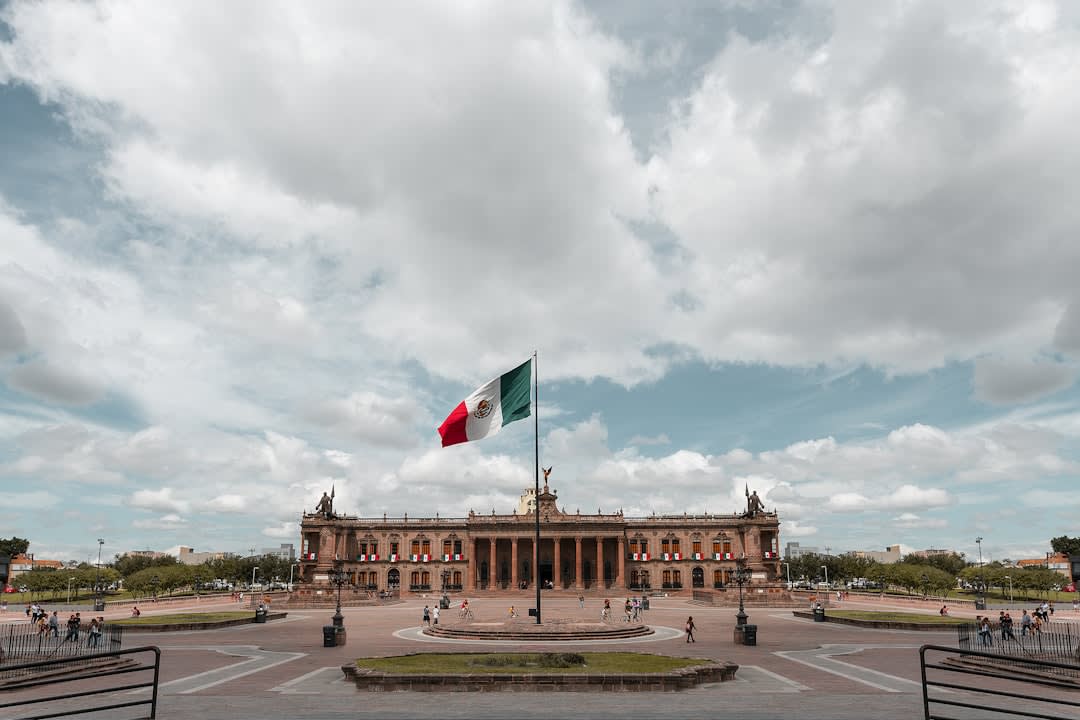
The Palacio de Gobierno murals, painted by Desiderio Hernández Xochitiotzin over a period of forty-seven years (1966-2013), are among the major works of 20th-century Mexican muralism outside Mexico City and are entirely overlooked in the international canon. The murals cover the walls of the government palace’s interior corridors and stairwells, depicting Tlaxcalan history from pre-Columbian times through the colonial period and into the 20th century, with a complexity and visual density that requires multiple visits to absorb.
The Tlaxcalan alliance with Cortés appears in the murals not as a betrayal (the framing used by Mexican nationalist historiography) but as a political decision made by a people under Aztec military threat, a decision that was reasonable at the time and whose consequences were not predictable. The artist Hernández Xochitiotzin took forty-seven years partly because the historical interpretation he was making was contested, and he wanted to be thorough.
The Sanctuary of Ocotlán
On a hill above the city, the Basílica de Nuestra Señora de Ocotlán is one of the most extraordinary baroque facades in Mexico: two white towers flanking a churrigueresque portal of such intricate carving that the stone appears to have been assembled from spun sugar. Built between 1670 and 1720, the exterior is best seen at mid-morning when the light comes from the west and the carving casts shadows that define the depth of each element.
The interior is gilded in the manner of Mexican high baroque, with the camarín (the chamber behind the altar where the Virgin’s image is housed) designed to simulate a celestial environment. The blue and gold of the ceiling above the main altar is one of the most beautiful things in Mexican religious architecture.
The Pulque
Tlaxcala is pulque country — the highland maguey plantations that surround the capital have been producing pulque (the fermented sap of the agave plant) for the plateau cultures since before the Aztec empire. Pulque has a short shelf life (it begins fermenting immediately and is most drinkable within 24-48 hours of tapping) and doesn’t travel well, which is why the pulque you find in Mexico City is often inferior to the pulque you find here.
The pulquerías in Tlaxcala serve both natural pulque (white, slightly viscous, mildly sour) and curado pulque (blended with fruit, nuts, or herbs — strawberry, celery, pine nut, tuna cactus fruit). The best curados are the ones made from seasonal ingredients that appear for a few weeks: the chile negro curado in late fall, the tomatillo curado in summer.
Getting there: ADO buses from Mexico City’s TAPO terminal (1.5-2h). Direct buses from Puebla (45 minutes). The city is an easy day trip from Puebla and can be combined with Cacaxtla (the Maya-influenced mural site 20 minutes outside the city, with the best-preserved pre-Columbian murals in Mexico).
When to go: Year-round. The Tlaxcala Carnival in February or March is the most elaborate pre-Lenten carnival in central Mexico — distinct from the Veracruz version, rooted in Tlaxcalan indigenous tradition, with huehues (masked dance characters) and a wildness that the more polished Veracruz event lacks.