Santa Ana Chiautempan
"The looms in Chiautempan sound like something between a heartbeat and a rainstorm, and the patterns they produce have not changed in four hundred years."
I came to Chiautempan on a Saturday because someone in Tlaxcala mentioned the market and I had nothing planned until the afternoon. The combi from the city center took twelve minutes and dropped me next to a church square already filling with vendors and the particular kind of foot traffic that means serious commerce rather than tourism. There were no signs directing me anywhere. The looms I could hear before I saw them — a rhythmic mechanical percussion coming from behind the market stalls, low and insistent, the kind of sound that settles into your chest before you locate its source.
The Looms Behind the Market
Chiautempan calls itself the sarape capital of Mexico, which is either a very specific honor or a masterclass in municipal branding — but the wool tradition here earns the title without needing it. The workshops are family operations, most of them running floor looms that fill entire rooms with organized color: spools of wool wound around wooden pegs, hanging in the light like a painter’s palette arranged by someone with strong opinions about order. The motifs are pre-Hispanic geometric designs — interlocking diamonds, stepped frets, angular birds — passed down in pattern cards that some families have kept for generations. You can watch the full process in certain workshops if you ask, which I recommend, because the relationship between a standing loom and the finished sarape draped over your bed at home is not at all obvious until you see the warp threads being laid and the shuttle passing through them, slowly, one line at a time. The best workshops are not on the main road. They are behind it, through gates that look closed.
Saturday Morning, Before Ten
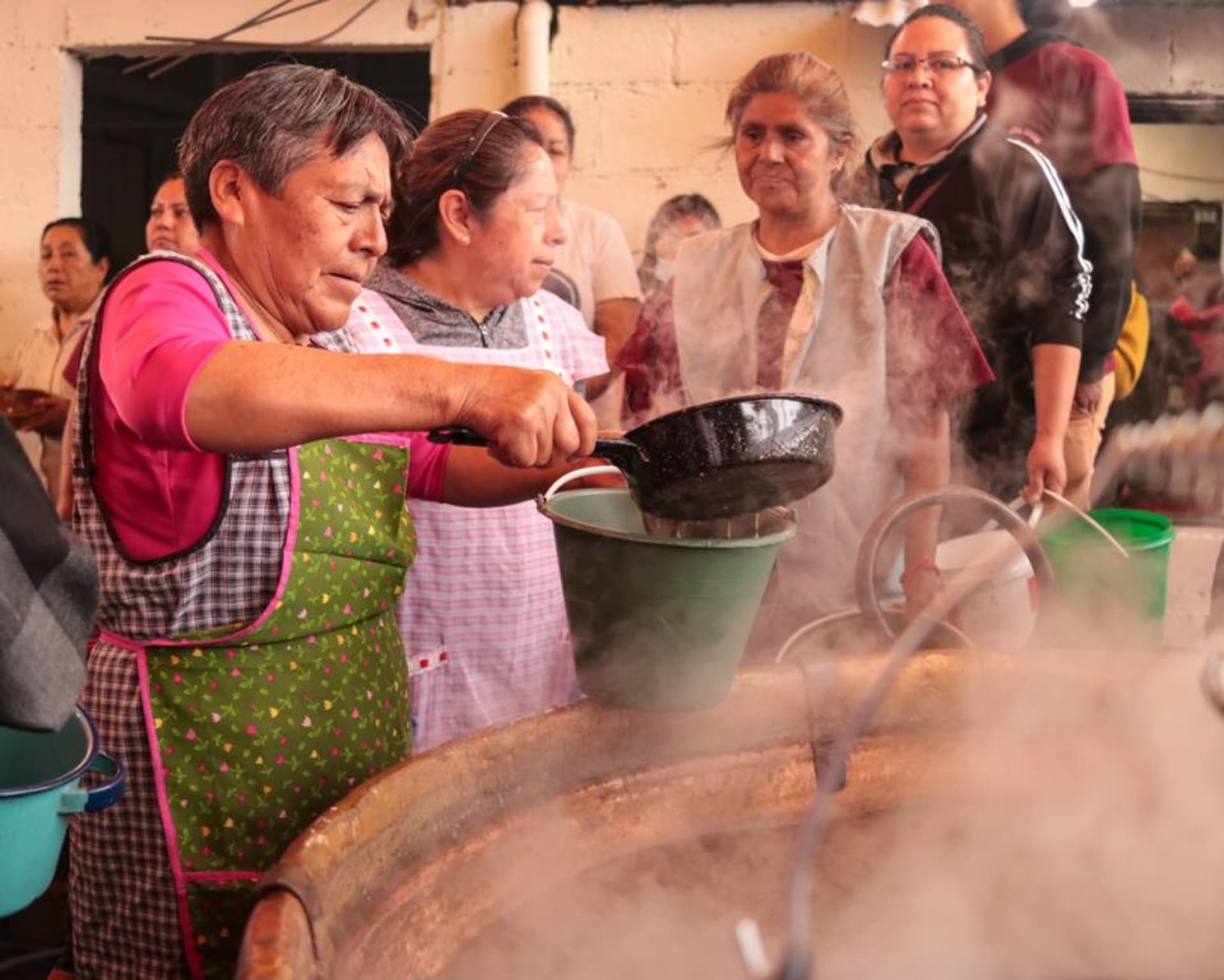
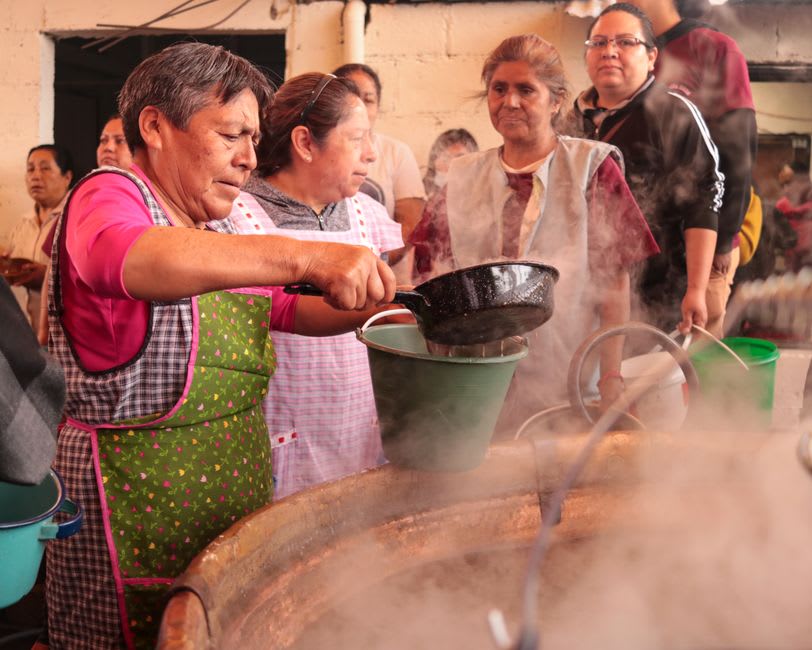
The market sets up around the Parroquia de Santa Ana on Saturday mornings, and if you arrive after ten you have already missed the first sorting. The pieces worth having — woven in natural wool with the kind of weight that means someone’s hands were working for a week — go to people who arrive with intention. What remains by noon is still good, but different: brighter synthetic dyes, faster production, the kind of sarape that photographs well and lasts a decade rather than a lifetime. I bought a grey-on-grey piece with a Nahuatl eagle motif from a woman whose table was three rows from the far wall of the tianguis. She explained the pattern while wrapping it in newspaper and I understood about sixty percent of what she said, which was enough to understand the piece. The food stalls run along the north side of the square: memelas with bean paste and salsa roja, steamed tamales in corn husks, and at least one vendor selling pulque from a large plastic bucket that probably has a name I never learned.

Before You Decide on Anything
The thing nobody tells you about Chiautempan is that price correlates poorly with how the vendor presents the work. The woman selling from a folding table and a plastic chair may have the better piece; the workshop with the handpainted sign and the laminated brochure in English may have the faster production. Ask how long the piece took to make. If the answer is measured in days, you are in the right conversation. If the answer is vague, keep walking. The market runs until mid-afternoon, but the vendors worth talking to start packing up around two. Go in the morning, eat memelas for breakfast, and give yourself at least two hours before you commit to anything.

Getting There
Chiautempan is three kilometers east of Tlaxcala city center. Combis leave from near the central market in Tlaxcala and deposit you at the church square for a few pesos — the ride takes under fifteen minutes. The Saturday tianguis is the main reason to come, though the workshops run most weekdays for anyone who wants to watch the looms outside of market crowds. From Puebla, Tlaxcala is about an hour by bus, then twelve minutes onward by combi.