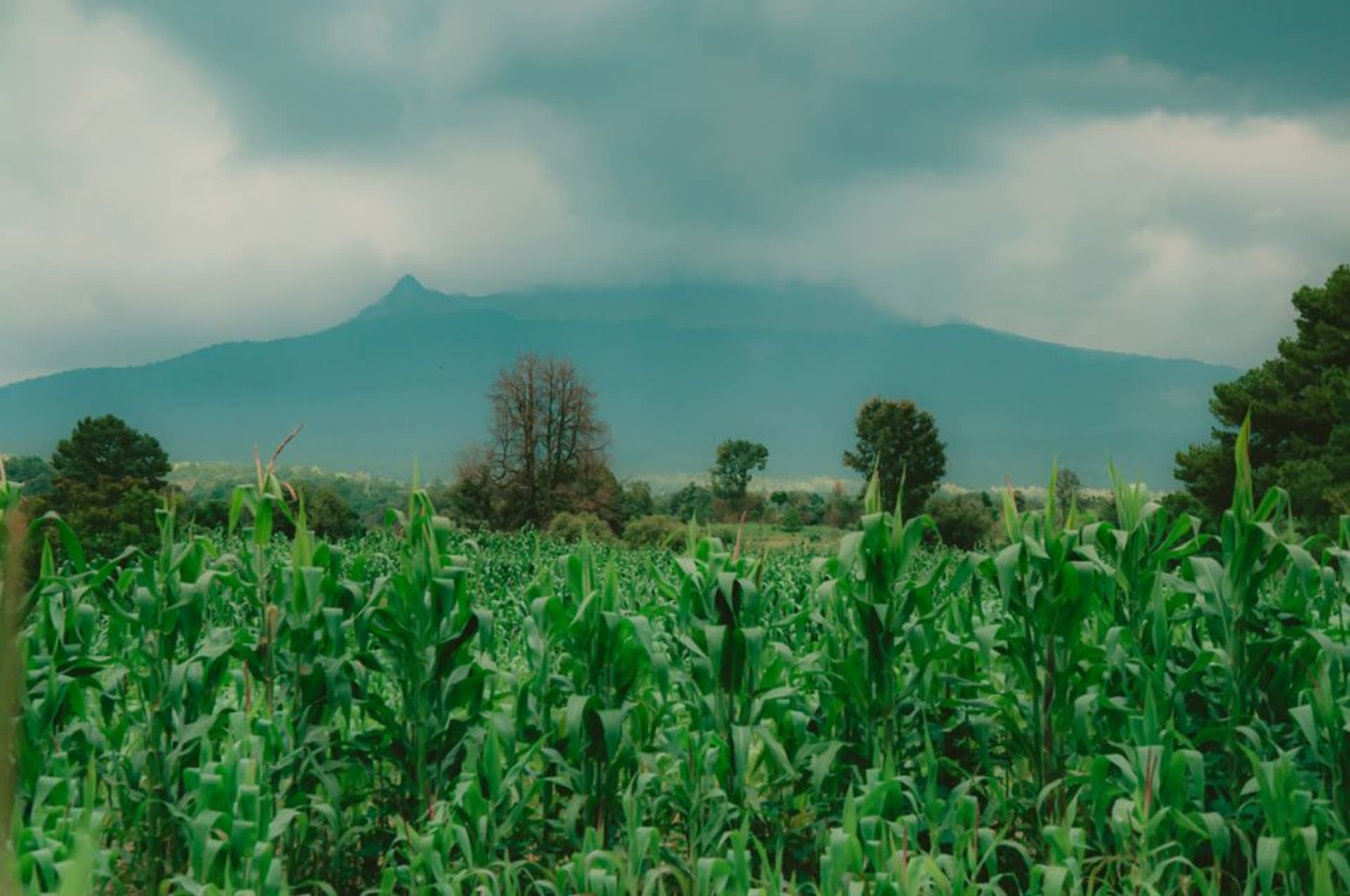
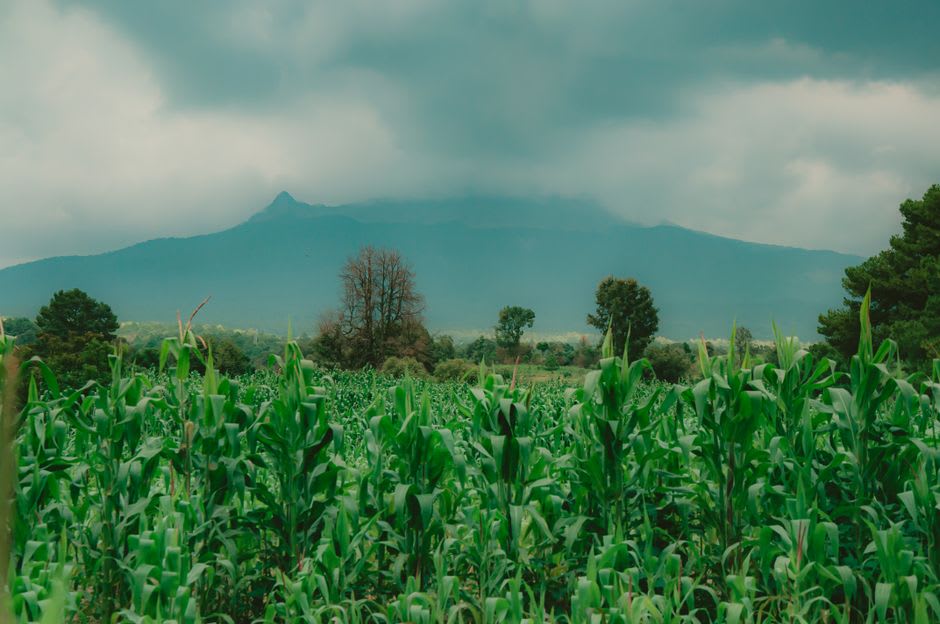
A tlachiquero named Don Sabino taught me how pulque is drawn, standing in an agave row west of Ixtacuixtla with a long dried gourd he used like a straw, siphoning the sweet aguamiel out of the heart of a scraped maguey. He let me taste the aguamiel first — cool, faintly sweet, vegetal — and then the pulque it becomes, thick and sour and alive, which I liked considerably less and drank anyway out of politeness. He laughed at my face. Then he pointed his chin at the horizon, where the Malinche stood clear and green, and told me that on the best mornings you can see Popocatépetl smoking away behind it. That was reason enough to come back.
Big-Sky Farm Country
Ixtacuixtla — officially Ixtacuixtla de Mariano Matamoros, a name almost longer than its main street — spreads across the flat, open plains on the western side of Tlaxcala, and the defining feature of the place is space. The land runs level and wide, planted in maguey, corn, and barley, and above it sits a sky so large it seems to press the horizon flat. After the folded terrain of much of central Mexico, the openness here is a genuine surprise. I drove the back roads slowly with the windows down, past agave rows drawn out in long straight lines toward vanishing points, and understood why the light in this part of Tlaxcala gets talked about — it’s the light of a place with nothing tall enough to block it, gold in the morning and enormous at dusk.
The Pulque Haciendas
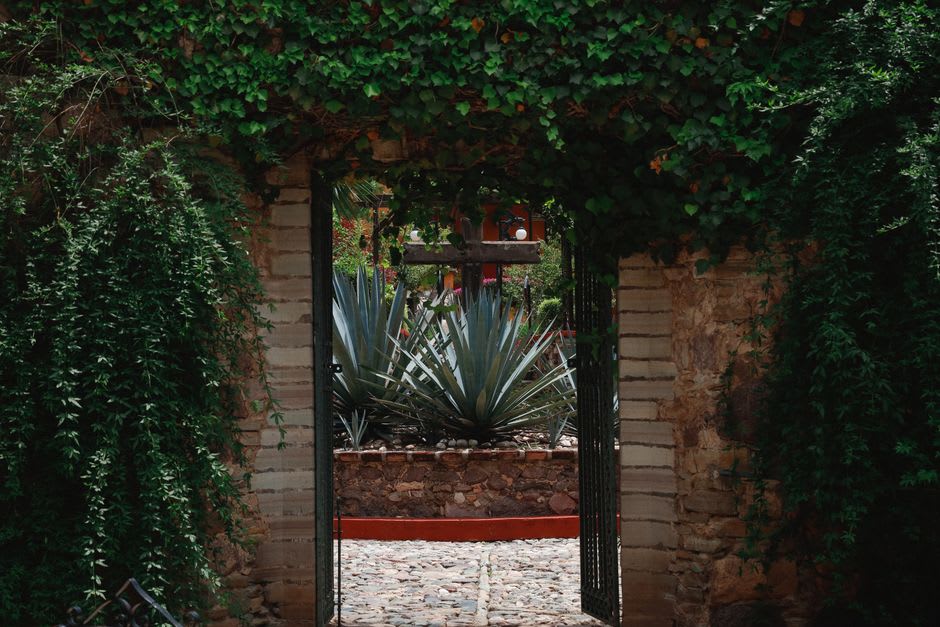
This is old pulque country, and the evidence stands in the fields: the great haciendas pulqueras that once ran the maguey economy across Tlaxcala, some restored, many left to the slow work of weather and time. I walked the grounds of one weathered estate — arched storerooms, a crumbling chapel, a courtyard where the aguamiel would have been collected and fermented by the barrel — and it had the particular melancholy of a place that was once the center of everything and is now the center of nothing. The maguey outlived the system that profited from it. The plant still grows in disciplined rows, still bleeds its sweet sap, still gets drawn by hand by the few tlachiqueros left who know how, but the industrial machinery of the pulque age has gone quiet, and what remains is more beautiful for being idle.
Two Volcanoes on a Clear Day
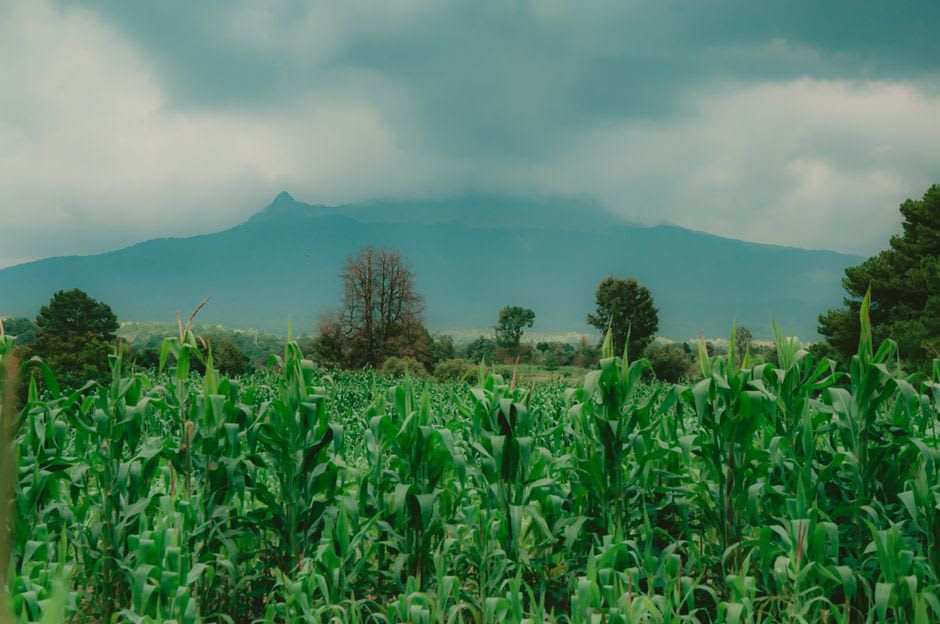
The reward for a clear morning in Ixtacuixtla is a horizon with two giants on it. La Malinche dominates the east, close and green and detailed, its slopes catching cloud by midday. But turn west on a truly clean morning — after rain, before the haze builds — and Popocatépetl appears far off across the plains, and if the mountain is in one of its moods, a thread of smoke rising from its cone. I stood in the road with Don Sabino’s aguamiel still on my tongue and watched both of them at once, two volcanoes bracketing a valley full of agave, and it was the kind of view that doesn’t photograph well because a photograph can’t hold that much sky. You have to just stand in it. The country people out here do, every morning, and I don’t think they’ve stopped noticing.
Getting There
Ixtacuixtla lies about 30 minutes west of Tlaxcala city by road, out across the plains toward the Puebla state line. Regional buses and colectivos run from Tlaxcala and from nearby San Martín Texmelucan, which sits just over the border in Puebla and is often the easier connection. From Mexico City, take a first-class bus to Tlaxcala or to San Martín Texmelucan (each around two hours) and pick up a local from there. A car is the honest answer for this landscape — the haciendas and the best volcano views are scattered across the countryside, well away from any bus route.