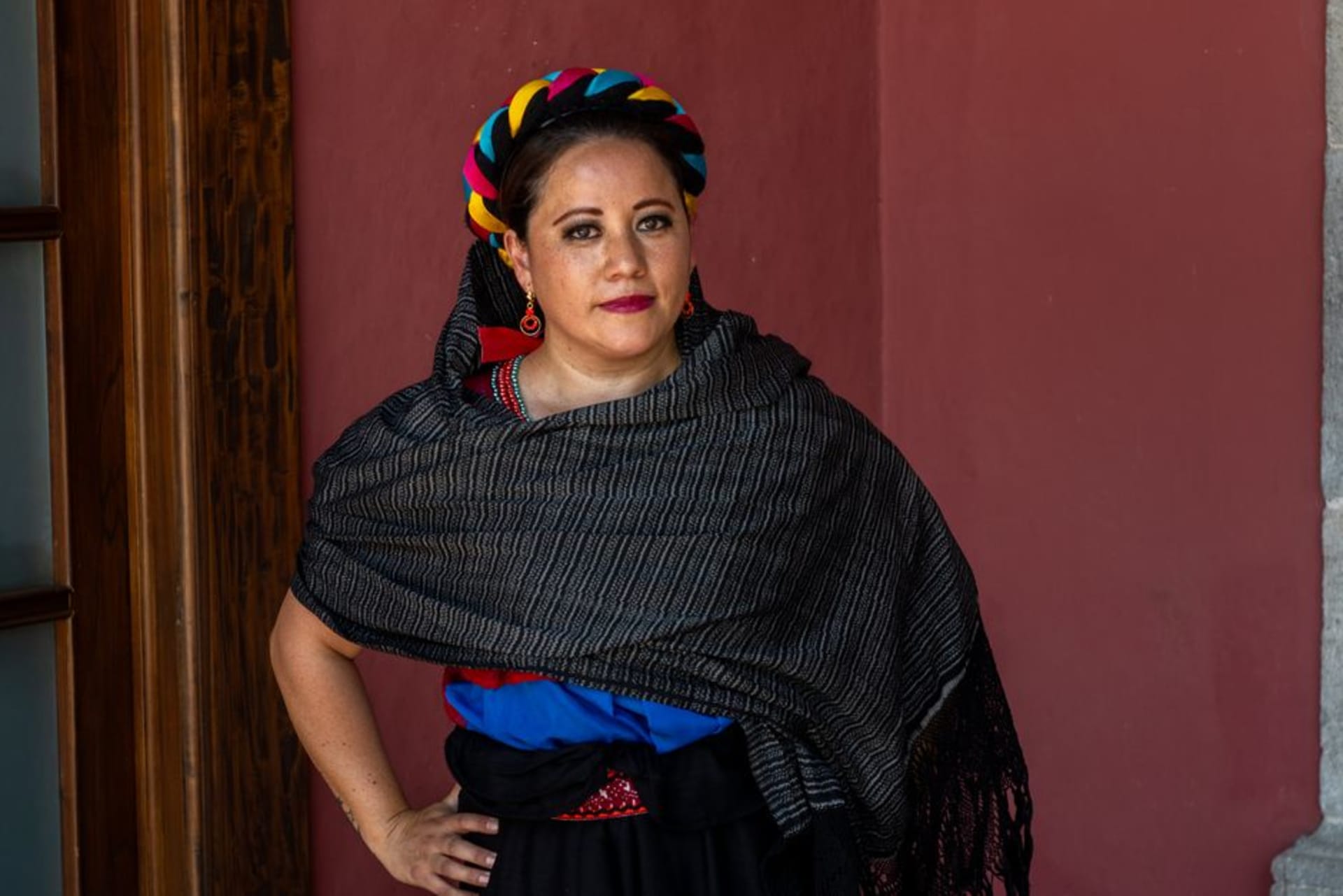
Contla de Juan Cuamatzi
"I bought a sarape from the man who wove it, watched him fold it, and walked back out into a street where three other looms were running in three other doorways. That kind of proximity to craft is genuinely hard to find anywhere."
I came to Contla on a Tuesday, which turned out to be neither market day nor a weekend, which turned out not to matter at all. The workshops do not keep hours in any meaningful sense — you walk down Calle Juárez, hear the rhythmic clack of a foot-loom through an open door, and walk in. A woman in her sixties was working near the front of the room, her back to me, three finished sarapes draped over a wooden rail behind her. She did not look up. The wool moved. I stood there for several minutes before she asked, in Spanish, whether I was looking for anything in particular.
The Workshops
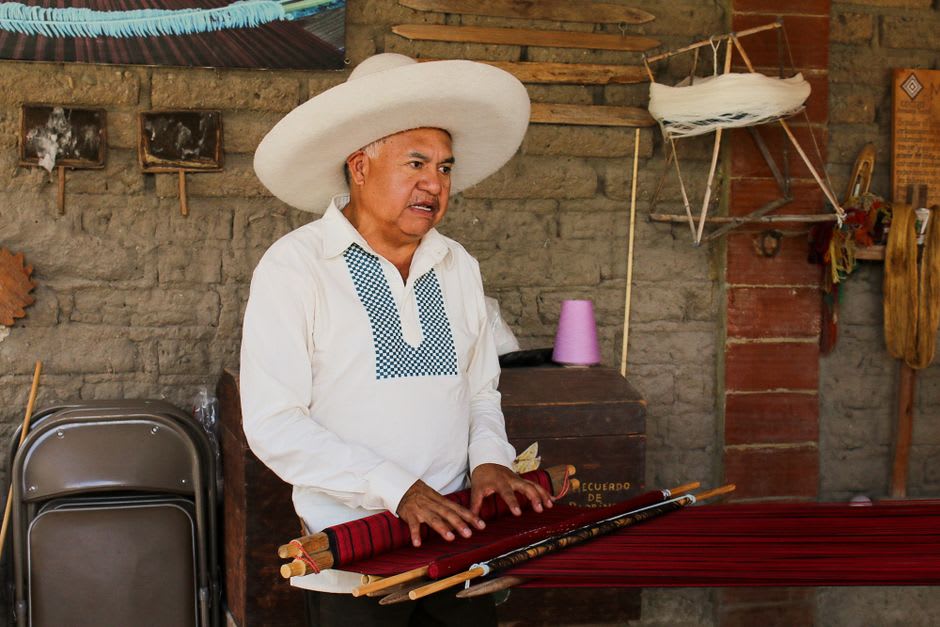
The word talleres suggests something more formal than what actually exists here. These are family homes with looms in the front room, the courtyard, sometimes the kitchen corridor. Contla’s weavers have been working the same basic structure of wooden upright loom — the telar de pedal — since colonial-era missionaries introduced it in the 17th century, and the technique has not required revision. What changes is pattern and color, and those choices are entirely the weaver’s. The geometric designs — diamonds, stepped frets, radiating star shapes — follow no catalog I could find; they are passed down or invented, sometimes both. One workshop on Avenida Hidalgo had three generations present on the afternoon I visited: a grandfather who explained, in measured Spanish, that the red in his sarapes comes from cochineal dye he sources from Oaxaca; his son at the loom; a teenage granddaughter rewinding bobbins in the corner. Nobody was performing craft for me. They were just working.
The Thursday Market
The tianguis that fills the plaza every Thursday is not exclusively about sarapes — it is a full weekly market, with produce vendors selling quelites and huitlacoche alongside tables of chiles, and a row of comida corrida stands near the church where you can eat a bowl of mole de olla with a stack of blue-corn tortillas for less than you would spend on a coffee in the capital. The artisans spread their work on plastic tarps or hang it from improvised racks. Prices are stated without theater. I heard Nahuatl spoken at most of the weaving stalls — vendors shifting into Spanish when I approached, with no apparent break in their conversations with each other. The color out there in the open air on a clear morning, the sarapes against the blue of the church facade, is genuinely difficult to process.

What to Buy and What to Ask
The thing worth knowing before you arrive is that price varies significantly with material. Wool sarapes cost more than acrylic ones — sometimes three times more — and the difference is obvious once you hold both. Ask directly: lana pura or acrílico. Most weavers will tell you without hesitation, and the answer tells you something about what you are looking at. A mid-sized wool sarape with a complex geometric pattern runs somewhere between 600 and 1,200 pesos depending on the workshop and your willingness to have a conversation. I did not bargain hard. The work is slow and the margins are not enormous. I bought two.

Getting There
Contla sits about 30 minutes northeast of Tlaxcala city by car or colectivo. From Tlaxcala’s central bus terminal, shared taxis to Contla leave when full from the surrounding streets — ask for the parada toward San Pablo del Monte and confirm the driver goes through Contla. No direct bus from Mexico City exists; come via Tlaxcala. Any day works, but Thursday market mornings reward the early visit.