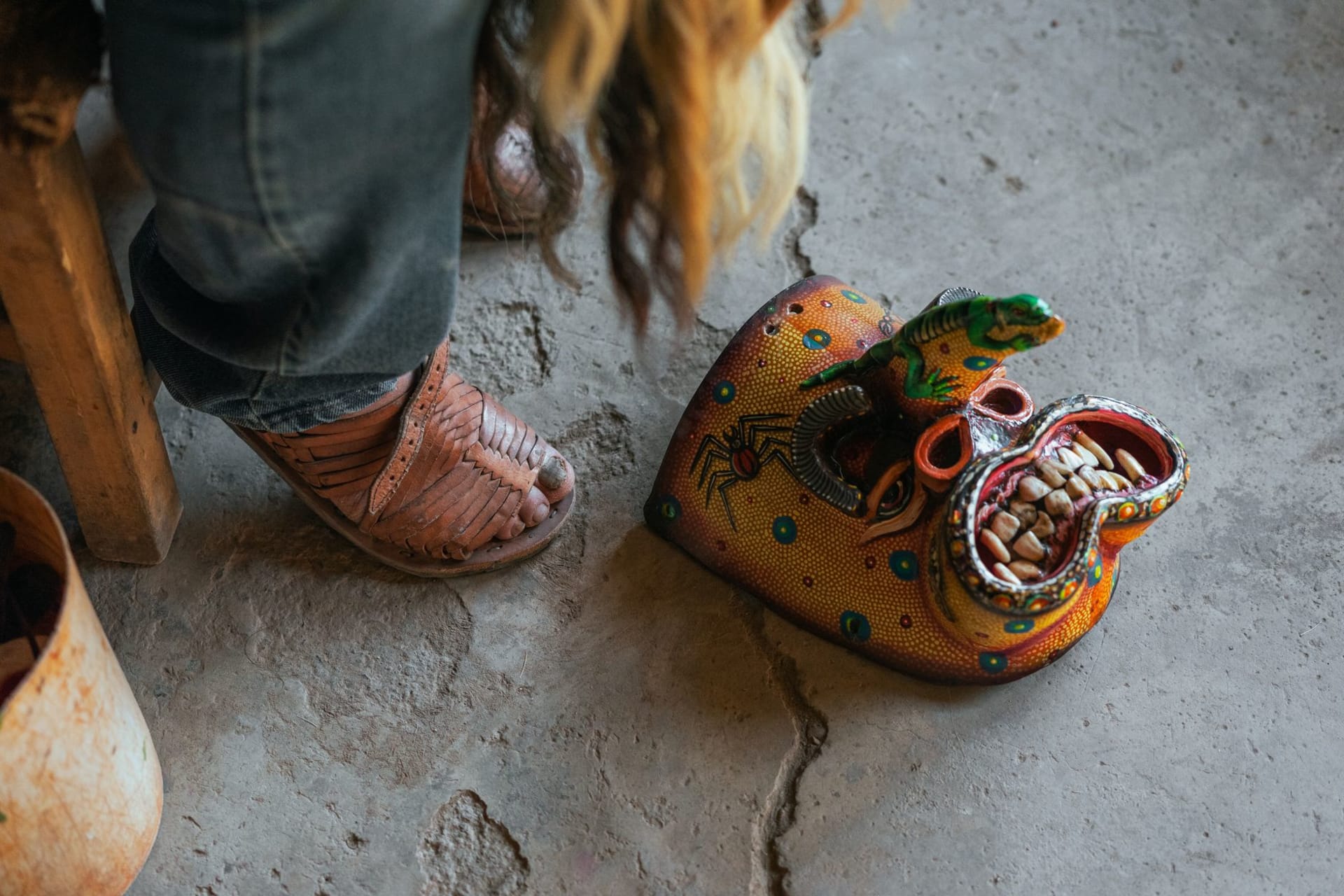
Jonuta
"I returned to Villahermosa having seen a part of Tabasco I could not have described before I went."
There is a town in eastern Tabasco that sits on the Usumacinta River near the Chiapas border, and the only paved road into it floods for several months of the year. I went in the dry season, on a bus that took about two and a half hours from Villahermosa on roads that became progressively narrower and eventually delivered me to a place that was operating according to a different set of organizing principles than the places I had recently been.
The Usumacinta is one of the great rivers of Mesoamerica — it drains the Maya highlands of Guatemala and Chiapas, forms the Mexico-Guatemala border for part of its length, and empties into the Gulf of Mexico through the swampy deltaic zone of Tabasco and Campeche. The ancient Maya built cities along it. The archaeologists who discovered and published those cities arrived by river. In Jonuta, the river is still the primary infrastructure.
Morning on the Water
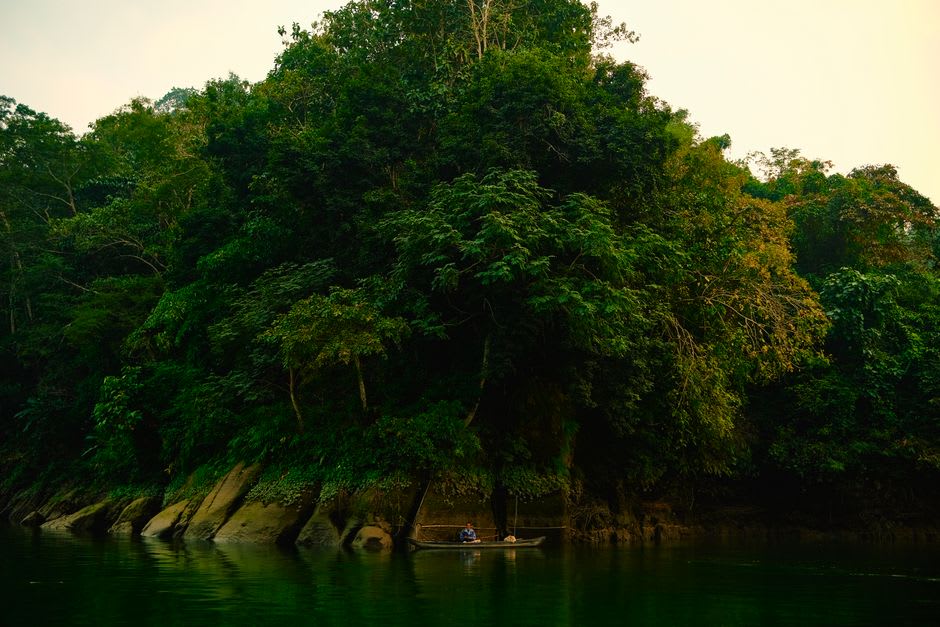
I was at the dock at six-thirty in the morning, which is when the river starts. There is no single port — just a stretch of muddy bank where various flat-bottomed boats are pulled up or tied to pilings, and men load and unload merchandise, and the occasional larger launch sits waiting. The traffic in the morning is goods going upstream and downstream, a few passengers, the fishing boats heading out to whatever part of the river they work.
A fisherman named Enrique agreed to take me on a one-hour circuit — upriver for thirty minutes, across to the Chiapas bank, back. His boat was maybe seven meters, an outboard motor, a plank across the middle. The river in the dry season is green-brown and moving steadily. The banks are a wall of vegetation: ceiba, palm, strangler fig, an undergrowth so dense that the jungle seems less like a collection of individual plants and more like a single organism pressing toward the water.
The howler monkeys announced themselves before we were halfway across. The sound of a howler monkey — somewhere between a roar and a bark, amplified by the resonating chambers in their throats — carries across water in a way that is completely disproportionate to the size of the animal, which is roughly the size of a large house cat. I did not see them. I heard them clearly for fifteen minutes, a call and response across the river that had nothing to do with me.
The Stela and the Floodplain
Jonuta’s archaeological significance is invisible on the ground, which is part of what makes the place interesting to think about. The Stela of Jonuta — a carved Maya monument found in the surrounding floodplain by archaeologists in the twentieth century — is now in the Villahermosa museum, severed from the landscape that produced it. When I visited the museum before coming here, the stela was in a gallery of Maya pieces, properly lit, labeled in three languages, surrounded by the apparatus of institutional care. Here on the floodplain where it was found, there is no indication anything was ever here. The water comes up in the rainy season and covers the fields, and then it recedes, and the cattle graze on the wet grass, and somewhere in the sediment beneath them is whatever else remains.
This is the specific quality of the Usumacinta lowlands: the Maya presence is not in discrete sites you can visit with a map but diffused through the entire landscape, under the water, in the silt. The museum extracts individual objects and makes them legible. Here they are still buried and still accumulating silt.
The town of Jonuta itself is a few streets of concrete houses and a main plaza and a church. There is a small market, a comedor or two, a tianguis on certain days. The population is around eight thousand. People are not unfriendly but they are also not accustomed to the specific type of person who arrives without a clear purpose and then stands on the dock looking at the river, which I was. Enrique found this mildly amusing and charged me a fair rate.

Getting There
From Villahermosa, second-class buses run toward the eastern Tabasco lowlands, passing through Jonuta on their way toward other destinations. The journey is two to three hours depending on the service. Check the season before you plan: the road genuinely floods, and the meaning of “accessible” changes significantly between the dry season (November-April) and the wet season (May-October). If the road is out, the options are the river itself — which is possible, via launches from upstream towns — or waiting.
I returned to Villahermosa on the afternoon bus sitting next to a woman who had been to visit her sister in Jonuta and was carrying a large bag of plantains. We talked about the river. She said she had crossed it by boat her entire childhood and that it was different now — the water level lower in some seasons, the banks more cut. She said this without particular alarm, just as a fact about the place she was from, the way you describe something that has changed.