Cananea
"Cananea has had a hundred and twenty years to make peace with what happened here. It hasn't bothered."
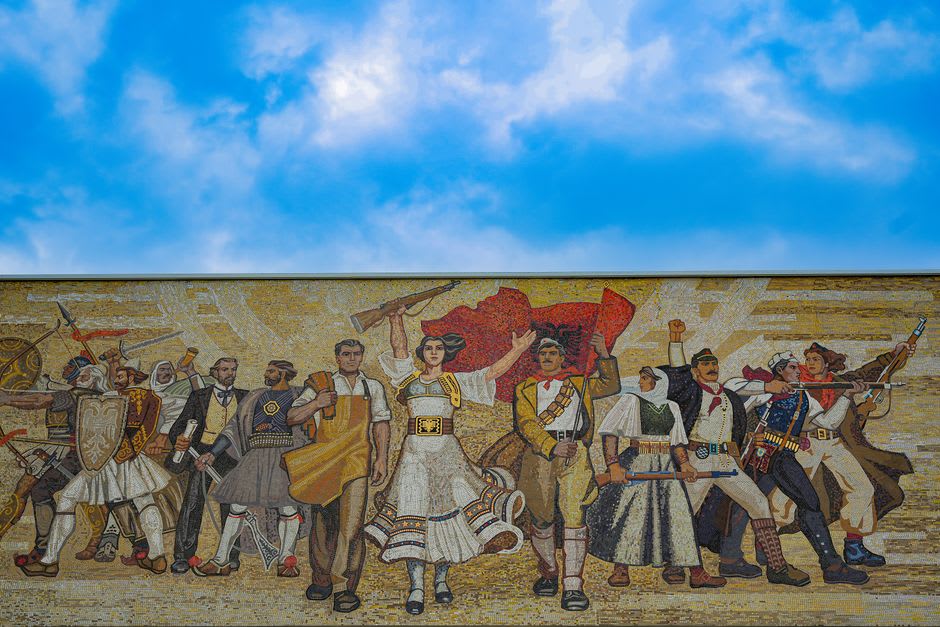
Cananea announces itself not with a cathedral or a colonial plaza but with a mural the size of a building face — workers mid-stride, fists raised, the year 1906 stenciled in red across the top. I came up from Hermosillo on a Tuesday, the Sonoran desert flattening and paling as the road climbed north toward the border, and nothing in those four hours of mesquite scrub prepared me for that image. The whole downtown turns out to be like this: a city that has decided, collectively and without apparent embarrassment, to be very specific about where it came from.
Where the Revolution Started
The facts are plain enough to feel cinematic. On June 1, 1906, workers at the Cananea Consolidated Copper Company — an operation owned by an Arizona businessman named William Greene — walked out demanding equal wages and equal treatment with their American counterparts. They were earning two pesos a day. The Americans beside them earned five dollars. Greene called Arizona Rangers across the border to help suppress the strike. By the time the shooting stopped, more than thirty workers were dead.
The murals covering Cananea’s centro don’t soften any of this. They’re not decorative — they’re documentary. The Museo de la Lucha Obrera on Calle Juárez lays out the timeline in photographs and period artifacts: the broadsheets, the rifles, the faces. Standing in front of the main strike panel on a quiet weekday afternoon, I kept thinking about the four years separating that moment from the start of the Revolution proper, 1910. Cananea understood something about labor and dignity that the rest of Mexico took longer to name.
The Crater Next Door
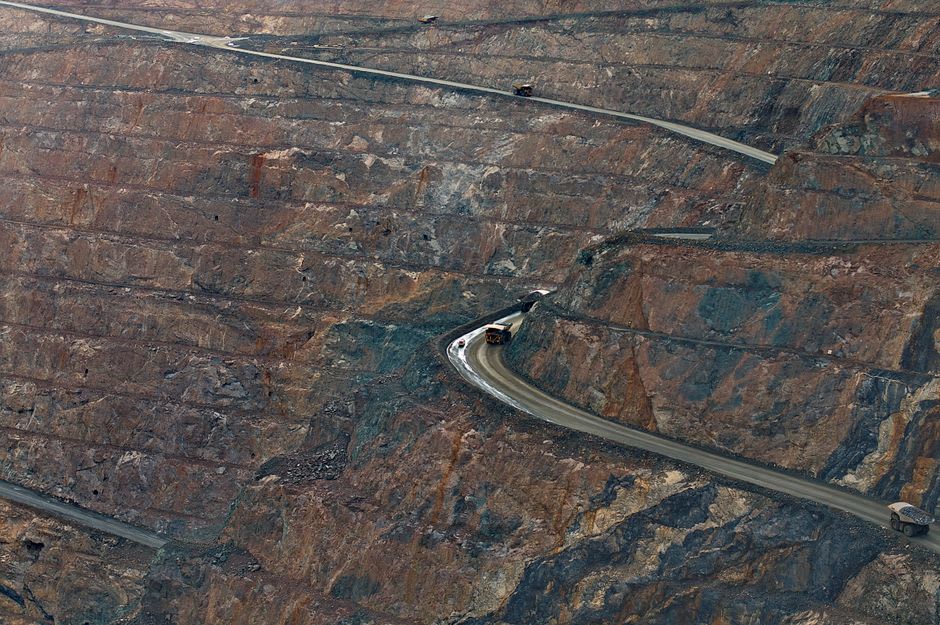
They’ll tell you at the hotel that access is closed — Grupo México doesn’t run public tours of Buenavista del Cobre — but you don’t need to enter to understand its scale. From the hills above town, the mine opens below you as a rust-red amphitheater terraced down in concentric rings, the machinery at the bottom rendered toylike by distance. On the afternoon I climbed up for a look, the sky above it carried a faint mineral haze. Local people told me the excavation shifts the wind patterns. I believe them.
The mine employs much of Cananea directly or indirectly, which gives the city an unusual social texture — not quite a company town, but close enough that the echoes of 1906 feel less like history and more like a tension that never fully resolved. In 2014, a sulfuric acid spill from the mine contaminated the Sonora River for hundreds of kilometers downstream. The legal proceedings remain unresolved.
Flour Tortillas and the Plaza at Six
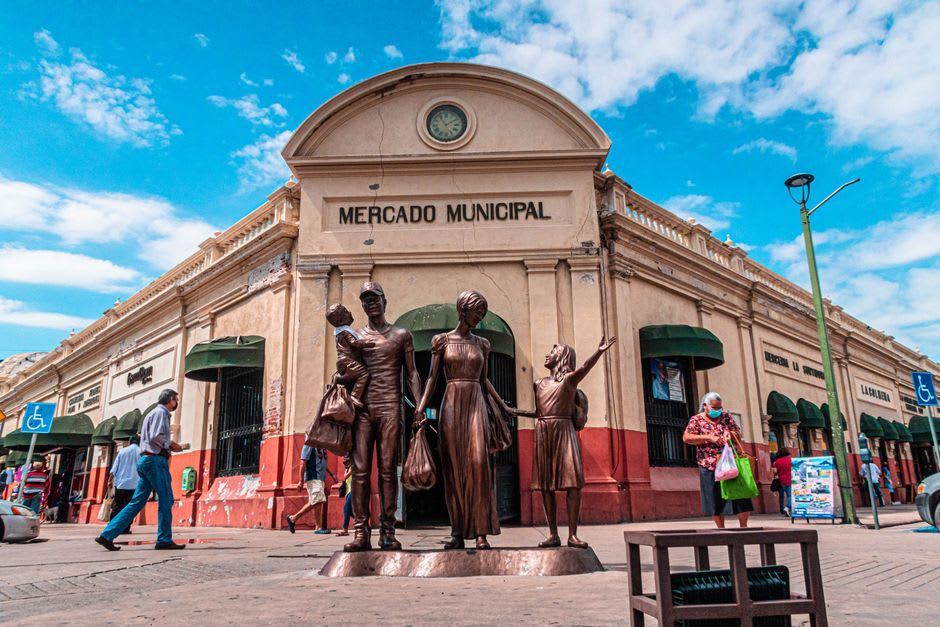
Sonora does carne asada better than almost anywhere in Mexico, and Cananea, for all its industrial grit, is no exception. At the market on Avenida Obregón, two or three stalls run charcoal from midday onward — order arrachera if you want something with texture, and they’ll wrap it in flour tortillas the size of your forearm. Sonoran flour tortillas are a distinct category: thick, slightly chewy, built to hold weight without disintegrating. I ate standing at a folding table outside one of the fondas, watching the evening light go off the church facade on Plaza Juárez.
By six o’clock the plaza fills with families doing exactly what plazas are built for. This city, which has every right to be bitter, seemed instead to be simply proud.
Getting There
Cananea sits about 60 kilometers east of Nogales and three hours north of Hermosillo on Federal Highway 2. Most visitors arrive by car or bus from Hermosillo or cross from Arizona via the Nogales-Mariposa border. There is no train service, and buses from central or southern Mexico require a connection in Hermosillo. The drive north from Hermosillo on Highway 15 to Ímuris, then east on Highway 2, is straightforward and well-paved.