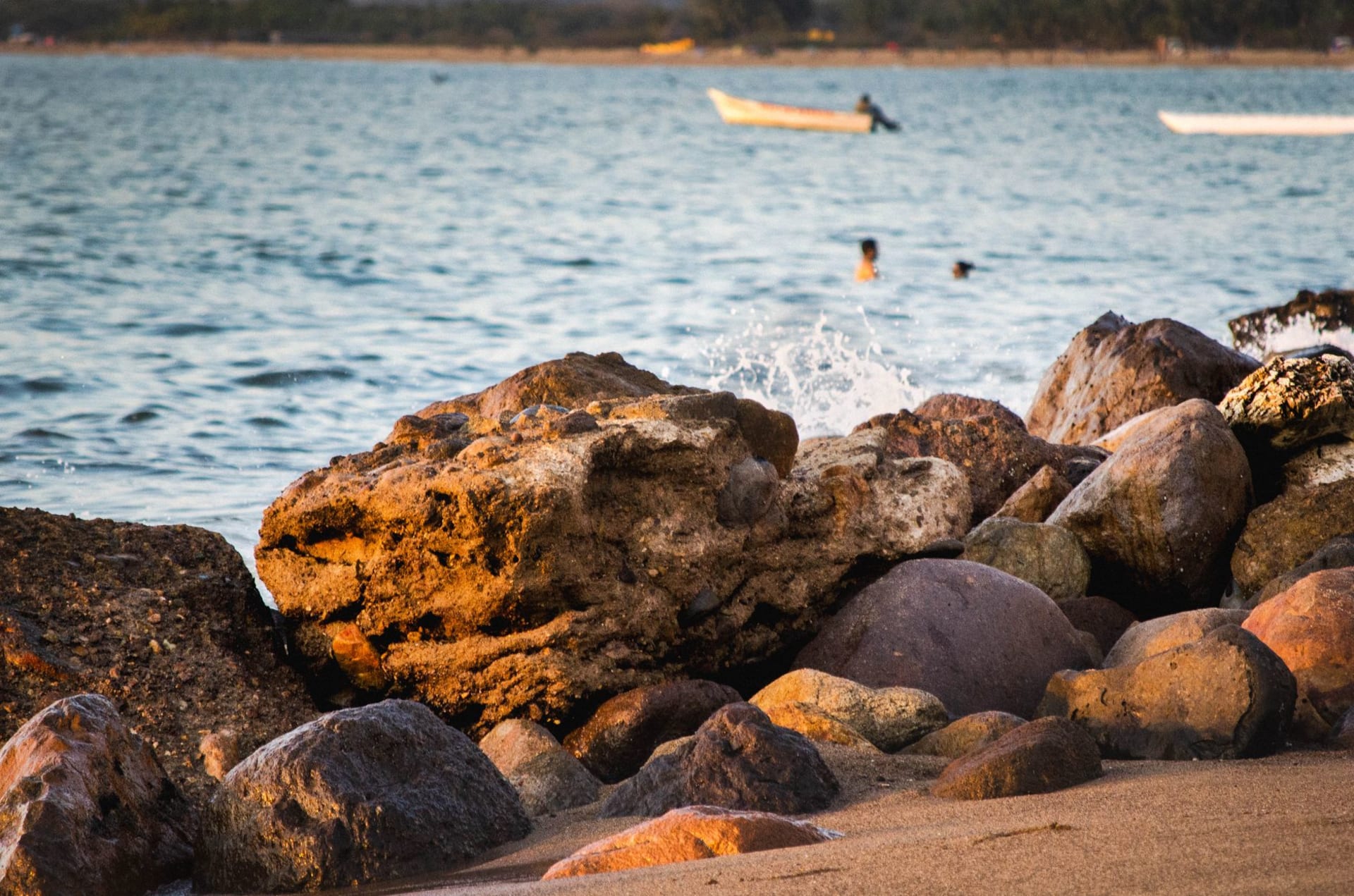
Bahía de Kino
"The Seri woman at the cooperative spread the ironwood carvings on a blanket between us and named each animal in Cmique Iitom, the language of the Comcáac. I bought a seal. I still have it."
Bahía de Kino is two towns in one, separated by a few kilometers of road and a few cultural light-years. Kino Viejo — the old village — is a working fishing community with the smell of salt and diesel and fish processing, boats pulled up on a beach of grey sand, kids on bicycles, dogs that look like they’ve been there longer than the buildings. Kino Nuevo is the strip to the north: snowbird RVs, retired Americans who came for a winter and didn’t leave, modest beach houses with aluminum lawn chairs and American flags, a few restaurants that serve margaritas and shrimp tacos for people who crossed the border wanting Sonoran seafood without a longer drive.
I came for the Seri, which is the reason to come to Kino that isn’t immediately obvious from a description of two retirement scenes. The Comcáac — the people known in Spanish as the Seri — are the indigenous community that never submitted to Spanish missionary work and maintained an independent existence on the Sonoran coast and the islands of the Sea of Cortés until the twentieth century. Their population now numbers around a thousand people; the main communities are at Punta Chueca and El Desemboque, both accessible from Kino. The ironwood carvings they make — sculptures of marine and desert animals carved from the exceptionally hard wood of the desert ironwood tree — are sold at a cooperative in Kino Nuevo and are the most distinctive artesanía in Sonora.
The Seri Cooperative
The cooperative is a small building with a modest sign, easy to miss if you’re not looking for it. Inside, the carvings are arranged on shelves and on blankets spread on the floor, organized by the woman running the place in a system that made sense to her if not immediately to me. The ironwood — Olneya tesota, a legume of the Sonoran Desert, one of the densest woods in North America — carves to a polish that looks almost mineral, the grain of the wood visible beneath the surface like something preserved rather than worked.
The animals are almost entirely from the Seri’s coastal world: dolphins, seals, turtles, sharks, manta rays, pelicans, coyotes, lizards. The scale varies from something that fits in a closed fist to pieces two feet long. The carving quality varies too — some pieces are rougher, some with a finish that took much longer and shows it. The woman who runs the cooperative was direct about which pieces were better work, pointing without being asked, which I appreciated.
She told me the name of each animal in Cmique Iitom — the Seri language, a language isolate with no relatives in any other language family, one of the most linguistically isolated languages in the Americas. The dolphin, the shark, the sea turtle. I repeated them badly. She repeated them correctly without making me feel embarrassed about the gap. I bought a carved seal about fifteen centimeters long, its surface polished to a dark warmth, the whiskers suggested rather than detailed. I paid four hundred pesos and it was the right price and I carry it in my bag when I travel.
The Light on the Sea of Cortés
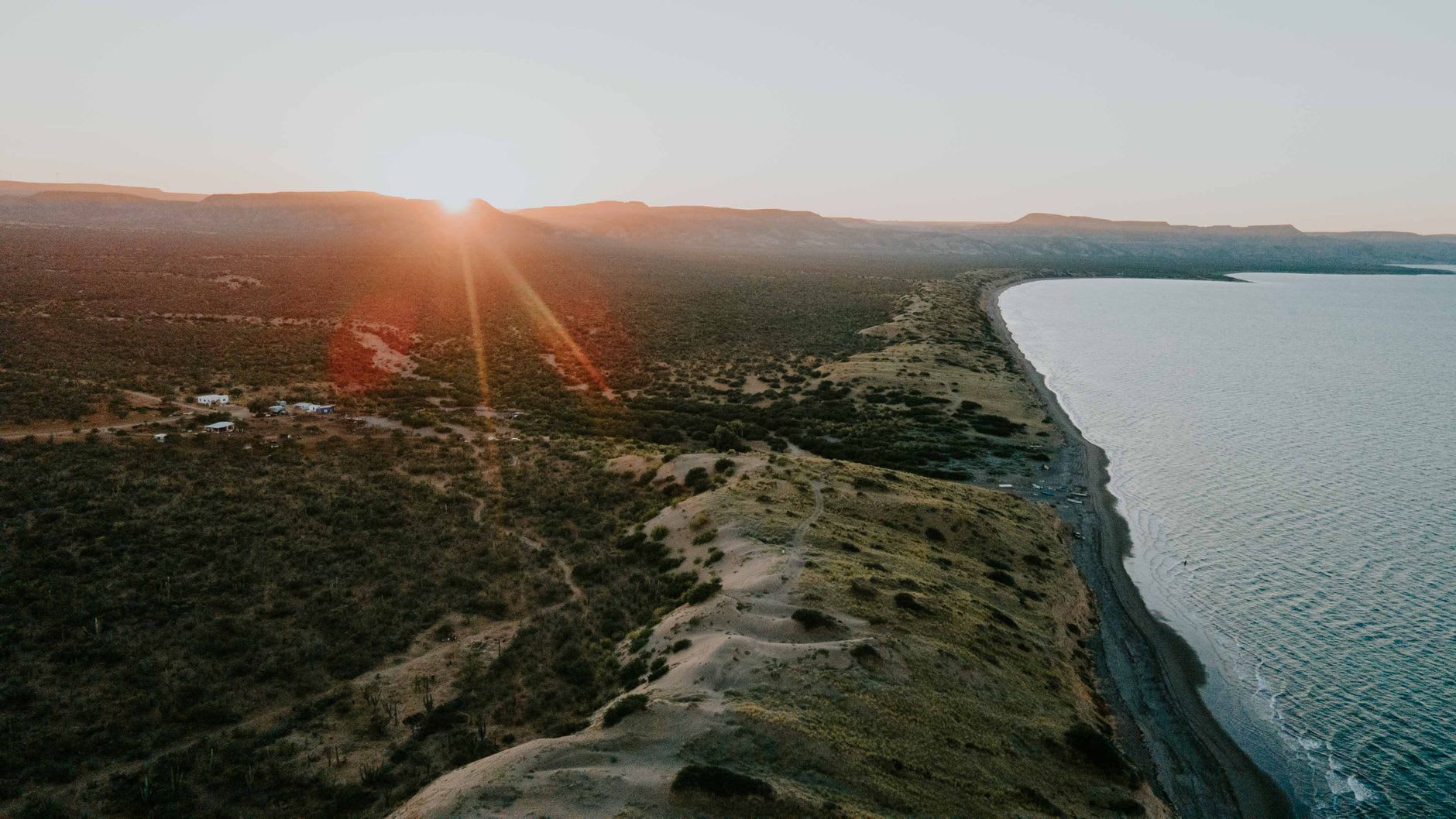
The Sea of Cortés light is something I keep trying to describe and keep failing to describe accurately. It’s not the same as Pacific light — the Pacific is wide and its light is oceanic and slightly diffuse. The Cortés is narrow (at this point maybe 200 kilometers across) and enclosed by the desert on both sides, and the light it produces is concentrated and precise and makes everything at the water’s edge extremely legible — the shadows are sharp, the colors are saturated, the water goes from pale turquoise in the shallows to deep indigo where the bottom drops.
At Kino, the bay faces west, and the evening light on the water is the dominant experience. I walked the beach at Kino Viejo from about 5pm until dark on both evenings I was there, which is the right thing to do. The fishing boats coming in have a certain quality in that light — the pelicans following them, the engine sound across the flat water, the men unloading in silhouette. It’s not a spectacle; it’s just a working fishing harbor doing what it does, in excellent light.
The callo de hacha is the thing to eat at Kino if you eat one thing. Callo de hacha — the adductor muscle of the pen shell clam (Atrina maura), a large bivalve found in the Sea of Cortés — is served raw, like a scallop, dressed only with lime juice and a little salt. The texture is dense and slightly chewy, the flavor clean and briny and mildly sweet, without the iodinous edge that oysters can have. It is almost unknown outside of Sonora and Baja California because it doesn’t travel well. You eat it at the source.
I ate it at a plastic table on the beach in Kino Viejo, bought from a man with a cooler and a folding knife who opened the shells while I watched. Six callitos, a lime cut in half, a small shaker of salt. The man did not offer me anything else and I didn’t need anything else.
Isla Tiburón
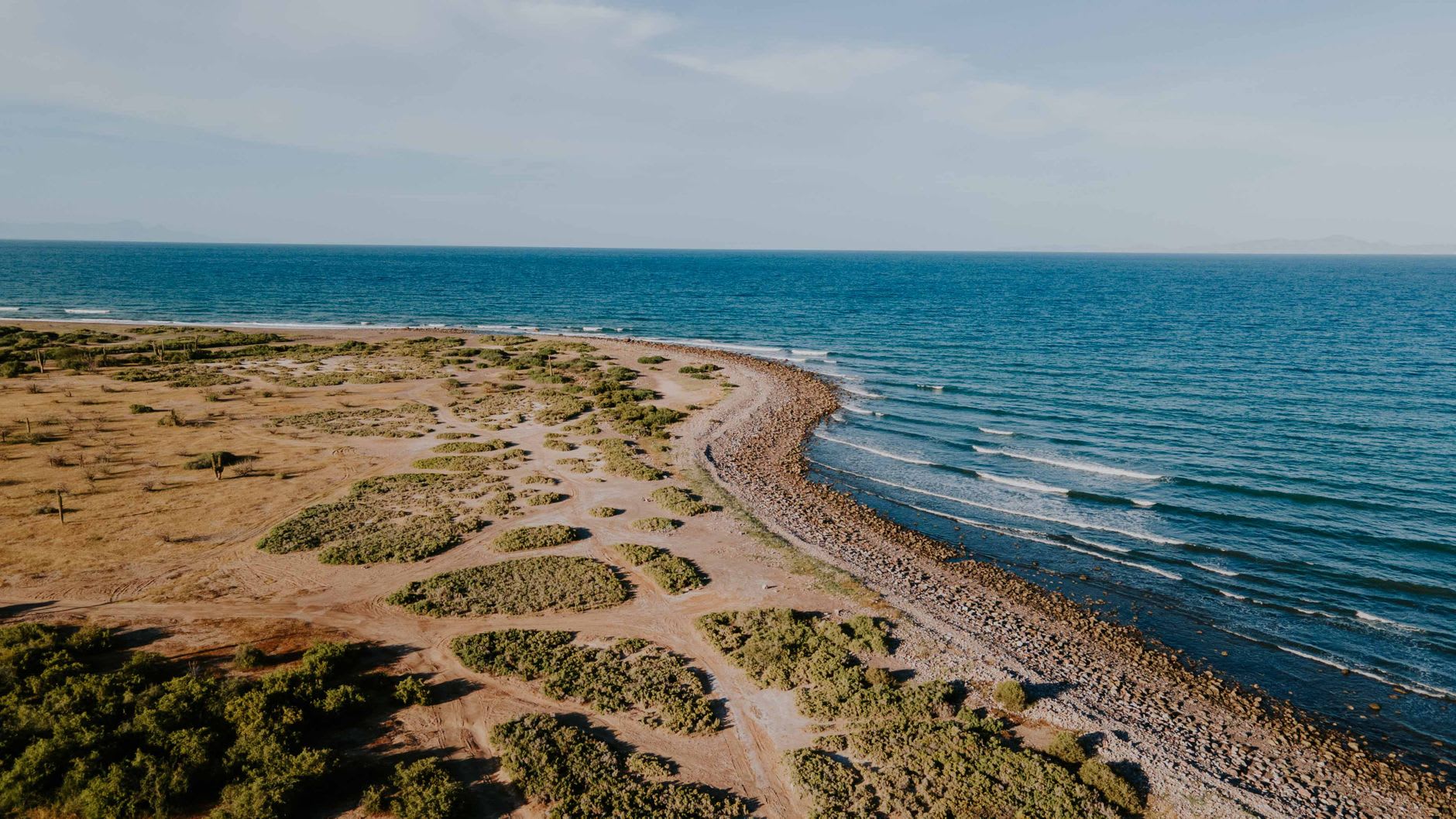
Visible from the shore on clear days — which in Sonora is most days — Isla Tiburón is the largest island in Mexico and belongs to the Seri by land agreement with the federal government. It is uninhabited (except for a small Seri presence during certain seasons) and protected as a wildlife refuge. Access requires a permit from the Seri community and is not straightforward for independent visitors, but authorized tours run from Kino with a Seri guide.
I didn’t go. I considered it and decided that the logistics required more time and planning than I had on that trip. But I watched the island from the beach every morning, a low dark shape to the west across the water, visible and inaccessible in exactly the way that makes a place more interesting.
The whale sharks that aggregate in the waters between Kino and Tiburón from late summer to early winter are the other wildlife fact: this is one of the most reliable sites in the Sea of Cortés for whale shark encounters, and tours from Kino run during the season (roughly July through November). Snorkeling with whale sharks is a specific experience that I’ll describe differently: it is enormous and gentle and completely outside the scale of ordinary marine experience.
Practical Notes
Bahía de Kino is 110 kilometers west of Hermosillo — roughly 90 minutes by car. Hermosillo has daily flights from Mexico City, Guadalajara, and several US cities; rent a car there and drive west. There is no direct bus service from Hermosillo to Kino Nuevo; local buses reach Kino Viejo but with limited frequency.
The Seri cooperative in Kino Nuevo keeps irregular hours — generally open in the mornings, with the exact schedule depending on who’s managing it that day. A second selling point is at Punta Chueca, the Seri community about 25 kilometers north of Kino Nuevo, where you can visit with some advance notice and sometimes meet artisans working directly.
For callo de hacha: ask at the fishing cooperative in Kino Viejo, or look for vendors with coolers on the beach in the early morning when the boats come in. The marisquerías in Kino Nuevo serve it but at a markup; the beach vendors are fresher and cheaper.
Whale shark tours run from Kino’s panga operators, typically September through November. The season varies with water temperature; ask locally about current conditions.
Accommodation in Kino is modest: a handful of small hotels and RV parks in Kino Nuevo, nothing in Kino Viejo. Prices are low by Sonoran coastal standards. Book a room with air conditioning; summer temperatures are significant.