
Tamasopo
"The water is that color. I know it looks like someone adjusted the saturation. They did not."
I had been warned about the color of the water in the Huasteca Potosina before I went there. People said things like “it looks unreal” and “like a screensaver” and I filed this under the category of regional enthusiasm, the kind of thing people say about the place they love when they want you to understand why they love it. Then I arrived at the Cascada de Tamasopo and had to revise my understanding of what my eyes could register as genuinely real.
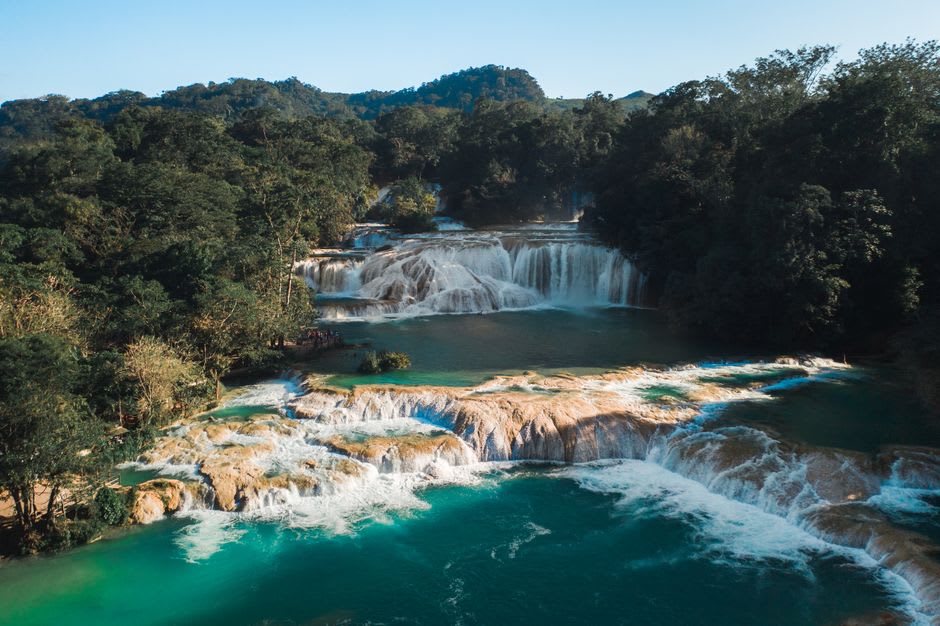
The water is turquoise. Not blue, not green — a specific Caribbean turquoise that exists because the springs that feed the Tamasopo River come up through limestone, dissolving calcium carbonate as they go, and the suspended minerals in the water scatter light at the particular frequencies that produce that color. It is a chemical phenomenon. It is also extremely beautiful.
The Cascade
The main cascade — Cascada de Tamasopo — is about a ten-minute walk from the center of town. You pay a small entrance fee, walk a short path through tropical vegetation, and arrive at a pool at the base of a limestone fall where the water drops perhaps eight or ten meters into a natural swimming hole. The pool is deep enough to jump into from the lower rocks. The current from the cascade keeps one side of the pool cooler than the other. The vegetation around the edges is dense and green and the contrast between that green and the turquoise of the water is the thing the photographs try to capture.
I went in on a weekday morning when the cascade area was not crowded. The water temperature was refreshing — cool enough to feel it when you enter, warm enough after five minutes that you stop noticing it. I swam across the pool and found the current from the cascade and floated in it for a while, facing upstream, looking at the fall.
There is a secondary cascade further upstream, smaller, accessible by a short hike. The river above the falls moves through a narrow canyon where the limestone walls are stained orange and cream and the water runs shallow and clear over pale stone. I went up there alone in the late morning and ate the remaining piece of a pan dulce I had bought in town and sat on a rock in the river with my feet in the water for longer than was strictly productive.
Enchiladas Huastecas and Why They Matter
The Huasteca Potosina has its own culinary tradition that is distinct from the central Mexican food most people think of when they think of Mexican food. The enchiladas huastecas are the best example of this, and they are emphatically not the enchiladas you might know from other regions.
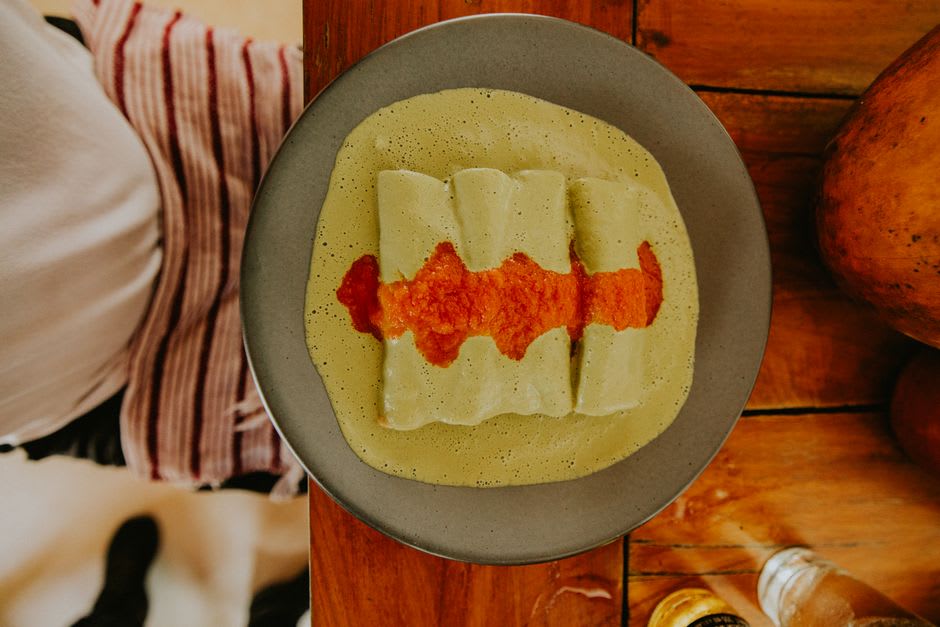
A Huastecan enchilada is a corn tortilla that has been fried in oil, dipped in salsa roja, and served flat or folded on a plate with boiled potato and fresh cheese. There is no baking, no sauce poured over, no filled roll. The tortilla is the vehicle, the sauce is cooked into it by the frying and dipping process, and the potato and cheese provide the substance. It is a humble dish in the best sense — a few ingredients combined in a specific technique that produces something more than the sum of its parts.
I ate a plate of enchiladas huastecas at a small comedor in the town center after coming back from the cascade. The woman who made them fried the tortillas in a wide cazuela over a gas flame and worked quickly, and the result — three enchiladas on a plate with potato, cheese, a few shreds of cabbage, and a slice of avocado — cost me about sixty pesos and was among the best things I ate in the Huasteca. The tortillas had a slight crispness at the edges from the frying and then a softness in the center from the sauce, and the combination of textures was exactly what I wanted after two hours in cold water.
Getting There and the Huasteca Circuit
Tamasopo is in the Sierra Gorda foothills east of the San Luis Potosí altiplano, accessible by bus from the city of San Luis Potosí via Ciudad Valles. If you are doing the full Huasteca Potosina circuit — which typically includes the Cascadas de Tamul, the Puente de Dios, and the Sótano de las Golondrinas swallow cave — Tamasopo fits naturally into the eastern section of that route.
The town itself is small enough that you can walk from one end to the other in fifteen minutes. There are basic guesthouses and a handful of comedores. The cascade area gets crowded on summer weekends and public holidays; weekday mornings between November and April are the best combination of good weather and manageable crowds.
A good day in Tamasopo is uncomplicated: arrive in the morning, swim for an hour, eat enchiladas, consider whether you want to hike the canyon in the afternoon. Most days, I do.