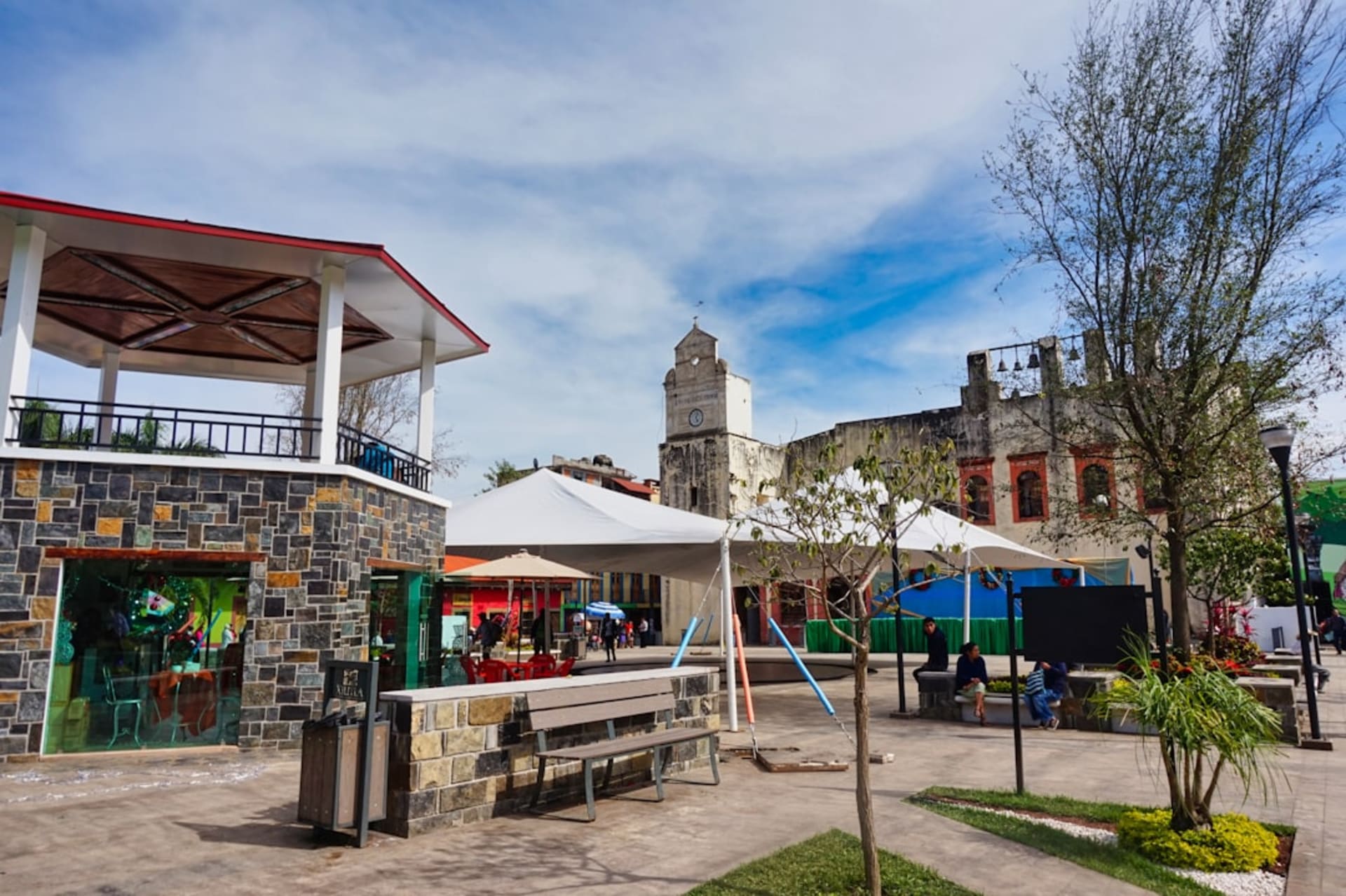
San Luis Potosí
"Edward James spent his inheritance building a concrete jungle sculpture garden. He lived in it alone for decades. It is one of the strangest places in Mexico."
San Luis Potosí’s colonial center is one of the most distinguished in Mexico — a fact that its relative obscurity on the international travel circuit makes somewhat baffling. The city was founded in 1592 after silver was discovered in the Cerro de San Pedro to the east, and the mining wealth it generated over the following two centuries built a concentration of baroque churches, civil buildings, and private mansions that rival Zacatecas and Guanajuato while receiving a fraction of their visitors.
The UNESCO listing came in 2010. The crowds have not.
The Centro Histórico
The city’s historic center is organized around four plazas that form a loose cruciform axis. The Plaza de Armas is the civic anchor, with the cathedral on one side and the state government palace on another. The cathedral facade — pink cantera stone, two towers of unequal height (one was never finished), and an 18th-century portal carved in a restrained Baroque — is one of the better proportioned church facades in central Mexico.
The Templo del Carmen, two blocks west, is the masterpiece. Built between 1749 and 1764 and covered in the Churrigueresque ornament that 18th-century Mexico perfected, its facade and interior represent the style at its most fully realized: a three-dimensional carved stone tapestry in which architecture and decoration become indistinguishable. The attached Teatro de la Paz, an Italian-style 19th-century opera house, is still in active use for concerts.
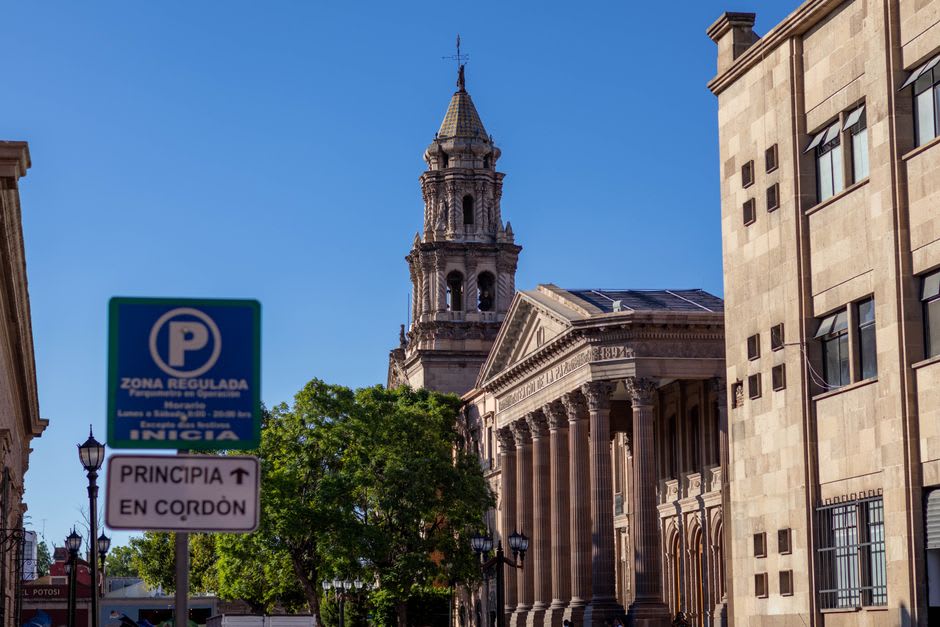
The Barrio de Tlaxcala — the indigenous neighborhood established by Tlaxcalan allies of the Spanish, as in so many colonial cities — has a different texture from the monumental center: smaller streets, the Capilla de Loreto (a curious Italian-style chapel), and the traditional market where the city actually does its food shopping.
Las Pozas
An hour north of the city, in the cloud forest above the Huasteca Potosina town of Xilitla, Edward James — an English poet, art patron, and eccentric of independent means — began in 1949 to build a garden. He continued building it until his death in 1984. What he built, over thirty-five years, using local craftsmen who he employed continuously and paid in ways that made them fiercely loyal, is one of the most extraordinary things in Mexico.
Las Pozas (The Pools) is a sixty-acre site of concrete sculpture-architecture rising from a tropical ravine with waterfalls and natural pools. The structures — which James called by names like “The House with Three Floors Which Might Be Five,” “The Staircase to Heaven,” and “The Bamboo Palace” — are not quite buildings (none are habitable) and not quite sculpture (they are too large and too architectural). They are the product of a single obsessive imagination working over three decades with unlimited resources and no practical constraint.
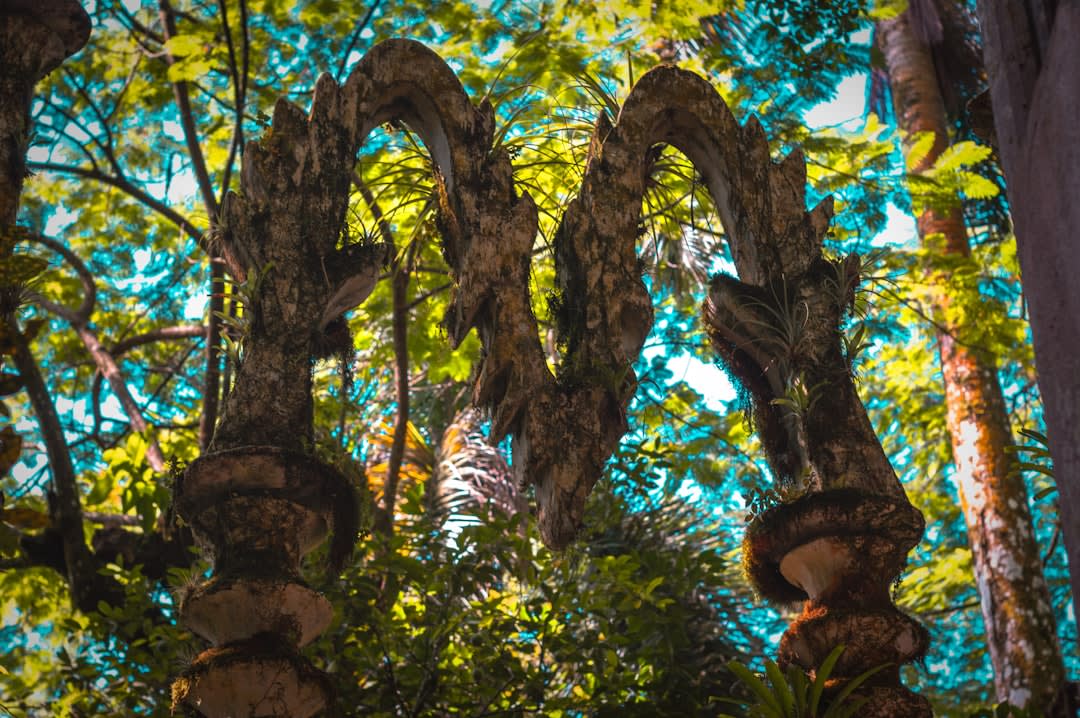
The site is now managed by a foundation and open to visitors. The entry fee is modest. The walk through takes two to four hours depending on how long you spend at the natural pools (which are swimmable and exceptional in the dry season). The concrete is being slowly reclaimed by the jungle — vines threading through the open arches, moss covering the steps — in a way that makes the whole thing feel like a ruin of something that never quite existed.
Xilitla itself — a small Huastec town perched on a hillside above the ravine — has posadas, a market, and the specific feeling of a place that has accommodated a large English eccentric for decades and found the experience mostly fine.
The Huasteca Potosina
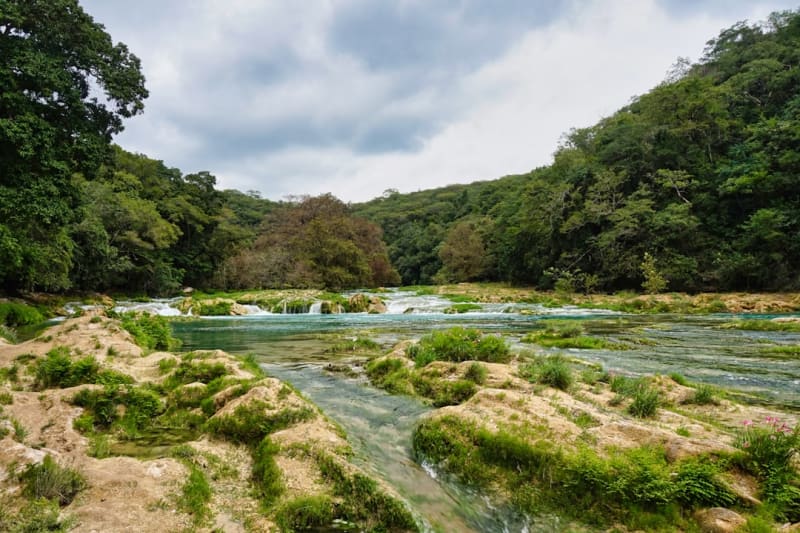
The region east of San Luis Potosí drops from the Sierra Madre into the Huasteca lowlands — a subtropical zone of waterfalls, rivers, and indigenous Huastec culture that is one of Mexico’s most remarkable natural landscapes and almost entirely absent from international itineraries.
Tamul waterfall — the largest in San Luis Potosí state, accessible by canoe up the Santa María River — falls 105 meters into a river pool that is a specific shade of turquoise that photographs require to be believed. Media Luna — a spring-fed lagoon of constant-temperature water — is the best freshwater diving site in Mexico.
Getting there: Direct flights from Mexico City (1h) and Guadalajara. ADO buses from CDMX Terminal Norte (5-6h). Las Pozas is reached by colectivo or taxi from Xilitla, which is reached by bus from the San Luis Potosí central terminal (3h).
When to go: October through May for the colonial city year-round; November through April for the Huasteca (river levels are best in dry season). Las Pozas is spectacular after rain when the waterfalls run.
Explore
Places in San Luis Potosí
Huasteca Potosina
A region of San Luis Potosí state where the rivers run turquoise through tropical limestone canyons, the Tamul waterfall drops 105 meters into a river you can reach by canoe, and the Huastec communities maintain a textile and ceremonial tradition distinct from any other indigenous culture in Mexico.

Real de Catorce
A semi-ghost silver-mining town in the San Luis Potosí desert reached through a 2.3km single-lane tunnel carved in 1901.