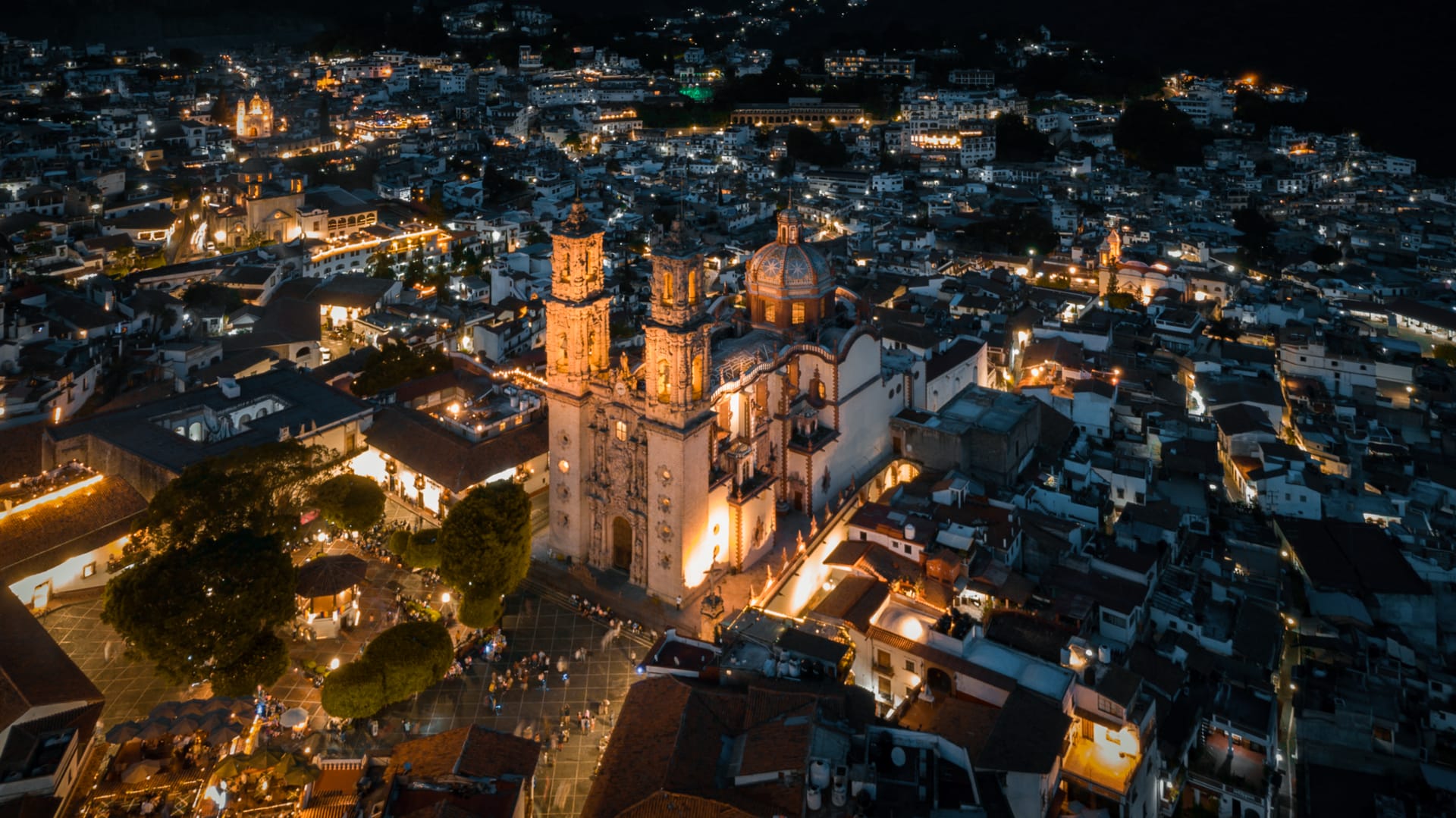
Santa María del Río
"The woman at the loom said she could tell where any rebozo came from within Mexico just by the fringe. She looked at mine and said: you're in the right place."
The rebozo is one of those objects that sits so quietly in daily Mexican life that you stop noticing it. Women wear them folded over one shoulder or wrapped around both, used as shawls, as baby carriers, as sun protection, as prayer covering, as everyday clothing, as formal dress. They range from coarse cotton sold at market stalls for a hundred pesos to hand-woven silk pieces that take weeks to complete and cost more than I want to specify. I had been in Mexico for two years before I began to understand the difference, and I only began to understand it properly in Santa María del Río.
The town is an hour south of San Luis Potosí City on the highway toward Querétaro, in the valley of the Santa María River — a colonial settlement of the straightforward Potosino kind: a main plaza, a church, streets of uniform height and yellow-ochre facades, the particular quietness of a town that is not on the way to anywhere except itself. Its reputation for rebozos is not a tourist invention. The weavers here have been making them since the colonial period, and the specific technique — a fine silk or cotton weave with a fringe-knotting method called empalagado — is recognized throughout Mexico as particular to this town. Show a rebozo to an artesano who knows them, and they can tell you whether it came from here.
The Workshops
The family workshops are on the streets near the main plaza, not hidden, not tourist-formatted. The looms are inside houses with open doors, and the sound of the shuttle on an 1880s wooden frame is audible from the street before you can see the loom. I walked into two workshops, both run by families who have been weaving here for multiple generations.
The first one I entered had three looms operating simultaneously: a grandmother at a large floor loom working silk threads in a deep blue and green combination, a younger woman at a smaller loom with cotton, and a teenage girl knotting fringe at a separate frame with a speed that suggested she had been doing this since childhood and probably had. The silk threads on the large loom were fine enough to be nearly invisible individually, the warp threads stretched tight with the slight vibration of tension. I asked the grandmother how long the piece she was working on would take. She said three weeks. I asked how many she made in a year. She said it depended on orders.
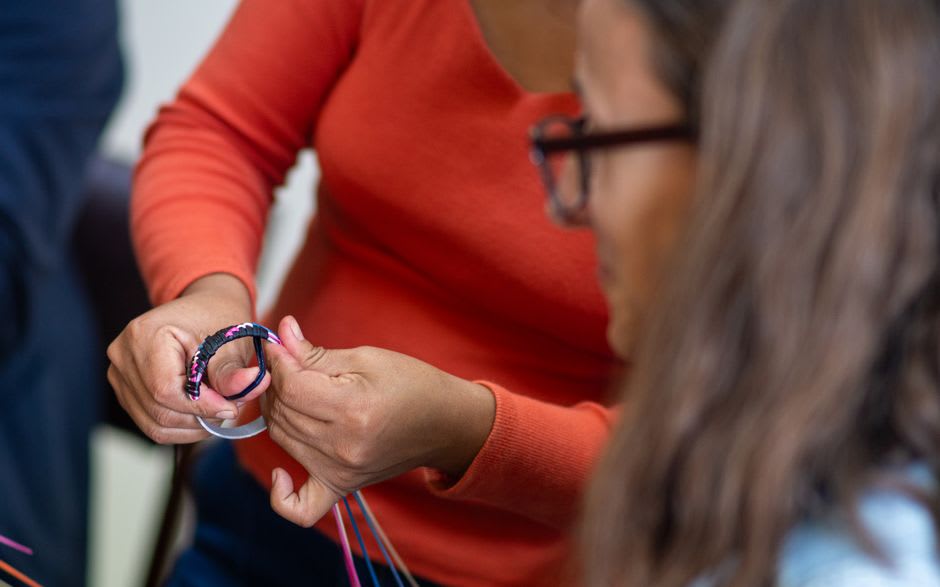
The fringe-knotting is the part that takes the longest to explain. The finished fringe of a Santa María del Río rebozo is not cut or knotted in the way you might assume — it emerges from the loom with a specific length of unwoven warp thread, and each artisan then knots this fringe by hand in patterns called laborados, using a small wooden needle, creating geometric or floral designs within the fringe itself. The knotting can be as elaborate as the body of the shawl, and it is entirely by hand, and it is what the specialists look at first when identifying where a rebozo was made.
The Rebozo I Bought
The second workshop I entered had a finished rebozo on display that I recognized immediately, in the way you recognize something you didn’t know you were looking for. It was a silk piece in deep burgundy with a fine cream geometric weave pattern and a fringe that was knotted in a design that took me a minute to resolve into its structure — a repeated diamond within diamond, the thread so fine it had the quality of embroidery but denser.
The man running the workshop showed me how to hold it, the weight of the silk in my hands, the way the light moved through the weave when you held it to the window. It was expensive. I bought it for Lia, who was waiting in San Luis Potosí City, because I was confident enough that she would understand why. She wore it out of the hotel that evening over a dress, with the fringe hanging over one shoulder, and the color was exactly right.

The River and the Colonial Town
The Santa María River runs through the edge of town and is crossed by a colonial stone bridge that is genuinely old and genuinely pretty in the understated way of functional colonial infrastructure. The riverbank in the afternoon light has the quality of places that have been lived alongside for centuries — the trees are enormous, the water is clear and shallow, there are women washing things on the flat stones near the bridge in a way that makes historical documentary feel intrusive.
The town itself takes perhaps two hours to see fully. There is a museum of the rebozo in a colonial building near the plaza, which is worth an hour to understand the historical context before you visit the workshops. The plaza has the usual cafés. The market on Saturday mornings brings regional produce in from the surrounding valley. Come on a weekend for both.
From San Luis Potosí City, local buses leave from the Central de Autobuses toward Rioverde and stop at Santa María del Río — the journey is about fifty minutes. It is a straightforward day trip.