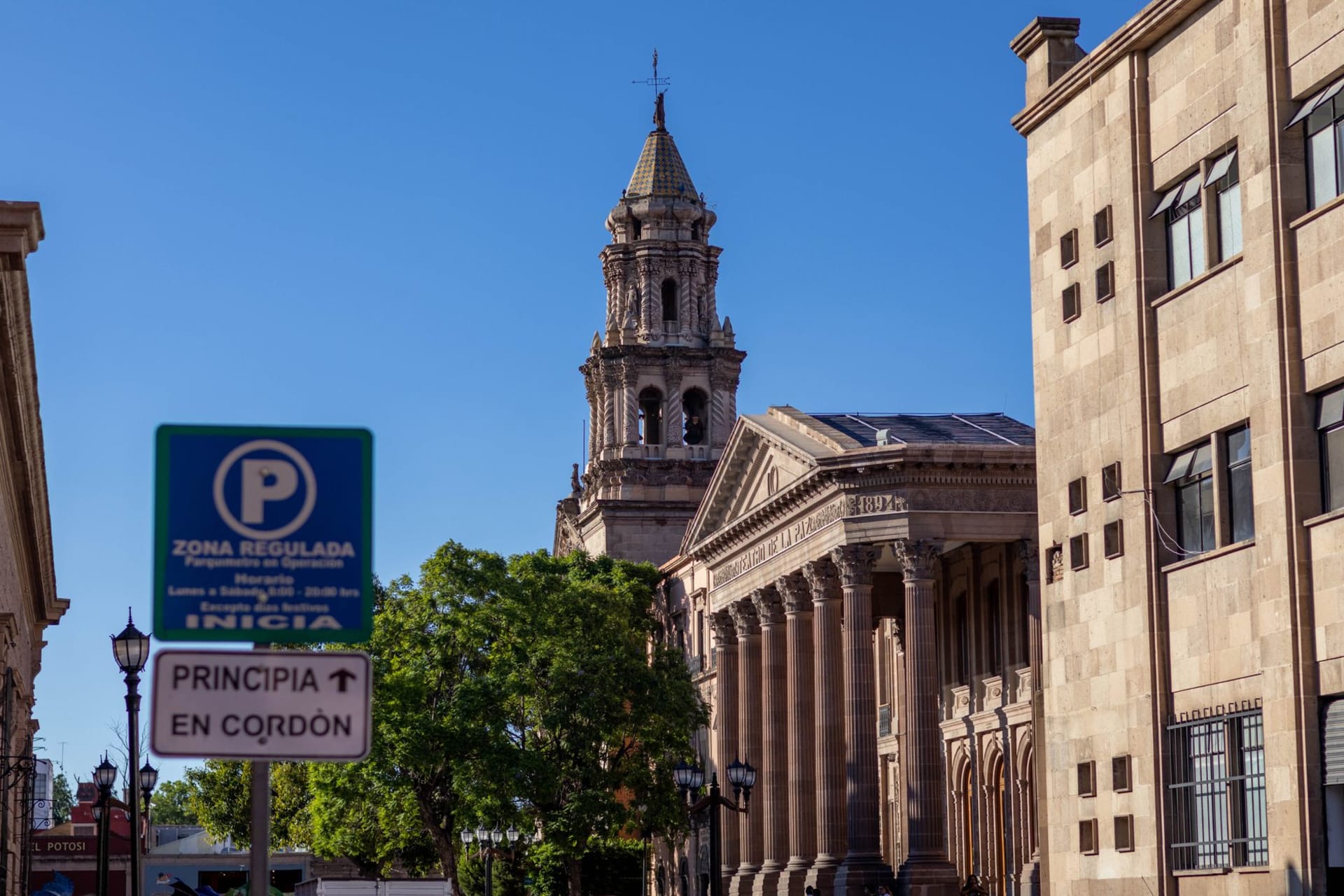
San Luis Potosí City
"I arrived expecting to pass through and ended up staying three days, which is what a good opera house and a better enchilada will do to you."
San Luis Potosí city is on the way to a lot of things and the destination for almost nothing — or so the travel logic in Mexico seems to suggest, given how consistently it appears in travel blogs as a lunch stop between Mexico City and Monterrey, a place for a night before pressing on to the Huasteca or Real de Catorce. I was guilty of exactly this on my first visit. On my second visit I stopped treating it as a through point and discovered that it has one of the better colonial city centers in northern Mexico, a culinary tradition specific enough to actually matter, and an opera house that would be the most remarked-upon building in a smaller city.
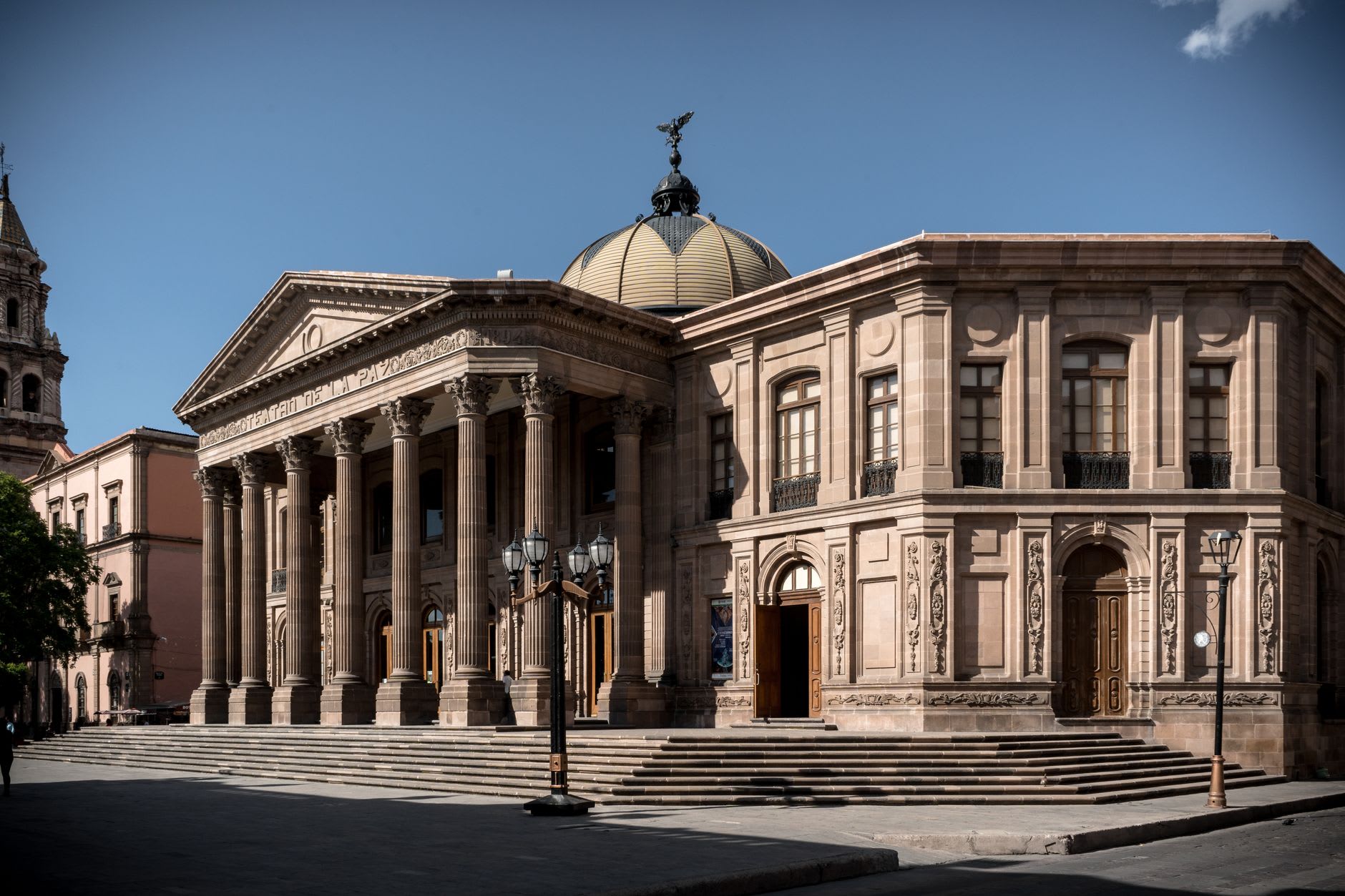
The Teatro de la Paz
The theater is the first thing I would send anyone to. Not because of any particular performance — though the city has a decent program and if the calendar works out, go — but because the interior is the kind of room that produces involuntary architecture tourism even in people who don’t think of themselves as architecture tourists.
It was built between 1889 and 1894, during the Porfiriato, when San Luis Potosí’s silver economy was still producing enough surplus to build things at that scale. The exterior is Neoclassical — columns, pediment, the sober vocabulary of civic ambition — but the interior is where the money went: a horseshoe of gilded boxes, four tiers, the ceiling painted with allegorical figures, the whole thing in a condition of preservation that feels slightly implausible given that it’s been in continuous use for 130 years. I went to a free orchestral rehearsal on a Wednesday afternoon — the tourist office had mentioned this was possible, that the hall is sometimes open during rehearsals — and sat in the second tier while a youth orchestra ran through something I didn’t recognize and the conductor stopped them every two minutes to correct the brass section.
The acoustics are very good. I know this because the conductor’s corrections were audible from the second tier at a comfortable speaking volume. The conductor seemed to know this too and managed his commentary accordingly.
The Plaza de Armas outside the theater is one of the best main squares in the Bajío: shaded by old Indian laurel trees, with a kiosk where band concerts happen on weekend evenings, and surrounded by buildings that include the state government palace and a cathedral whose façade presents a lesson in eighteenth-century stone carving. But the cathedral at Templo del Carmen — three blocks away on the Jardín del Carmen — is the more impressive church in the city, and the reason the Jardín del Carmen is where I spent most of my time.
The Templo del Carmen
The churrigueresque façade of the Templo del Carmen is the kind of thing that takes a while to process. Churrigueresque — the most ornate of the Spanish Baroque styles, named for the Churriguera family of architects — involves layering relief sculpture until the wall behind it almost disappears, the stone cut into so many planes and depths that the surface seems to vibrate in direct sunlight. The Carmen façade does this, but also incorporates polychrome tilework in the towers, which catches the afternoon light differently from the carved stone and adds a visual note that the purely stone examples of the style don’t have.
I went at different times of day to see how the light changed it. Morning from the east is flat and makes the carving look academic. Late afternoon from the west is when it opens up — the shadows fall into the carved recesses and the relief becomes readable, the figures coming out of the stone in a way that morning doesn’t allow.
The interior has a notable camarín — a room behind the main altar, accessed through a small door, decorated in its own right with azulejo and carved ornament. Most visitors who enter the church don’t find the camarín. I found it because I was looking at the architecture obsessively enough to notice a door that shouldn’t have been there.
The Enchiladas Potosinas
The enchiladas potosinas are the dish that distinguishes San Luis Potosí’s food culture from the general Mexican canon, and the distinction is specific and important: the chile is in the masa, not in the sauce. A standard enchilada is a corn tortilla dipped in chile sauce, filled, rolled or folded. An enchilada potosina is made from a masa that has been colored and flavored with guajillo or ancho chile from the start, before the tortilla is formed, so that the corn itself carries the heat and the color. The result is a darker, slightly bitter tortilla — red-brown, almost maroon — filled typically with queso fresco and fried until the exterior is crisp.
I found them at the Mercado República at midday, which is when the market’s cooked food section is fully operational. The stall where I had them was run by a woman who had three cast iron skillets going simultaneously and moved between them with a spatial awareness that I found genuinely impressive. The enchiladas arrived on a plastic plate with crema, shredded lettuce, and a salsa verde that was very fresh and quite hot. They cost 35 pesos for three. I ate six.
The Mercado República deserves more time than just the enchiladas. The produce section in the morning has the full botanical range of a market that serves a city of nearly a million people — a different variety of chile, squash, or herb turning up in every aisle — and the candy section, a San Luis specialty, has ate de membrillo (quince paste), cajeta (goat’s milk caramel), and cocadas in varieties I hadn’t seen elsewhere. There’s also a section of masks and textile artesanía from the Huasteca region to the east, which reminded me I had more of this state to explore.
The City at Night
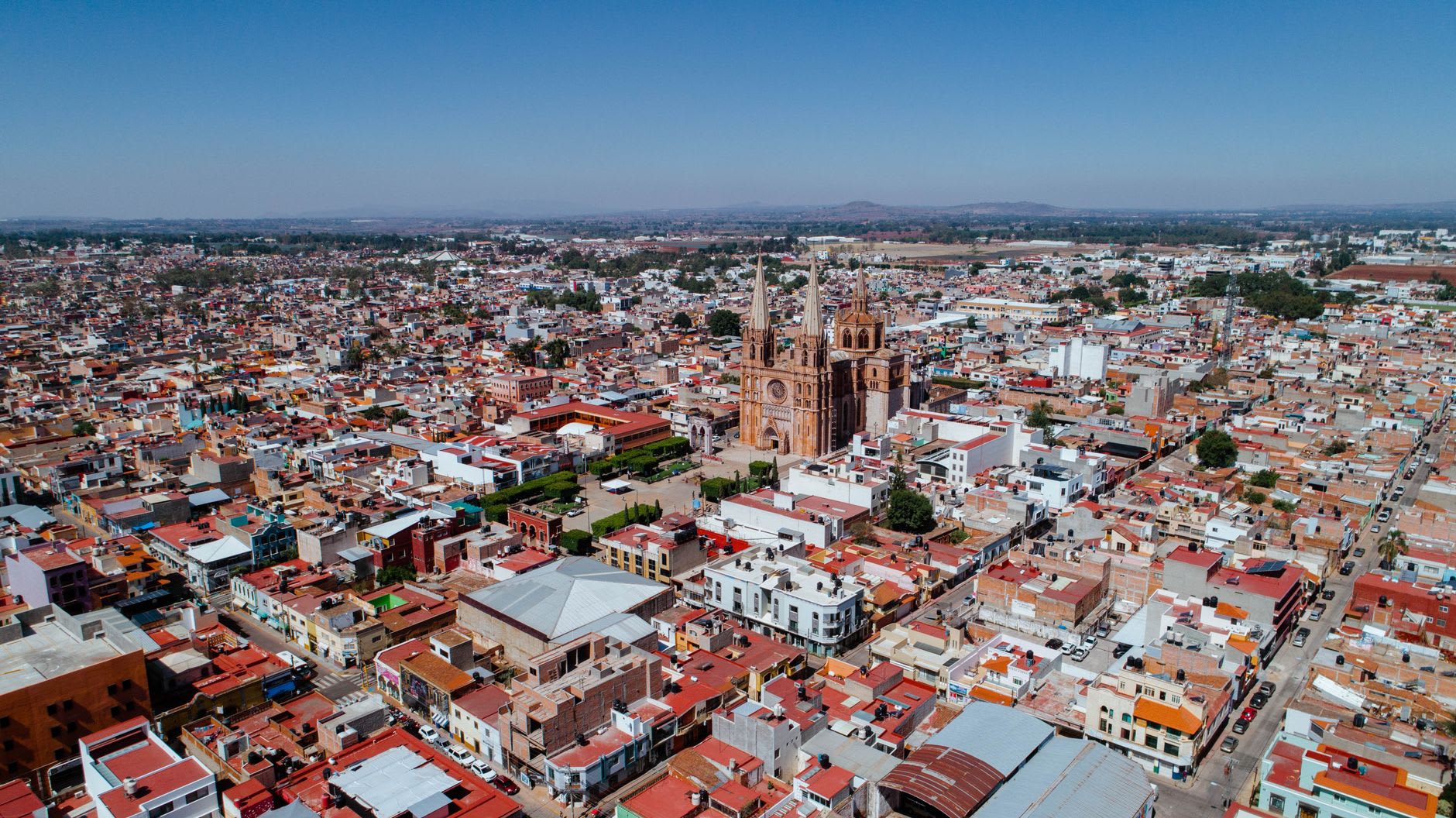
San Luis Potosí at night has a pleasantly provincial quality that the major tourist cities in Mexico have largely lost. The people on the plazas in the evening are mostly people who live there, taking the air, running into each other. The Jardín Colón, near the theater, fills with couples and families and teenagers doing what teenagers in Mexican plazas have always done — circling in loose groups, with a kind of studied casualness that looks exactly the same in 2024 as it must have in 1974.
I had mezcal in a bar near the Plaza de Armas that had been a pharmacy in its previous life and had kept the antique shelving and the large glass apothecary jars, now filled with things that were not medicines. Lia found a cocktail menu that used local desert herbs she hadn’t heard of, which led to a conversation with the bartender that went longer than any of us expected. Outside, the cathedral lit up at 10pm and the plaza went quiet in the way it does when the ambient temperature drops in the Bajío — suddenly cooler, suddenly comfortable, suddenly conducive to staying another hour.
Practical Notes
San Luis Potosí is three and a half hours from Mexico City on the Primera Plus or ETN bus lines (express service from Terminal Norte). The centro histórico is compact and walkable from any central hotel. The state is also the gateway to Real de Catorce (3 hours by road and jeep) and the Huasteca Potosina (Xilitla, Tamul, Las Pozas — 4 to 5 hours northeast).
The Teatro de la Paz is open for guided visits Tuesday through Sunday; check the current performance program at the theater box office. For rehearsal access, the tourist office on the Plaza de Armas can advise on current schedules.
The Mercado República is busiest from 9am to 3pm; the cooked food section is best from noon to 2pm. For enchiladas potosinas, look for stalls with cast-iron comals and the dark red masa — the color is the tell.