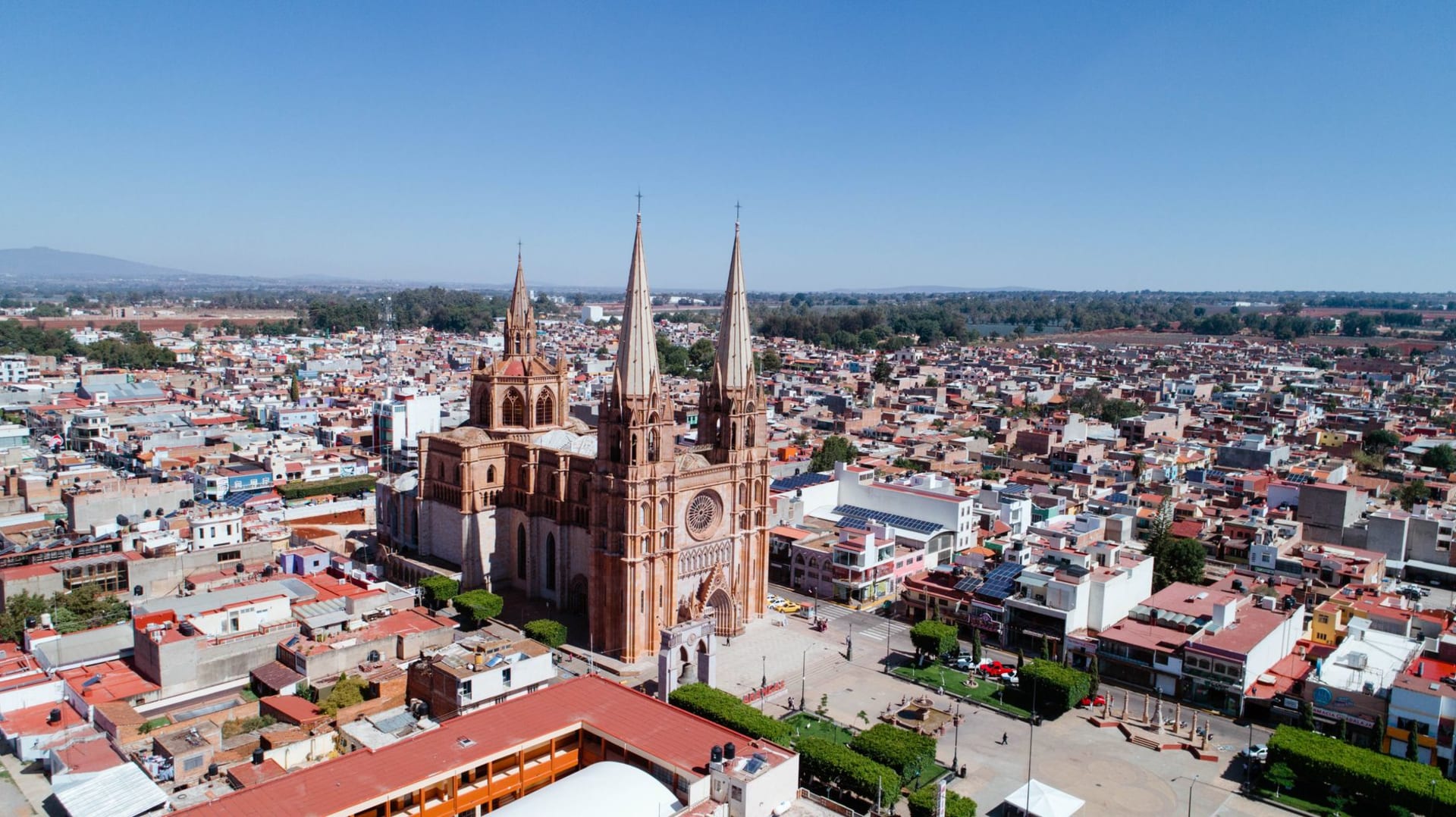
San Juan del Río
"He let me look through the magnifying glass for much longer than was necessary. I think he enjoyed watching someone see the inside of a fire opal for the first time."
The stone market on the main road into San Juan del Río is easy to miss if you are not looking for it, which is a shame, because it is one of the better shopping experiences in the Querétaro region and the raw material is genuinely extraordinary. The fire opals from the Querétaro highlands are among the finest in the world — the stone is found in volcanic rhyolite deposits in the Sierra Gorda and the surrounding hills, and the best specimens have a depth of color that shifts from amber to deep red to orange depending on the angle of the light, like something alive caught inside the stone.
I stopped in San Juan del Río on the way north from Mexico City to Querétaro, which is the correct approach — the city sits at the southern end of the state, about an hour’s drive from the capital, and if you are making the Querétaro journey you will pass through it whether you intend to or not.
The Lapidary Workshops
Behind the roadside stone market, which sells raw stones, finished jewelry, and some tourist-grade material that is frankly unimpressive, there are proper lapidary workshops where the actual craft happens. These are not showrooms. They are workshops — small rooms with polishing wheels and magnifying lenses and stones in various states of completion on cloth-covered workbenches.
I found one workshop by following a side street and hearing the low grinding sound of a polishing wheel through an open door. The man working at it was perhaps sixty, with the careful posture of someone doing close work, and he did not look up when I came in. On the cloth in front of him were about twenty fire opals in various stages of cutting — rough stones, half-formed stones, finished stones the size of a thumbnail.
I asked if I could look. He gestured at the display shelf without stopping his work. The shelf held finished specimens in a range of prices written in ballpoint pen on small paper tags. I picked up a small fire opal — oval, the size of my thumbnail, priced at 180 pesos — and held it to the light from the doorway.
The color shifted. From a warm honey amber it went to deep copper, then to something almost blood-red at the edge where the light hit it at a particular angle. There is a French word, chatoyance, that describes the optical effect in certain gemstones where the internal structure scatters light in a shifting luminous way. Fire opals have it at a level that makes every other chatoyant stone seem modest.
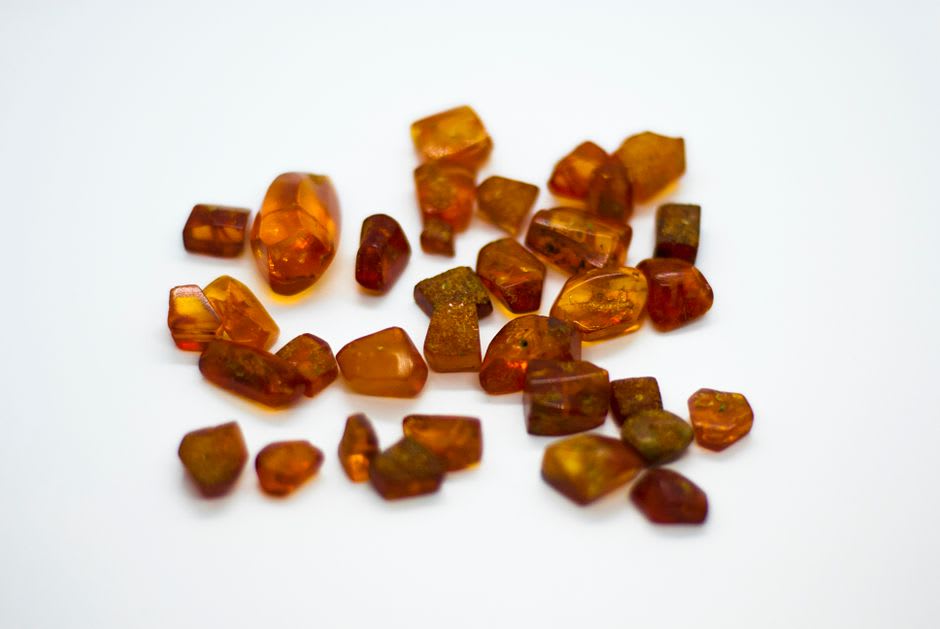
The lapidary put down his work and came over. He took the stone from my hand, held it to his own light source — a small lamp positioned at a specific angle — and showed me what I was looking at. The play of color in a quality fire opal is three-dimensional; the inclusions and internal structure create layers of color at different depths. He handed me a magnifying glass and pointed at the stone.
Through the glass I could see into the stone in a way that felt almost intrusive. The internal landscape of a fire opal is complex — veils, inclusions, the structures that produce the play of color. He talked me through what I was seeing without condescension, using technical terms and then immediately explaining them. This went on for perhaps fifteen minutes. I had not asked for fifteen minutes of instruction. He gave it anyway, apparently pleased to talk about the thing he spent his days doing.
I bought the stone. I also bought a slightly larger piece of raw agate that I have since done nothing with except put it on my desk, where it sits looking geological.
The Bridge, the Wine, and the Road
The colonial bridge over the San Juan River is worth a photograph and a walk across, though it does not demand the sustained attention of the stone market. The old center of San Juan del Río has the low-key charm of a city that is prosperous without being showy — it has been a commercial stop on the road north since the colonial period, and the architecture reflects generations of quiet accumulation rather than any single moment of wealth.
The wine valley to the east is a legitimate reason to extend a stop here. The Querétaro wine region is the most respected in Mexico among people who take Mexican wine seriously, which is not yet the whole world but is an expanding category.

Freixenet — yes, the Spanish cava producer, which has been operating vineyards in the Querétaro valley since the 1980s — runs tours at their cave-cellar facility east of town, which is built into the hillside in the manner of a European champagne house and produces sparkling wine using the traditional méthode champenoise. The quality is better than I expected. The cave is genuinely cold in a way that is welcome in the summer months.
San Juan del Río rewards a half-day. Go to the lapidary workshops before the stone market; the workshops are where the understanding comes from.