Peña de Bernal
"The rock is bigger than it looks from the village. It looks very big from the village."
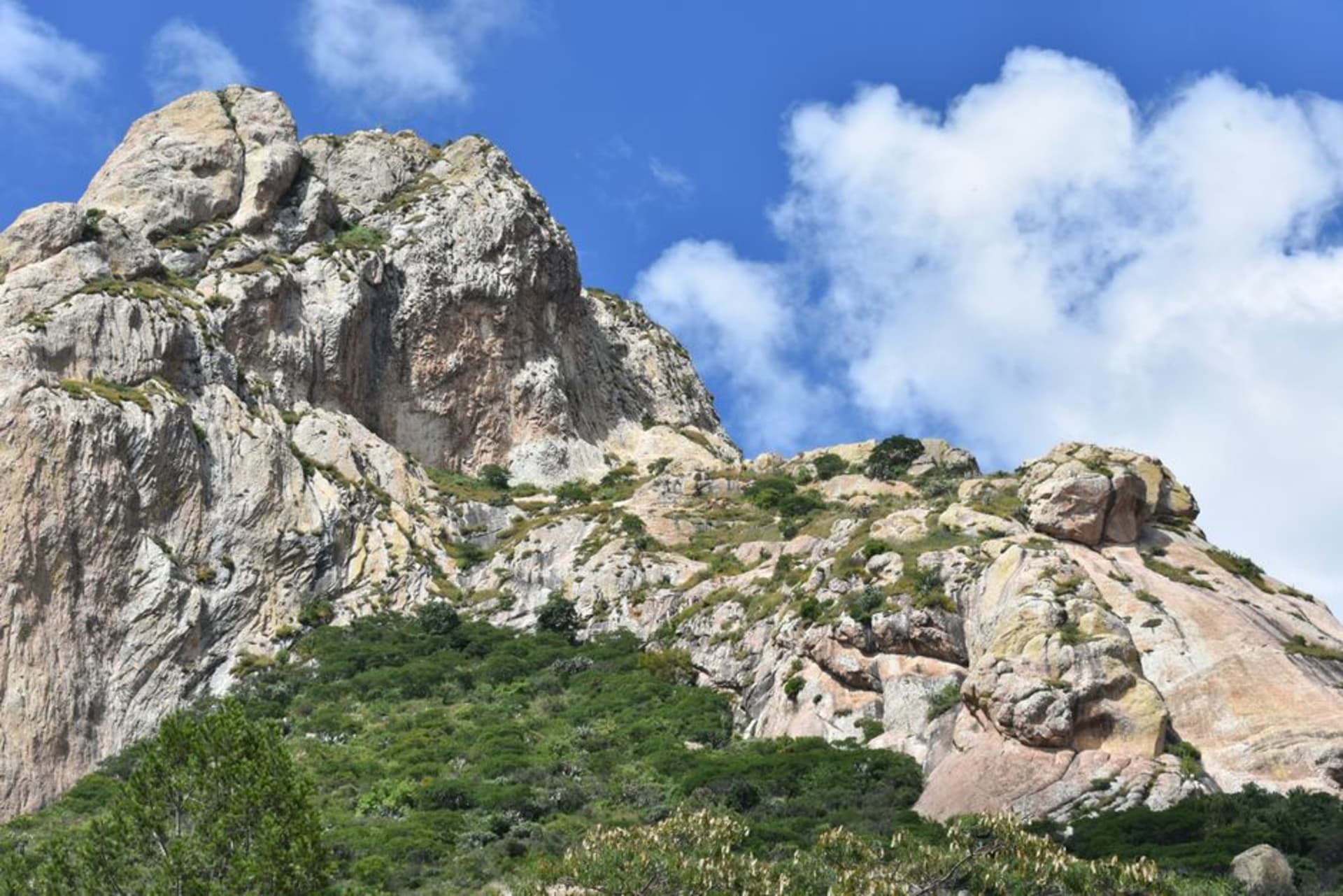
The Peña de Bernal is a granite monolith of 433 meters that rises from the floor of a Querétaro valley with the abruptness of something that should not be there. It is, by most geological measurements, the third-largest monolith on Earth after Sugarloaf Mountain in Rio de Janeiro and Rock of Gibraltar — though the ranking depends on how “monolith” is defined, and there are competing claims. What is not competing: the effect of arriving in the village of Bernal and seeing the rock filling most of the visible sky to the north.
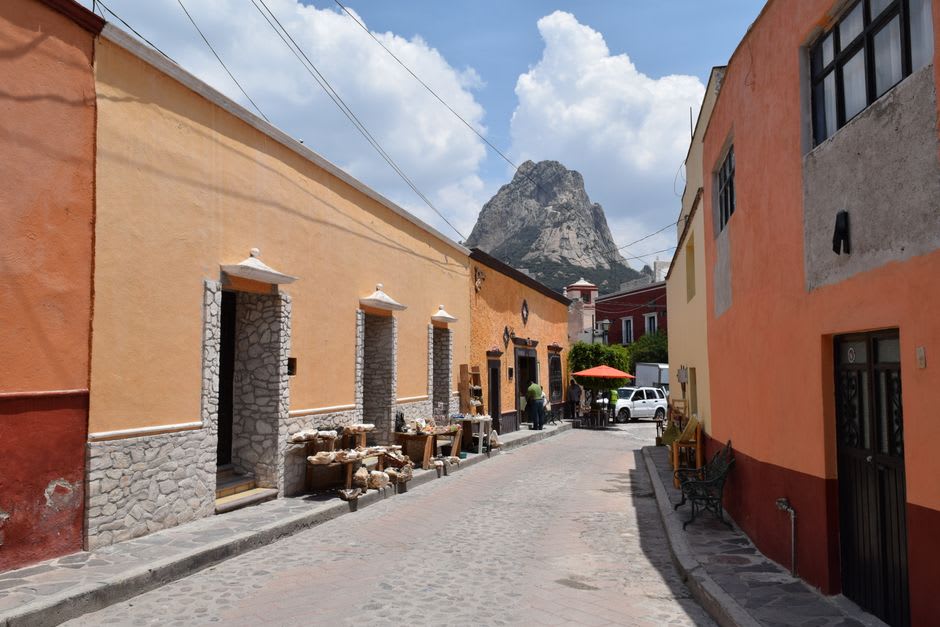
The village at the base of the monolith — the Pueblo Mágico of Bernal — has organized its economy around the rock for several decades: the artisan market sells textiles, the restaurants serve regional Querétaro food, the hikers who attempt the monolith (a technical climb requiring equipment for the upper sections, but accessible to non-climbers for the first 350 meters) fill the weekend posadas.
The Monolith
The Peña de Bernal formed from volcanic granite intrusion approximately 130 million years ago; the surrounding softer rock eroded away over subsequent geological time, leaving the harder granite core exposed. The Chichimec peoples who controlled the Querétaro highlands before the Spanish conquest considered the rock sacred and held ceremonies on its slopes; their relationship with the rock is preserved in the oral traditions of the semi-nomadic Chichimec communities that still exist in Querétaro state.
The climbing route begins at the base of the rock (a thirty-minute walk from the village) and ascends through several technical sections to the summit. The first third of the route is accessible to fit hikers without equipment; the middle section requires basic rock climbing skills; the summit requires technical climbing with ropes. The views from any elevation justify the ascent.
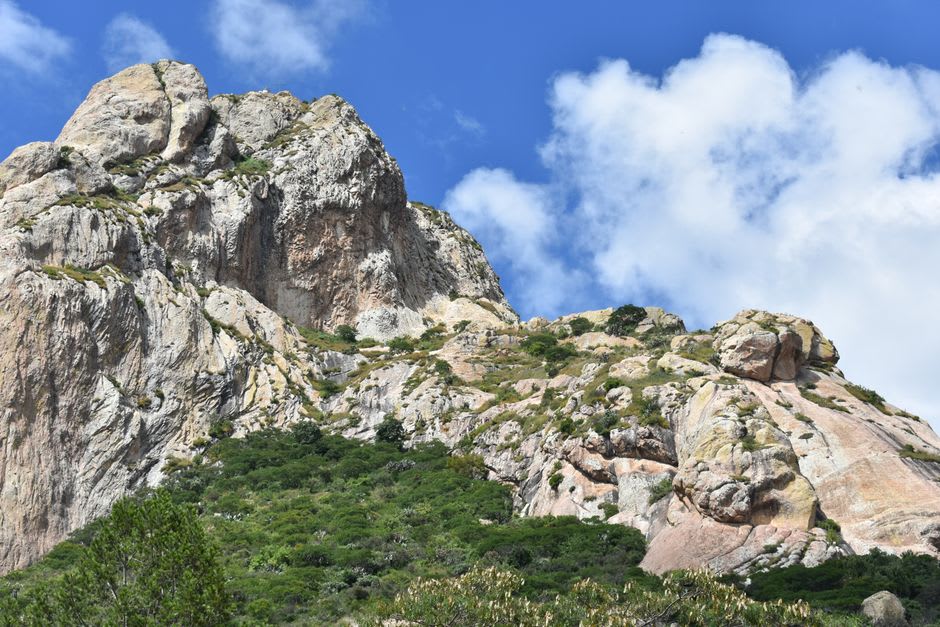
The base walk — circumnavigating the lower section of the rock through the scrub oak and maguey landscape at its foot — takes two hours and provides the varying perspectives (the rock looks different from each angle; the north face is more sheer, the south face has the visible geological striping) that the village view doesn’t offer.
The Village and the Market
The village of Bernal (population around 4,000) has the compact colonial center typical of Querétaro Pueblo Mágicos — church on the plaza, portales, cobblestone streets — with the specific market character that the monolith tourism has produced: artisan stalls selling the regional specialties of Querétaro state.
The two things worth buying:
Rebozo textiles — the hand-woven shawls of the Querétaro tradition, made on pedal looms in the village and in surrounding communities, in wool and silk blends that are warm enough for the highland evenings. The Bernal style has a specific color palette (earthy reds, dark blues, natural cream) and a weave density that produces a fabric weight different from the thin cotton rebozos of the coast.
Queso de tuna — a sweet made from the thickened juice of the prickly pear cactus (tuna), which grows throughout the Querétaro highlands and produces in abundance from August through October. The queso de tuna is amber-colored, intensely sweet, sold in thick slabs wrapped in cactus fiber, and tastes like nothing else available outside of the Bajío cactus country. The version made in the village during harvest season is better than the commercially packaged version available in Mexico City supermarkets.
Equinox
On the spring equinox (around March 21), the alignment of the Peña de Bernal with the setting sun creates a shadow that the Chichimec people observed as a cosmological event — the rock’s shadow at equinox falls precisely along specific landscape features in ways that suggest intentional pre-Columbian solar observation. In recent years the equinox at Bernal has become a significant annual gathering, with tens of thousands of visitors (many in white clothing, the tradition being that white clothing absorbs the equinox energy from the monolith) filling the village and the slopes of the rock.
The equinox weekend transforms Bernal into something entirely different from its normal quiet character; the posadas book months in advance.
Getting there: From Querétaro city: 60 kilometers by car (1h), or buses from the Querétaro bus station to San Juan del Río, then connection to Bernal. From San Miguel de Allende: 50 kilometers by car. The village is most easily reached by car; the weekend buses are popular but infrequent.
When to go: October-May for hiking. March 21 for the equinox (book accommodation in advance). October for the prickly pear harvest and fresh queso de tuna.