Colón
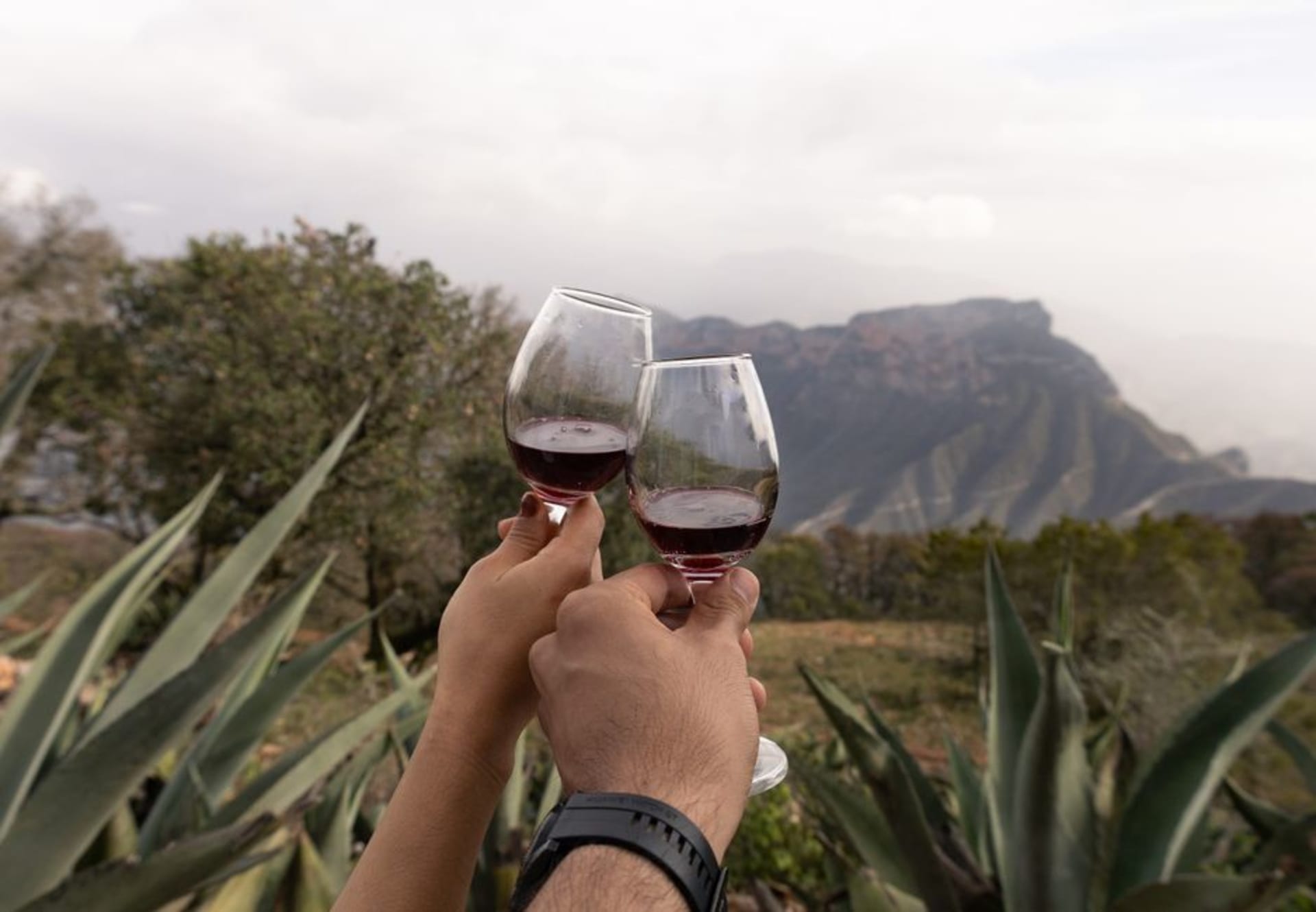
"El Zamorano stands over the whole municipality like a held breath — the highest thing for miles, dark against a sky that goes on forever."
The first thing you notice in Colón is how much sky there is. I’d come out from the city of Querétaro on a whim, following a tip about a young winery, and the moment the road left the last of the suburbs the land just opened — dry golden hills rolling out under an enormous pale sky, and rising over all of it the dark mass of the Cerro El Zamorano, the highest peak in the state. There is a particular feeling to that kind of openness, a loosening in the chest. I drove with the windows down and didn’t put on music. The quiet was the point.
Colón is ranch country, semi-arid and spacious, in the central part of Querétaro where the Bajío’s greener farmland gives way to drier, harder terrain. It has been cattle and agave and hard-scrabble agriculture for a long time. But in the last decade something new has crept into these hills — vineyards, small and ambitious, betting that the altitude and the big temperature swings between day and night make good wine country. They may be right. And in the meantime the whole place remains gloriously, unhurriedly empty.
Under the Zamorano
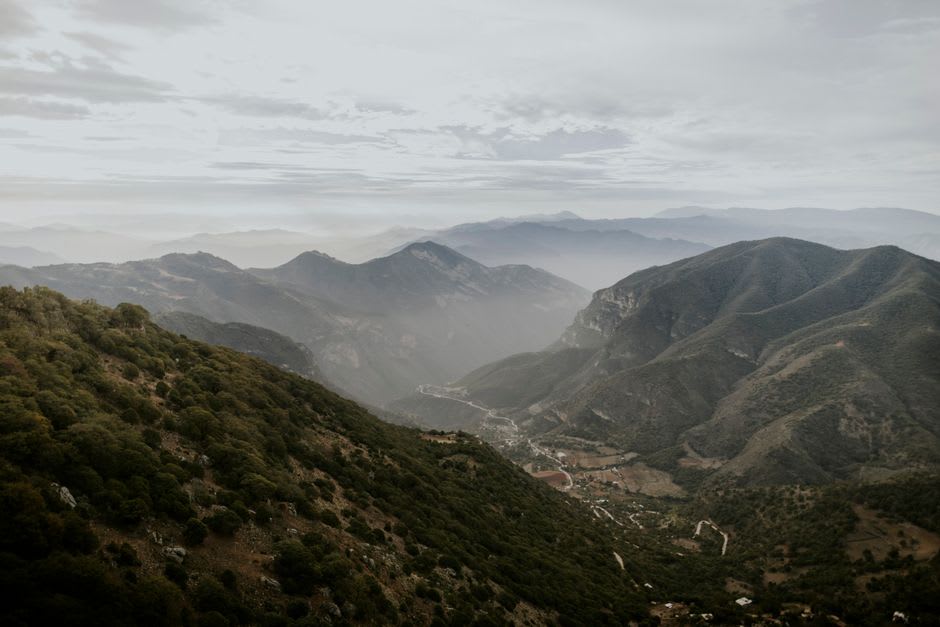
The Cerro El Zamorano dominates everything. At over three thousand meters it’s the roof of Querétaro, straddling the border with Guanajuato, and from the flats of Colón it stands over the horizon like a permanent weather system — often with cloud snagged on its upper slopes even when the lowlands are cloudless. It gives the landscape its bearings. Wherever you are in the municipality, you orient yourself by it.
I pulled off onto a dirt ranch road one afternoon just to sit and look at it. A herd of goats went by, driven by a boy who couldn’t have been twelve, raising a slow line of dust that hung gold in the low light. The mountain went slowly darker as the sun dropped behind me, and the temperature fell fast the way it does in dry high country — you feel the day’s heat lift right off the land. By the time I drove back the first stars were out over the Zamorano, absurdly bright. There’s very little light out here to compete with them.
The Vineyards
Querétaro’s wine scene is young and mostly clustered in this eastern, semi-arid stretch of the state, and Colón has become one of its quiet outposts. The vineyards here are small and often family-run, planted on the dry hillslopes where the thin soil and the wide day-to-night temperature swing concentrate the grapes. It is not Napa and it does not want to be. It’s a scrappier, more experimental thing, and I find that far more interesting.
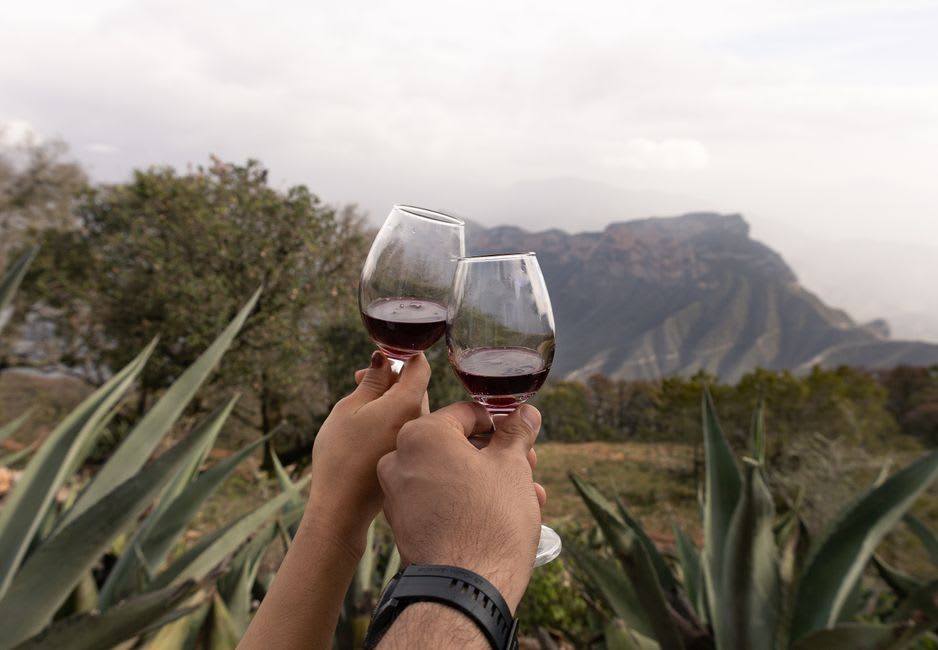
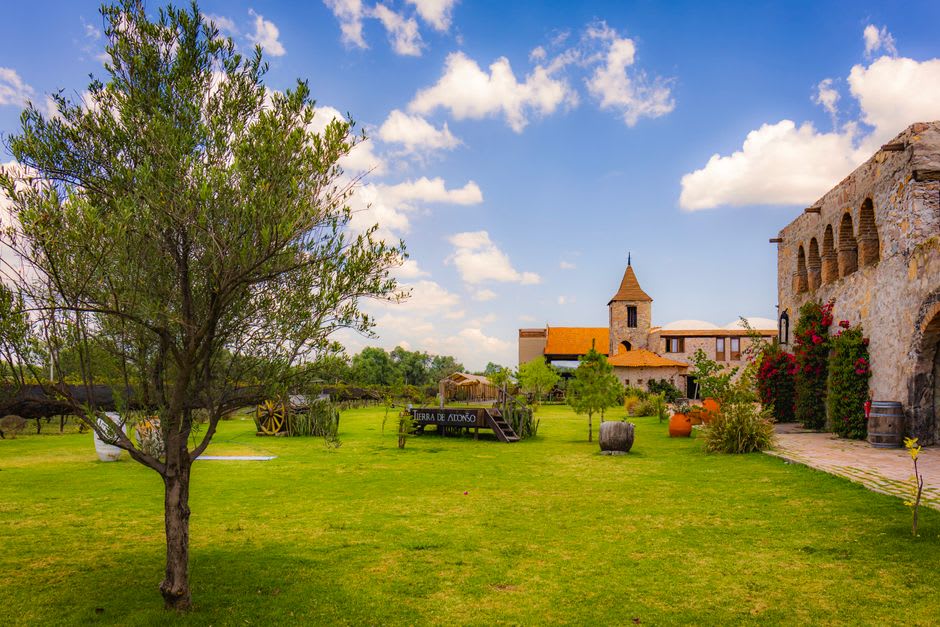
I spent an afternoon at one of them, sitting on a terrace with a glass of a young red while the owner talked about the gamble of planting vines in ranch country — the frost risk, the water, the learning as they went. The wine was honest and a little rough and improving every year, he said, and I believed him. What I remember most, though, is the setting: the rows of vines running off toward the dry hills, the Zamorano on the horizon, and the enormous silence, broken only by the wind and, once, a hawk. You do not come here for polish. You come for space and for the sense of something being built.
The Town and the Ranch Life
The town of Colón itself is small and workaday — a plaza, a church, a few streets that go quiet early. It’s a place that serves the ranches and the surrounding countryside rather than any idea of tourism, and it’s the better for it. I bought gorditas from a woman working a comal off the plaza in the morning and ate them on a bench watching pickup trucks come in from the ranches, men in worn hats and boots doing their errands, unhurried and unbothered by the stranger with the notebook.
This is dry high country and it lives at the pace the land sets. The heat builds slowly through the morning, everything rests in the worst of the afternoon, and the evenings come cool and clear. There’s a satisfaction in a place that isn’t trying to be anything other than what it is: ranch country under a big mountain, with a little wine now growing at the edges of it. I left reluctantly, the way I always leave the open places, already half-planning to come back.
Getting There
Colón lies in central Querétaro, an easy drive of about forty-five minutes to an hour east of the city of Querétaro, which is itself a major hub reachable by bus from Mexico City in around three hours or by air into Querétaro’s airport — which actually sits within the municipality. A car is close to essential here: the vineyards and the ranch country are spread out along dirt and secondary roads, and public transport thins quickly once you leave the town. Come any time of year, though spring and autumn are kindest; bring layers, because the dry-country nights turn cold fast once the sun drops behind the Zamorano.