Amealco
"Six women working at the same table, making things that have been made here for generations. I bought three and couldn't tell you exactly why they mattered."
The drive from Querétaro City south toward Amealco takes you through a landscape that surprises people who know the Bajío as a warm, agricultural plain. The highway climbs into the Sierra Queretana, the vegetation goes from scrub to grassland, and by the time you reach the altiplano above San Juan del Río the world has changed: cold, broad, treeless valleys with a particular quality of light that I associate with high plateaus everywhere — Iceland, inner Spain, the Auvergne — flat and without shadow for much of the day, then suddenly dramatic when the clouds come in.
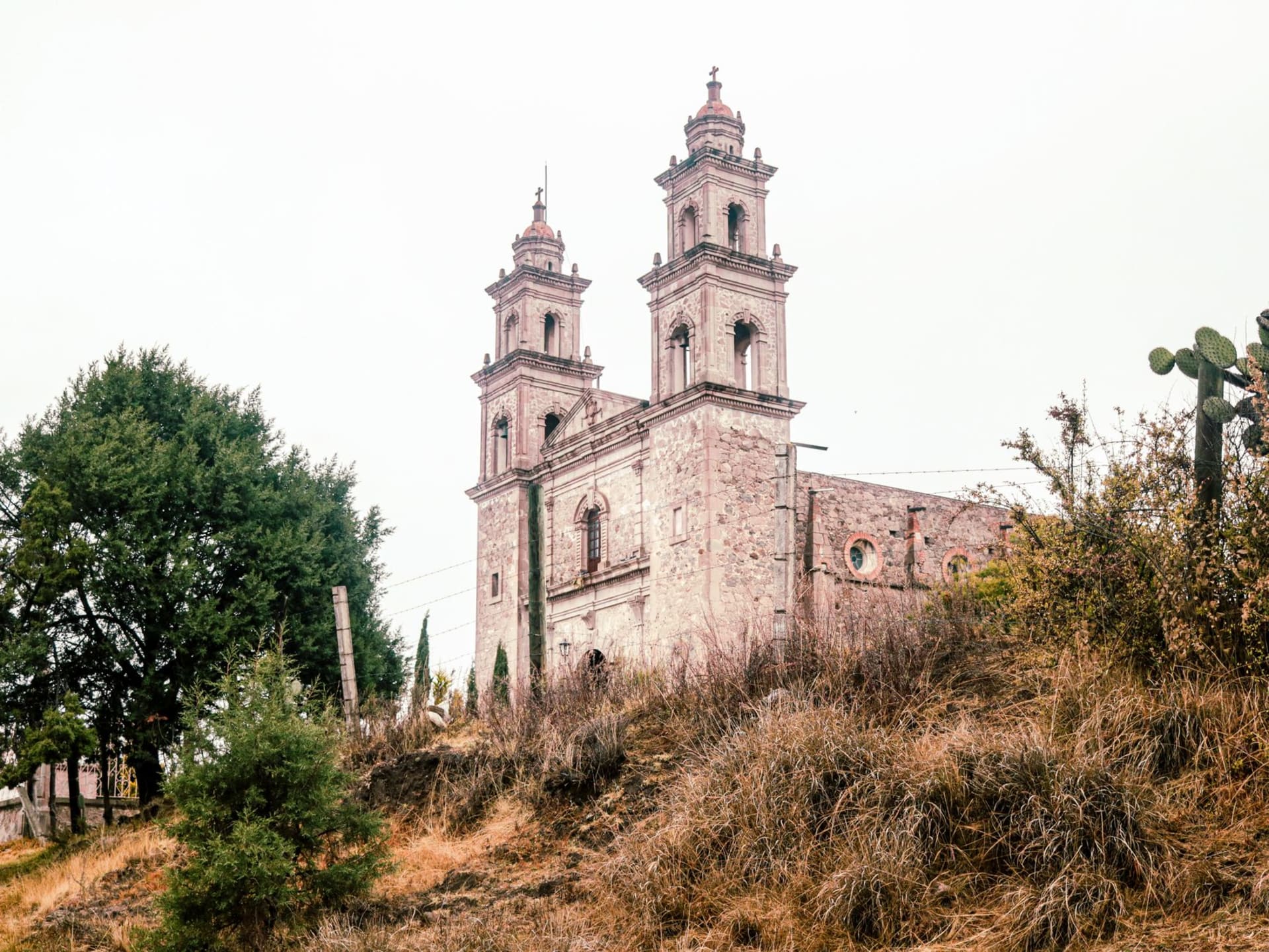
Amealco sits at about 2,500 meters in one of these valleys. It is a municipal seat, meaning it has the infrastructure of administration — a presidencia, a church, a main square — but it doesn’t feel urban in any recognizable way. The population is primarily Otomí, specifically the Hñähñu group who have occupied this highland region for centuries, and the town orients itself more toward its cooperatives and markets than toward any tourist infrastructure. There is no tourist infrastructure. This is not a complaint.
The Muñecas
The muñecas de trapo of Amealco are hand-sewn rag dolls made from fabric scraps and cotton batting, with embroidered features and hair made from wool or synthetic yarn. Describing them this way — as rag dolls, as fabric objects — misses something that I’m not entirely sure how to articulate without sounding absurd.
They are used in festival and devotional contexts in Hñähñu culture. They are not toys in the Western sense, though they have been sold as artesanía long enough that the line has blurred. What I know is that when you hold one, particularly the larger ones dressed in the small replica of the traditional Hñähñu woman’s dress — the quechquémitl, the skirt in specific colors — there is a weight to the object that has nothing to do with the cotton batting inside it. The embroidered face is simple. The expression is somehow specific.
I found the cooperative workshop I’d been told about on a side street off the main plaza. The door was open. Inside, six women were working at a long wooden table, each at a different stage: one cutting fabric, one stuffing, one embroidering a face with a concentration that made me feel I was interrupting something, though she looked up and nodded when I came in without breaking rhythm. Another woman explained the cooperative, the pricing, where the fabric came from. I asked about the significance of the dolls in ceremony. She gave me a patient answer that I could tell was a simplified version of a more complex thing, the answer you give to someone who is interested but doesn’t have the background.

I bought three. A large one in traditional dress. A smaller one with a different color combination that I liked for reasons I couldn’t specify. A third that one of the women pressed on me as a regalo, a gift, small enough to fit in a shirt pocket. She said it was for safe travel. I didn’t argue.
The Landscape
The altiplano around Amealco deserves attention as itself, not just as the setting for the muñecas. The November light on that high grassland has a quality I haven’t found elsewhere in Mexico — thin and direct, the kind of light that doesn’t flatter anything but makes everything visible. The broad valley below the town was brown with the late season grasses, the mountains on the horizon a pale blue-grey, the sky enormous.
France has its own high plateaus — the Massif Central, the Aubrac — and they have a similar quality of exposed, slightly melancholy beauty. The Amealco altiplano felt like that, but with a human settlement that was more legible to me as a way of living in a place: the houses clustered against the wind, the smoke from cooking fires, the presence of livestock on the road with complete indifference to cars.

Getting There
From Querétaro City, the drive is about an hour south on the road toward San Juan del Río and then south again into the sierra. There are local buses, but they run infrequently and the road requires some tolerance for altitude and winding; having a car makes the day much more manageable. The cooperative workshops are on and near the main plaza — there are several, not just one, and they vary slightly in what they produce and how they organize. The market day is Sunday, when more vendors come in from the surrounding communities, and the selection expands. Come warm: Amealco in November is genuinely cold in the mornings and evenings, even if the midday sun is direct.