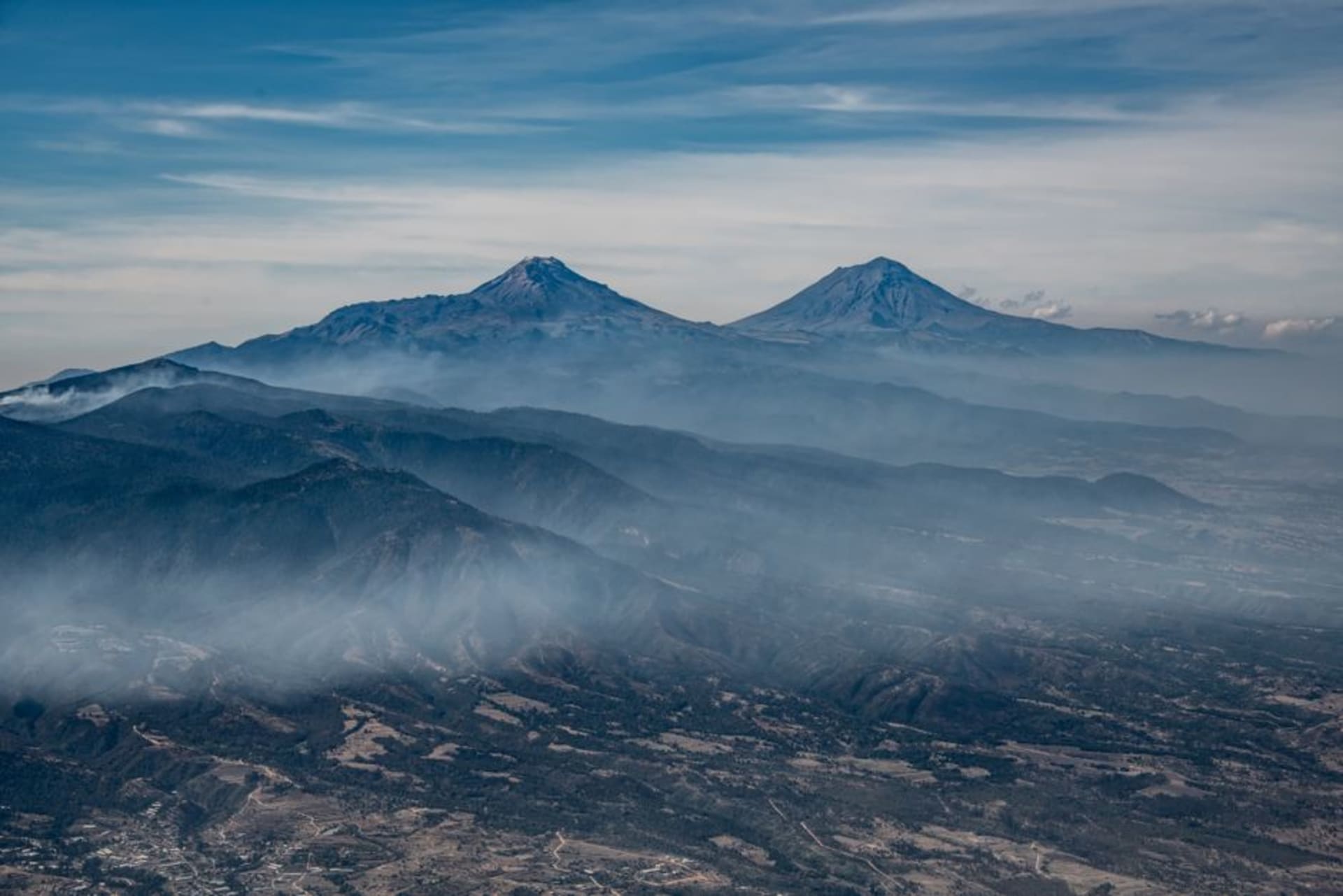
Tochimilco
"I drove up from Atlixco in under an hour and found a town where the main event is a stratovolcano that may or may not be having a difficult week."
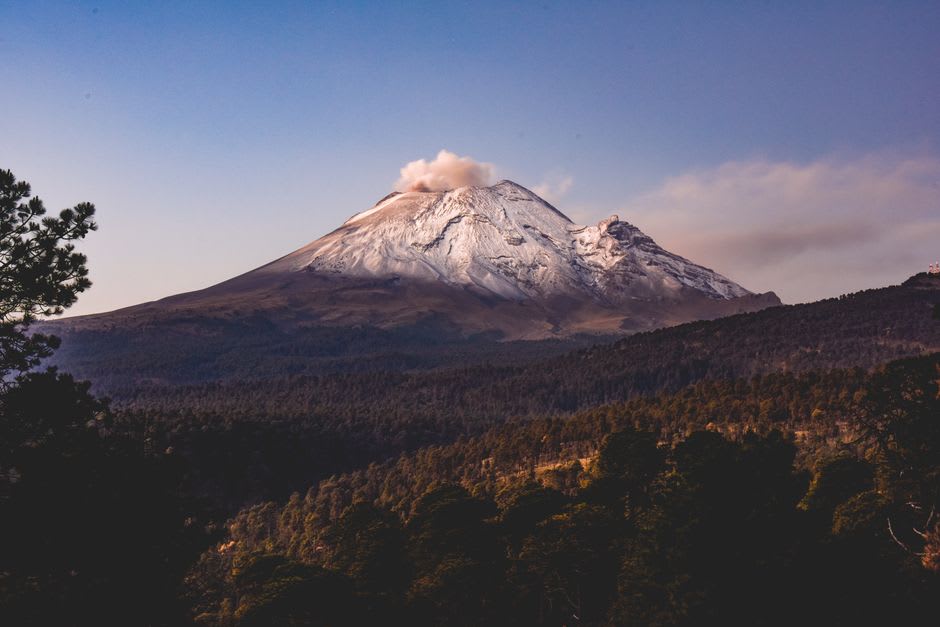
I drove up from Atlixco on a Tuesday in February, the road climbing through fields of nopal and dry milpa until the air thinned and the town appeared — white-washed walls, a wide church atrium, a single taco stand with a propane flame going. Popocatépetl was doing what it does: sitting there, enormous, exhaling a faint plume from the crater. I had expected some version of the Pueblo Mágico formula — the artisan shops, the parking lot with coaches, the municipal signage in cheerful fonts. Tochimilco has none of that. It has the volcano and a very quiet plaza and the particular dignity of a place that has not yet been organized for visitors.
Popocatépetl, from the Plaza
The thing about being this close to an active stratovolcano is that it recalibrates your sense of scale in ways a photograph cannot prepare you for. At 5,426 meters, Popocatépetl is the second-highest peak in Mexico, and from Tochimilco’s main plaza — sitting at around 1,900 meters — the cone appears not as a backdrop but as an immediate presence, occupying the northeastern sky the way a nearby building occupies a narrow street. On the morning I was there it was venting, a thin white column rising from the crater before dispersing in the high-altitude wind. The men I spoke with near the taco stand treated this with the equanimity of people who have watched the mountain smoke their entire lives. CENAPRED, the national volcanic monitoring center, maintains an alert system that runs from green through yellow and red; the upper slopes are gated when conditions require it. Tochimilco sits well below any serious exclusion zone, which is perhaps why nobody seemed interested in checking their phones about it.
The Ex-Convento de Santiago Apóstol
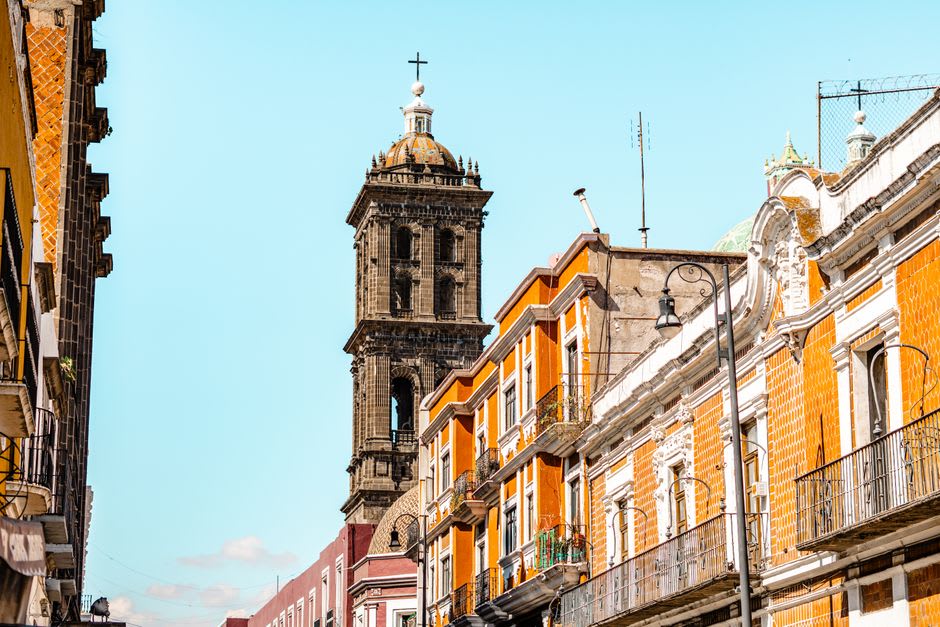
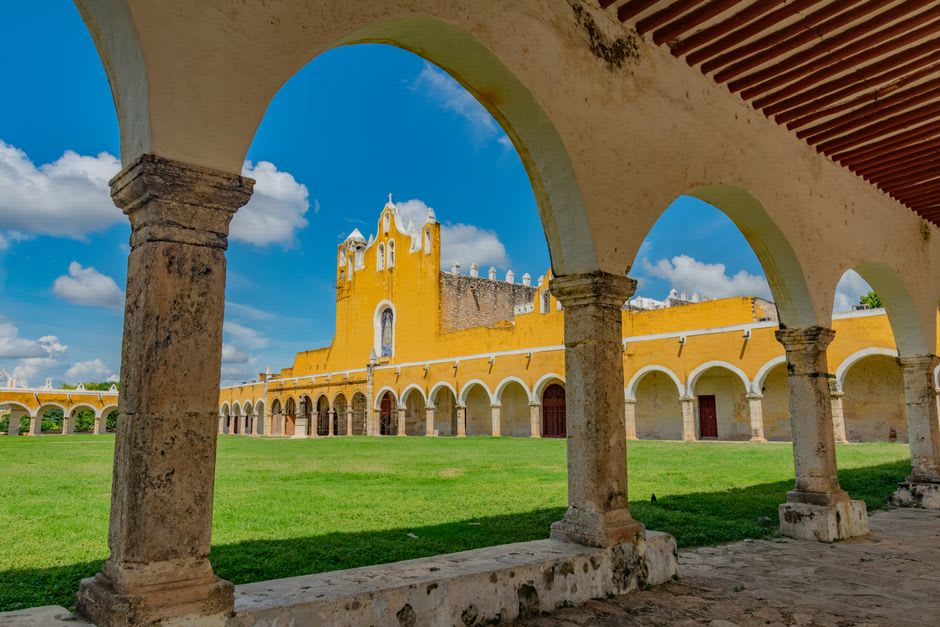
The church is 16th century, Franciscan, and built with the characteristic ambition of missionaries who apparently could not conceive of small. The atrium is enormous — the kind of open stone courtyard that once served as an outdoor nave when indigenous congregations were too large for the interior. Four posa chapels mark the corners, worn and mossy, largely unrestored in the way that suggests not neglect but a different relationship with historical time. I walked through it on a Wednesday morning when there was nobody else present except a woman sweeping dry leaves near the main portal. The interior holds gilded altarpieces in the churrigueresque style — busy, gilded, insistent — but it is the exterior geometry that stays with you: the plain stone facades, the proportions too wide to feel European, the silence of the atrium broken only by wind coming down off the sierra. There is no admission fee. There is no ticket booth. You walk in through a wooden door and the scale surprises you.
What Exists Here
The food options in Tochimilco are not extensive, which is fine because what exists is good. The taco stand operating near the plaza — out of a converted house front, no sign — runs a comal with quesillo and cecina from the Atlixco valley, which is saltier and more complex than the version you get in Puebla City. When I was there in February, there was also a pot of frijoles negros and fresh tortillas made by hand, not pressed. A small market on the main street sells produce, dried anchos and mulatos, and functional handmade goods rather than decorative ones. If you are expecting a restaurant with a menu, bring provisions. If you are expecting a taco with a view of an active volcano and approximately four uninterrupted hours of walking without crossing another tourist, you have come to the right town at the right altitude.
Getting There
The nearest city is Atlixco, roughly 35 kilometers north and itself about 30 minutes from Puebla City by car. From Atlixco the road to Tochimilco climbs for 40 to 50 minutes through increasingly rural terrain; a car is strongly recommended, as bus connections are infrequent and require transfers. October through February gives the sharpest visibility on Popocatépetl — the dry-season light and cooler air keep the summit clear most mornings. Check the CENAPRED alert level before you go; yellow phase is normal and no cause for alarm.