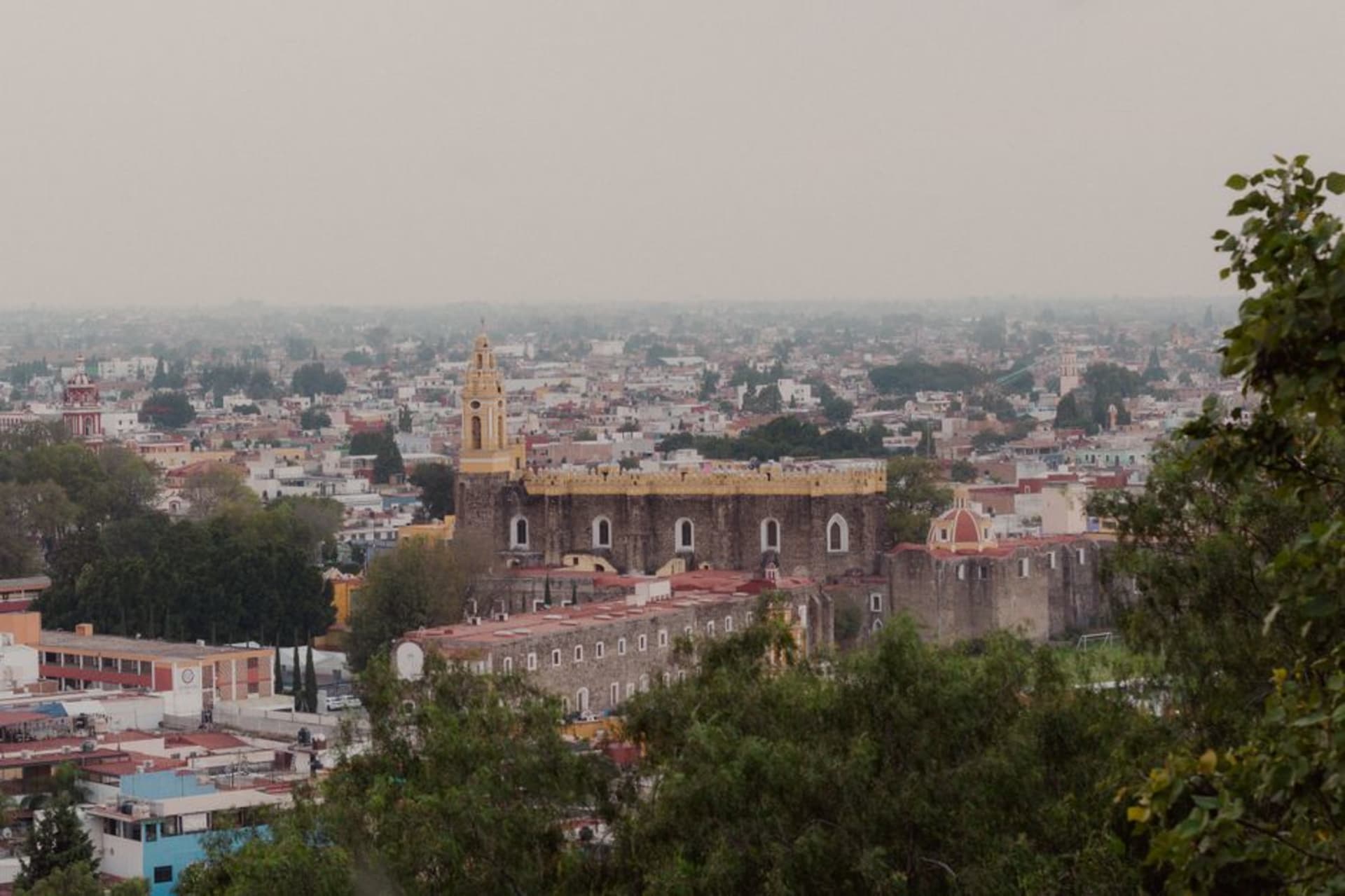
Tepeaca
"I went to buy one thing and left carrying more than I could fit in my bag. Again."
I took a combi from CAPU at seven in the morning and by the time we reached the outskirts of Tepeaca — forty-five minutes east of Puebla city — the road was already thick with trucks and three-wheeled cargo bikes loaded past reasonable limits. A man balanced a pyramid of clay pots on the back of his bicycle. I understood immediately that I had arrived on the right day, at the wrong pace.
The Friday Tianguis
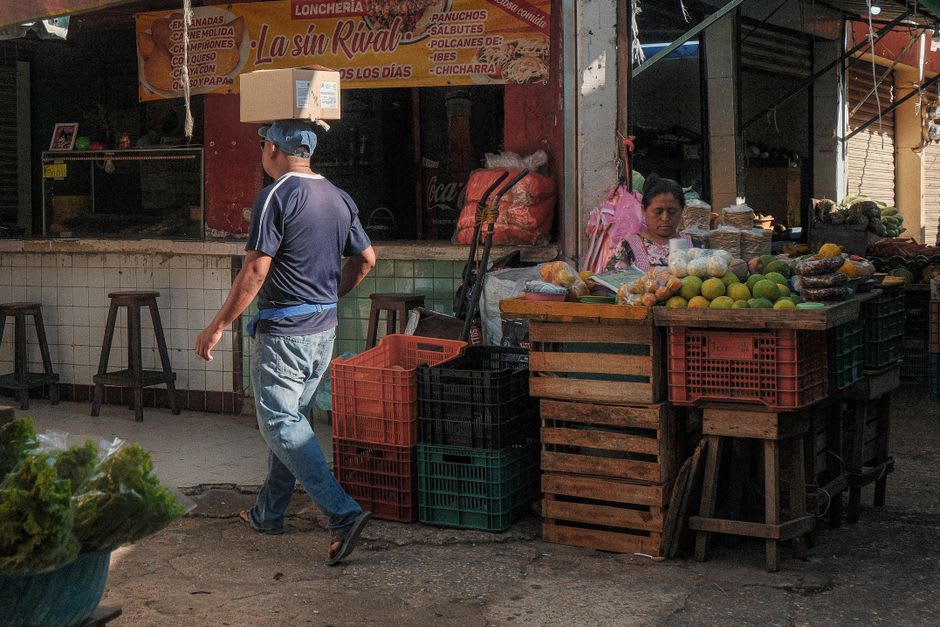
The market does not organize itself around the plaza — it colonizes the entire centro. By eight in the morning, Calle Reforma and the surrounding streets are impassable on foot without turning sideways. Vendors from the Mixteca arrive with dried chiles and mole pastes wrapped in plastic; families from the Sierra Norte bring hand-loomed textiles in the kind of saturated reds that photographs never quite capture. The ceramic section alone — talavera seconds, unglazed barro negro from villages south of here, painted plates from places I had never heard of — could occupy an afternoon.
What strikes me every time is the layering. At the surface level, this is a market where you buy things: huaraches, rope, five kilos of guajillo, a secondhand blender. But the people doing the buying and selling are not performing Puebla for anyone. There are no signs in English. The noise is livestock and bargaining and radio cumbia drifting from a speaker somewhere in the middle distance. The Rollo tower floats at the far end like a punctuation mark, and nobody seems particularly interested in it.
What You Eat Between Stalls
I have now been to Tepeaca three times and eaten the same thing twice: a cecina taco with a green salsa that leans so hard into tomatillo it almost reads as sour, and a memela — a thick oval masa cake — griddled until the edges crisp. Both from the same woman working the back corner of the covered section near Calle Hidalgo. She does not give you a menu. You sit on a plastic stool and she decides what you are having based on what she has left.
The other thing worth finding is the pipián verde — a pumpkin-seed mole served over chicken, drier and less sweet than Oaxacan mole verde, with a particular earthiness I associate with Puebla’s highland cooking. A few small fondas along the market perimeter serve it on Fridays only, made to order. This is not a food market in any curated sense. It is a working market where people also happen to eat, which is, reliably, the better kind.
The Rollo and the Ex-Convento
The Rollo is strange. A cylindrical stone tower from the 16th century, built as part of the colonial justice infrastructure — a place where sentences were announced, and occasionally carried out. It stands at the edge of the market, neither fenced nor explained, and people pass it carrying bags of produce without particularly looking up. I spent about ten minutes in front of it before a vendor asked if I was lost.
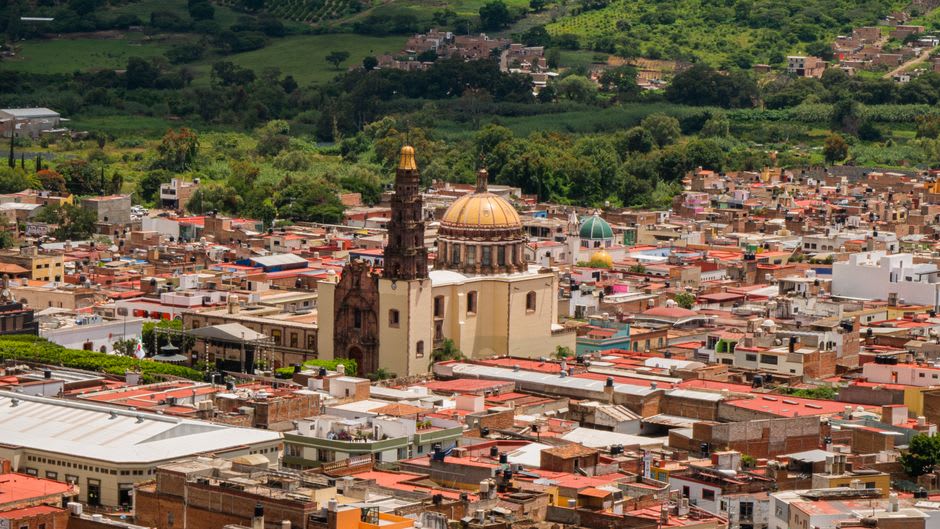
The Franciscan ex-convento behind it is worth twenty minutes of your Friday. The atrium is enormous — these complexes were built for open-air masses in the thousands — and the cloister is cool and quiet in a way the market emphatically is not. The murals in the corridors are faded but legible: saints, scenes, the usual hierarchy of colonial ambition rendered in mineral pigment on lime plaster.
Getting There
Combis to Tepeaca leave from CAPU, Puebla’s main bus terminal, roughly every twenty minutes and cost around 40 pesos. The ride takes forty to fifty minutes depending on traffic. On Fridays, expect delays approaching the centro — drivers will let you out a few blocks early and it is easier to walk in from there. There is no particular reason to visit on any other day.