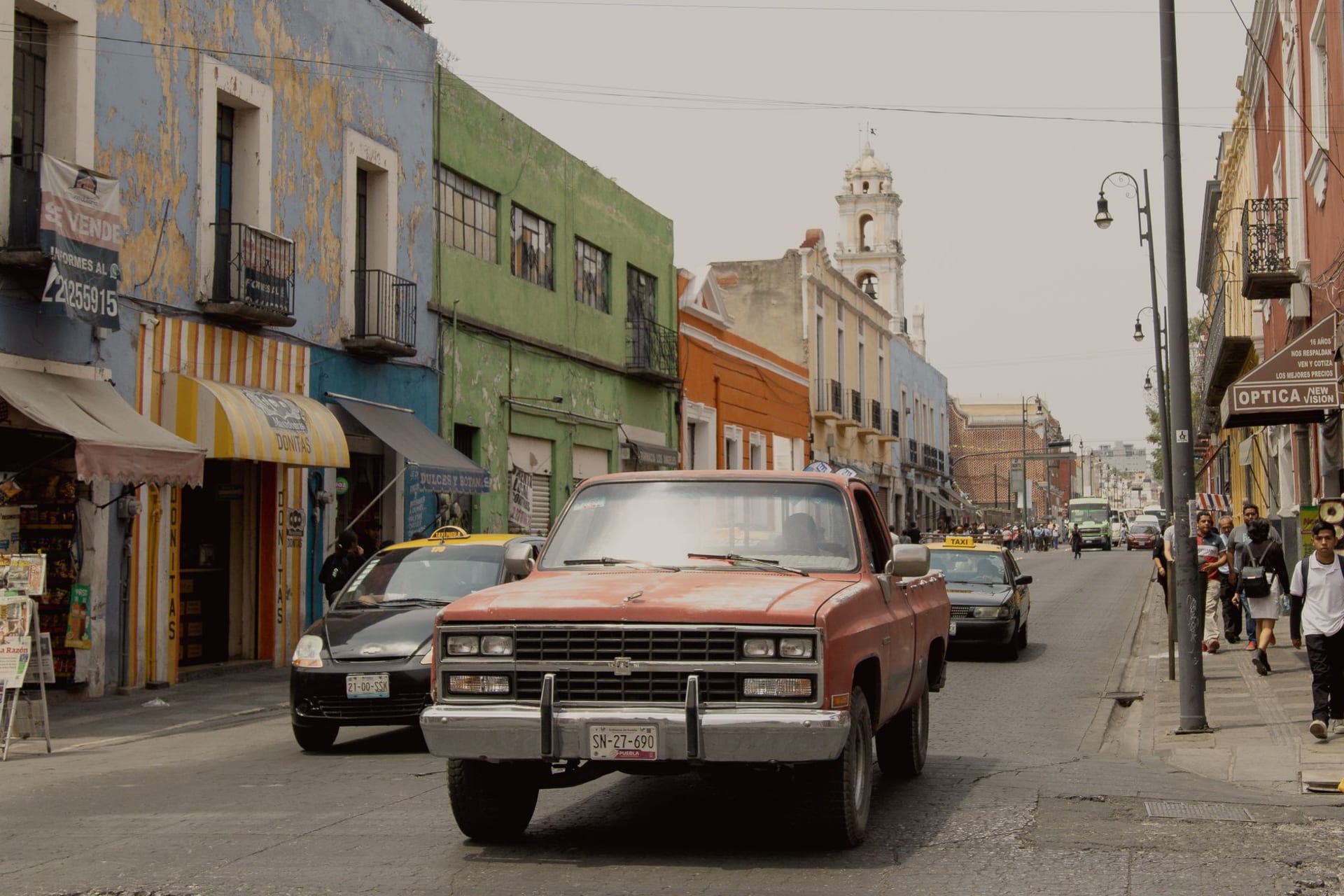
Puebla City
"I came for the mole and stayed for the cemita cart. Forty-five pesos changed my understanding of what a sandwich could be."
Puebla is one of those cities that doesn’t perform for you. It has the fourth-largest cathedral in the Americas, a UNESCO designation, one of the most important culinary traditions in the country — and yet, arriving by bus from Mexico City, it gives you nothing. Just a terminal, a taxi line, and streets that smell of exhaust and fresh-baked bread in equal measure. I remember thinking: this is going to take some work. It didn’t. Within two hours of arriving I had eaten the best chile en nogada of my life and completely revised my expectations.
The Chiles en Nogada Problem
The dish is seasonal. This is the first thing you learn, and the thing most travelers either don’t know or choose to ignore. Chiles en nogada — a poblano pepper stuffed with a mixture of pork, dried fruits, and spices, covered in walnut cream sauce and pomegranate seeds, garnished with parsley — represents the colors of the Mexican flag and is traditionally served for independence season, which in practice means August and September. The pomegranate seeds come fresh. The walnuts in the nogada come fresh. Outside those months you will find it on menus year-round in tourist-facing restaurants, and it will be technically edible, and it will be missing the point entirely.
I was in Puebla in mid-September, which meant I was in luck. The restaurant I’d marked — a place in the centro that an acquaintance had described as “not fancy but serious” — had a chalkboard out front listing that day’s count. Eighty servings. I arrived at 1pm and got the second-to-last table. A waiter carried three plates past me, each one looking like a small still-life painting: the deep green of the pepper, the ivory white of the nogada, the red seeds scattered across the top like a decision made in good taste. Lia took one look and said she was ordering two.
The filling is called picadillo, which sounds modest and is not. It contains pine nuts, raisins, candied citron, plantain, peach — all minced with the pork until the mixture is almost a paste, with spices running through it that are warm and complicated in a way that reminds you this dish comes from a culinary tradition stretching back to the convents of colonial Puebla, where the nuns had centuries and patrons and a sense of occasion to fill. The nogada is made from fresh walnuts, cream cheese, sherry, and a little cinnamon. Together it is the most elaborate single dish I have eaten in Mexico, and also one of the most balanced — nothing dominates. Everything argues and everything concedes.
I went back the next day for a second one.
Talavera, Tiles, and the Barrio del Artista
Puebla’s visual identity is its tiles. Talavera — the tin-glazed ceramic tradition brought from Spain in the sixteenth century, adapted and elaborated over four hundred years — covers buildings here in a way that feels almost competitive. There are facades with entire religious scenes rendered in blue and white. There are kitchen supply shops with floors, walls, and countertops all in different tile patterns that somehow don’t fight each other. The technique involves specific local clays, mineral oxides, and a double-firing process that gives authentic talavera its particular density and luminosity — the kind of blue you see and think: that was made with conviction.
The Barrio del Artista is where you can watch it being made, or at least made in workshops that open their doors. I spent an afternoon wandering between studios, watching a woman applying manganese oxide to an unfired plate with a brush that must have had four hairs in it, the precision required for the geometric borders frankly astonishing. She didn’t look up when I walked in. I stood for five minutes and she drew a perfect repeating diamond border, freehand, around the edge of a thirty-centimeter plate. I bought the finished version three days later when it had been fired, for two hundred pesos, and carried it wrapped in a sweater all the way back to Oaxaca on the bus.
The cathedral on the zócalo is the other visual fact of Puebla. It took nearly a century to build, completed in 1649, and its façade is a textbook of Baroque excess executed at the highest level — except that standing in front of it, excess doesn’t feel like the right word. It’s more that every surface has been considered, layered, argued over across generations of architects and stonecutters and patrons arguing with their own mortality. The interior has a ceiling height that makes you feel immediately smaller, which I suspect was the intention. I sat in a pew for twenty minutes doing nothing, which is not something I do often.
The Cemita Cart
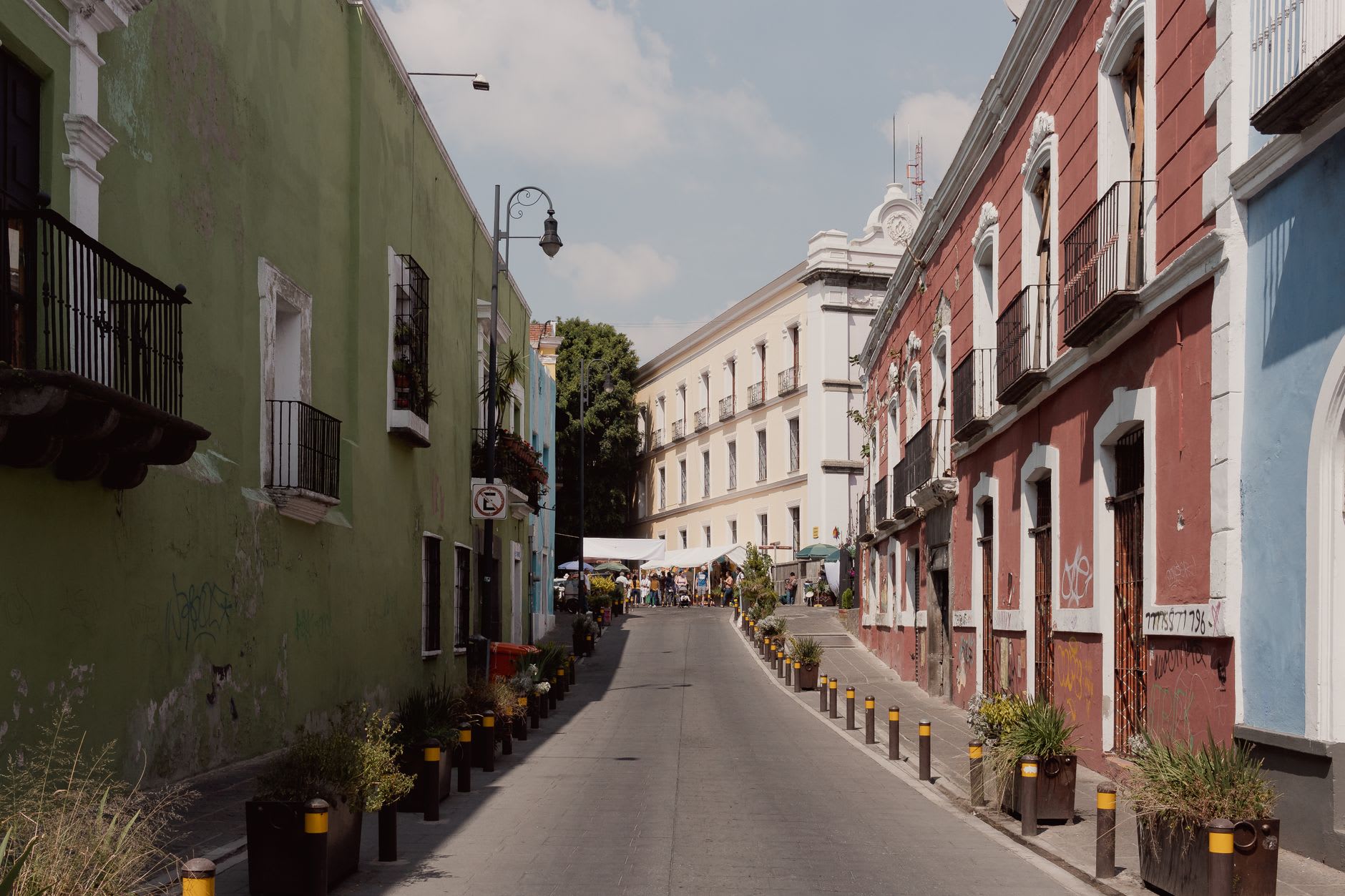
I found the cart on my second morning, on a side street two blocks from the market. A man with a griddle and a small pile of sesame-seeded rolls — the specific bread of the cemita, not bolillo, not telera, something softer and richer — was assembling sandwiches with the efficiency of someone who has been doing exactly this for thirty years. Which he probably has.
The cemita poblana contains milanesa (breaded meat, in this case pork), Oaxacan string cheese, avocado, chipotle, papalo, and pickled chipotles. The papalo is an herb that tastes like a more aggressive cilantro with a petroleum edge that sounds terrible and is completely addictive. The roll absorbs the fat from the milanesa and the oils from the avocado and becomes something different from what it was before the filling went in — structural but soft, with the sesame seeds providing a slight sweetness against the smoke of the chipotle. Forty-five pesos. The same combination in a restaurant with tablecloths costs two hundred and fifty and is objectively worse.
I ate it standing at the cart, watching the street. A truck delivering crates of avocados. A woman arguing on the phone while simultaneously directing a delivery man with hand signals. A dog sleeping in a patch of sun that moved three inches over the course of my entire cemita. Puebla’s ordinary life, which is what you want once you’ve eaten your fill of the extraordinary dishes.
The market scene worth knowing: the Mercado El Alto, on the north side of the centro, is where the serious food shopping happens. This is not a market designed for visitors. The aisles are narrow, the vendors do not reorient toward you, and if you ask for something in the wrong Spanish, you will be gently ignored until you correct yourself. I spent an hour in the chile section alone, trying to distinguish between the ancho, the mulato, the pasilla, and the various states of dryness that each one can occupy. The woman running the stall eventually handed me a small cellophane bag of each, labeled in her handwriting, for forty pesos total.
One thing nobody told me before I came: Puebla has a tunnel system beneath the centro — kilometers of colonial-era tunnels used for defense, transit, and contraband over the centuries. You can visit part of them through a small museum entrance on the main square. I went on a Wednesday afternoon when it was quiet and walked through lit passageways that felt like being inside the city’s other history, the one that happened underground while the cathedral was being argued about above. The tunnels are cool and slightly damp and the lighting is orange and it takes about forty minutes to walk the accessible section and costs forty pesos and almost nobody goes, which is reason enough.
Practical Notes
Puebla is two hours from Mexico City by bus — ADO runs frequently from TAPO and is reliable. The centro is walkable; most of what matters is within twenty minutes on foot from the zócalo. September is the ideal month for chiles en nogada and also for the Feria de Puebla crowds, which means book accommodation early.
The talavera workshops in the Barrio del Artista are generally open Tuesday through Saturday, 10am to 6pm. The Uriarte Talavera workshop, founded 1824, offers guided explanations of the full production process if you want context for what you’re watching. The best cemita carts are on Calle 18 Poniente and around the Mercado El Alto — before noon, since they sell out. For the cathedral: arrive early to avoid school groups, and ask at the gift shop about access to the sacristy, which contains colonial paintings that most people miss.