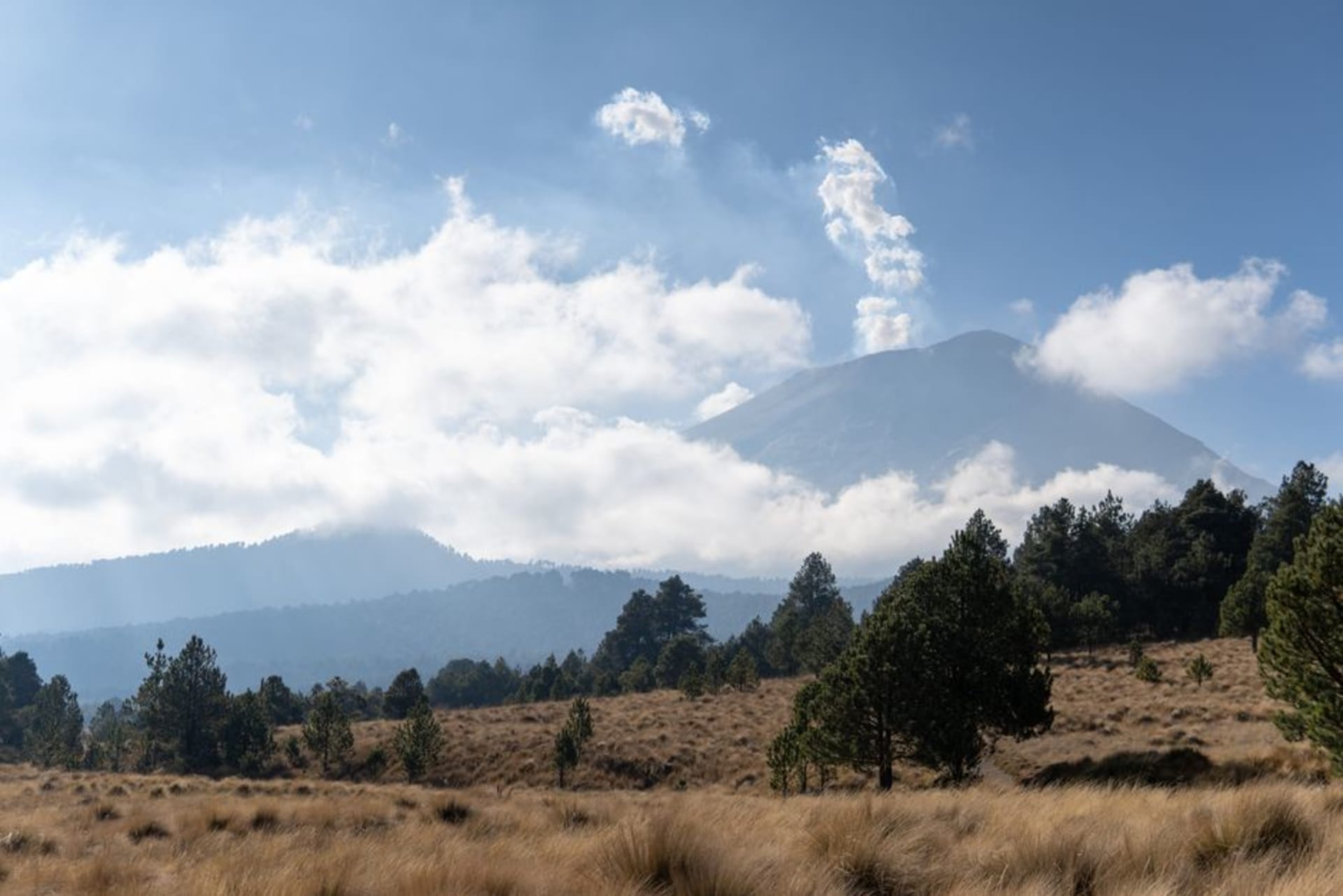
A town on the high, wind-scoured volcanic plains of northeastern Puebla — the Llanos de San Juan — spread out under distant volcanoes. Cold, open ranching and farming country, a former stop on the old royal road, with wide horizons, big weather, and none of the polish that draws crowds. Real, unhurried, and mostly overlooked.
Libres arrives the way towns do out on the high plains — as a low line on an enormous horizon, growing slowly as you cross the flat golden distance toward it. I drove out here across the Llanos de San Juan on a day when the wind never let up, the whole sky in motion, distant volcanoes standing pale and clean on the rim of the world. There’s a bareness to this country that some people find bleak and I find bracing: no folds to hide in, no shade to speak of, just the plain and the sky and the wind working across both. The town itself is unglamorous and honest, a ranching-and-farming place on the old royal road, and it wears its lack of polish like a plain coat it’s never thought to apologize for.
The Llanos and the Distant Volcanoes
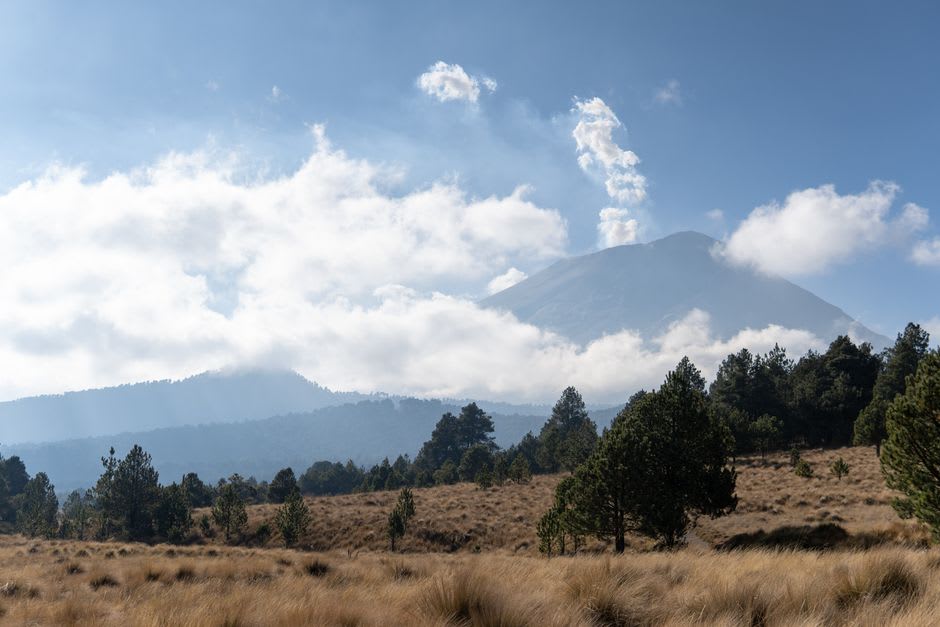
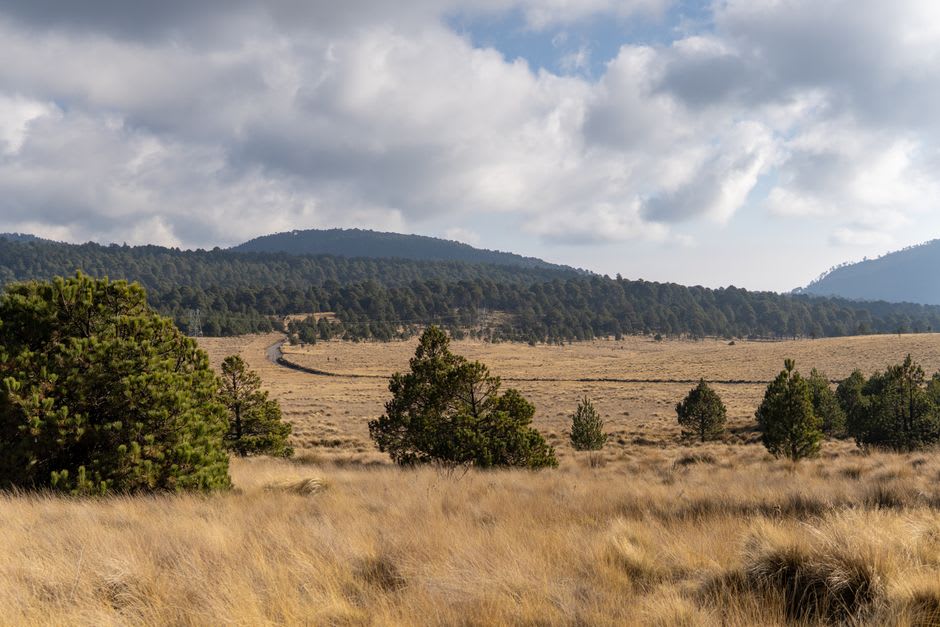
The Llanos de San Juan are high, flat, and exposed — volcanic plains lifted well above two thousand meters, cold at night, scoured by a wind that seems to come from everywhere at once. It’s farm and ranch country, the golden fields running out to horizons broken only by the far-off cones of volcanoes standing on the edge of sight. I pulled over on the plain outside town just to stand in it, and the wind took my voice and the space swallowed the car and I felt, pleasantly, very small. This is not pretty country in the postcard sense. It’s something better and harder to sell: vast, austere, weather-hammered, the kind of landscape that makes you understand why the people who live in it are unsentimental. The beauty is all in the scale and the light and the enormous restless sky.
A Stop on the Old Road
Libres owes its existence to movement — a stop on the old royal road that ran across these plains, one of the places where travelers and goods and animals broke their journey on the high open route. You can feel that history in the town’s plain functional shape, a working place rather than a showpiece, laid out to serve the road and the ranches around it. I walked the streets in the late morning with the wind pushing me along, past hardware stores and feed shops and a plain church, past pickups loaded for the fields. There’s no boutique anything here, no restored facade angling for a photograph. The town gets on with the business of being a town for the people who actually need it — and there’s a dignity in that which the polished pueblos mágicos, for all their charm, sometimes trade away.
Big Weather, Cold Nights
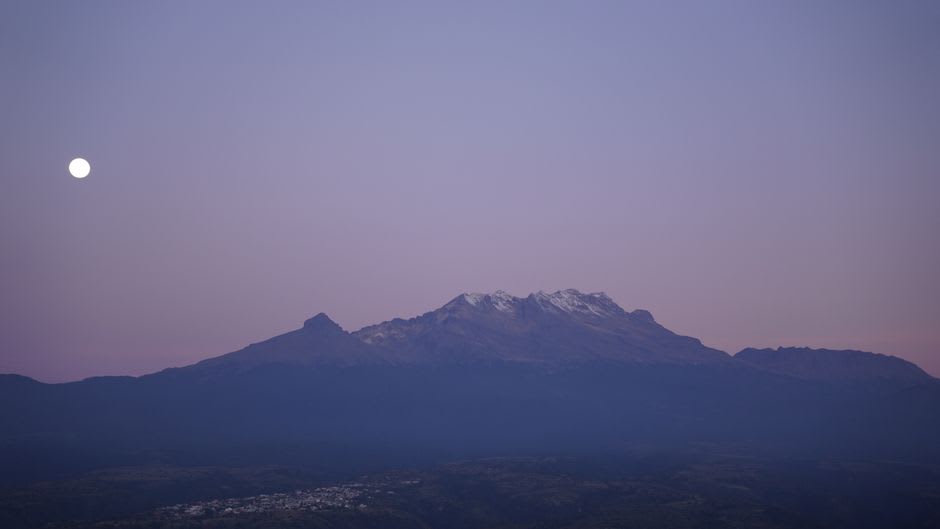
What I’ll remember most about Libres is the weather, because out on plains this open the weather is the main event. I watched a wall of cloud build over the distant volcanoes in the afternoon and drag its shadow across the whole plain, the light shifting from gold to slate to gold again in the space of an hour, the wind rising ahead of it. When the sun dropped the cold came in fast and hard the way it does at altitude, and by evening I was glad of every layer I had. There’s something clean about a place where the sky is this present, where you’re never allowed to forget you’re a small warm thing under an enormous cold one. I stood outside longer than was comfortable just to watch the last light go off the volcanoes, and then went in from the wind, unpolished and content.
Getting There
Libres lies on the high plains of northeastern Puebla, roughly an hour and a half to two hours from the city of Puebla by good highway out across the Llanos de San Juan, and it sits on the natural road toward the highlands beyond, including the long climb up to Ixtacamaxtitlán. There’s regular bus service from Puebla, which makes it more reachable than much of this region — but a car lets you get out onto the plains themselves, where the real spectacle is. Whatever the season, pack warm layers and expect wind: this is high, open, cold-nighted country, and it does not pretend otherwise.
Keep exploring
More of Puebla