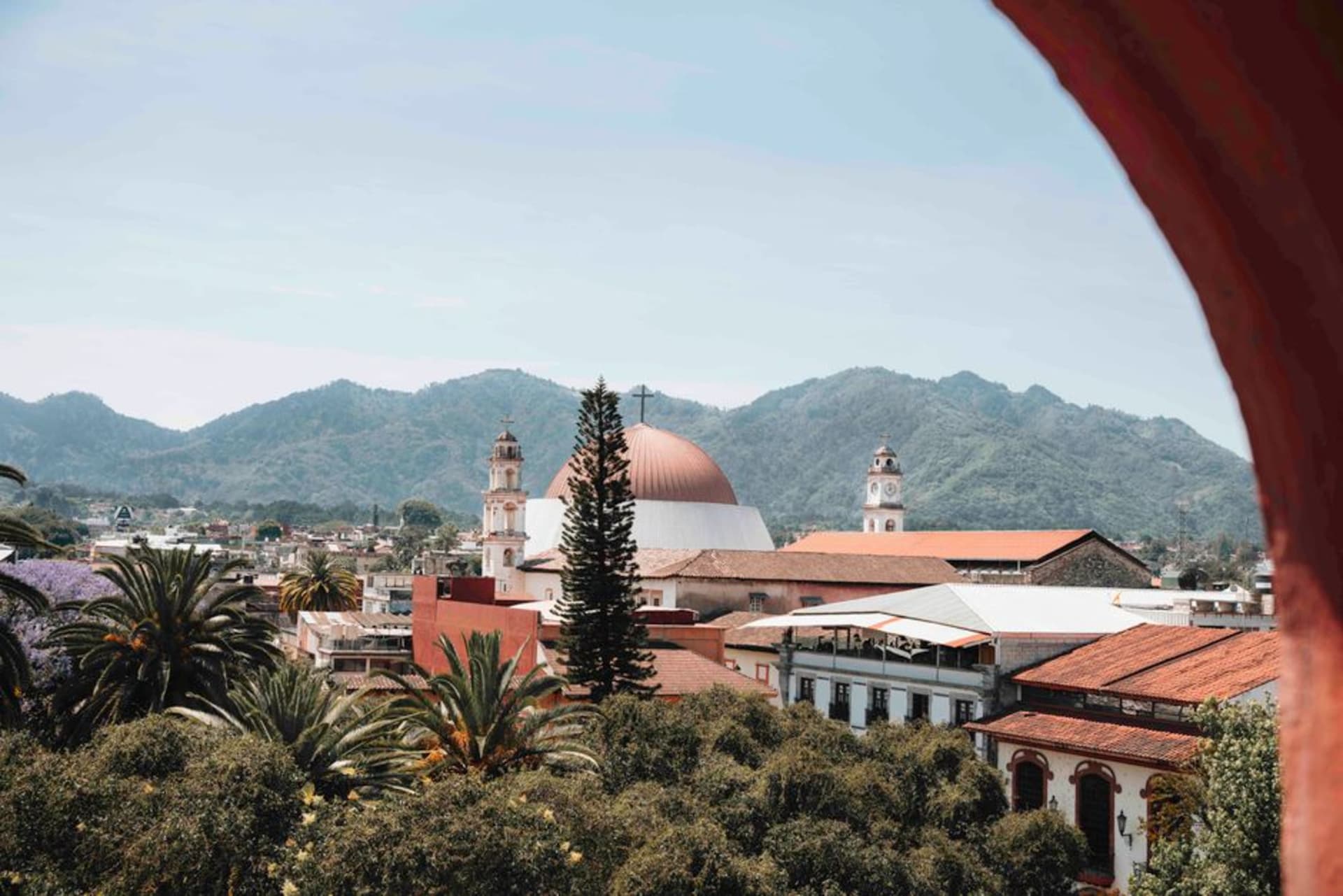
Huauchinango
"I arrived out of season and still found the whole hillside planted with flowers that had nowhere to go but bloom."
I came to Huauchinango on a Tuesday in November — nowhere near the March feria, no particular plan — and stepped off the bus from Tulancingo into air that smelled of wet earth and carnations. The town sits at around 1,800 metres on the Sierra Norte, and you feel that altitude immediately: the light is softer than on the coast, the afternoons close in early, and the vendors in the Mercado Municipal sell hooded sweaters alongside the mangoes. I had coffee at a metal table just off the plaza and watched a man wheel past a cart loaded with chrysanthemums so densely packed they barely cleared the doorways he navigated.
The Flower Economy
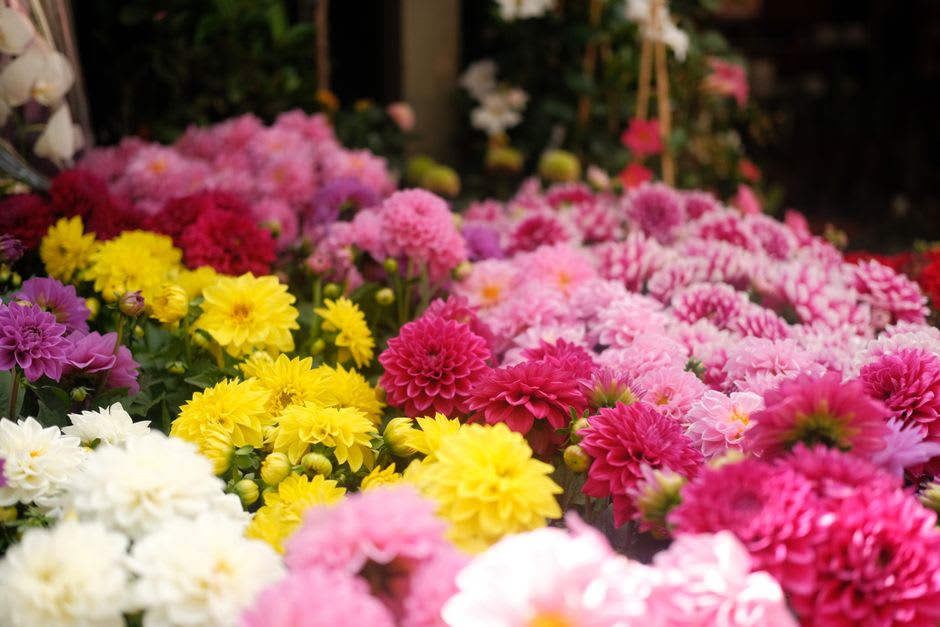
The thing nobody tells you about Huauchinango is that the Feria de la Flor is not really an event so much as the one week when everything that is always true becomes impossible to ignore. The rest of the year the nurseries are still there — spread across the hillsides on the road toward Xicotepec, running down slope behind family houses, piled in the back of pickup trucks outside the municipal market. Huauchinango supplies cut flowers to Puebla, Mexico City, and beyond, and you cannot walk ten minutes from the centro without coming across some patch of land given over entirely to gladioli or gerberas or the enormous dahlias that are the official symbol of the feria. I spent an afternoon walking the Camino a Las Huertas, a rough track above the town, watching a woman dead-head roses with the focused indifference of someone doing a job she has done ten thousand times. The hills were the green of somewhere that actually gets rain.
Cloud Forest and Trout
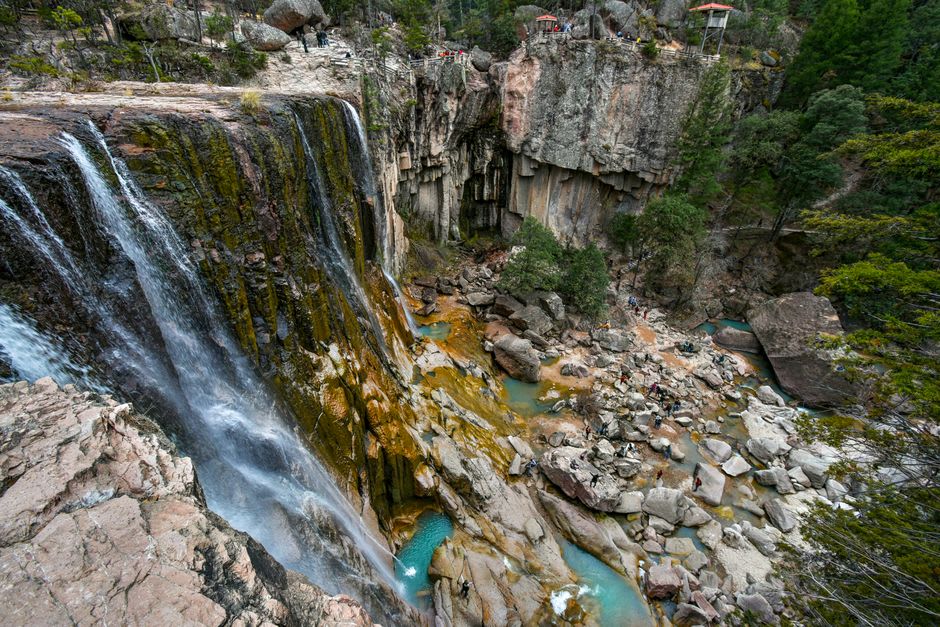
Below the town the land drops toward the Río Necaxa, and along the banks you find a string of trout farms that have been there long enough to feel like infrastructure. At one of them — a concrete terrace with plastic chairs above a series of ponds strung into the hillside — I ordered trucha al ajillo and ate it while watching the fish in the holding pool turn slow circles in the green-lit water. The Sierra Norte is cloud-forest country: humid, mossy, occasionally wrapped in fog that moves through fast and leaves everything beaded. The Cascada de la Diosa is a short drive and a short walk from town, and on a weekday morning I had it entirely to myself. The waterfall drops into a basin the colour of dark jade. I stood there longer than strictly necessary.
The Plaza in Off-Season
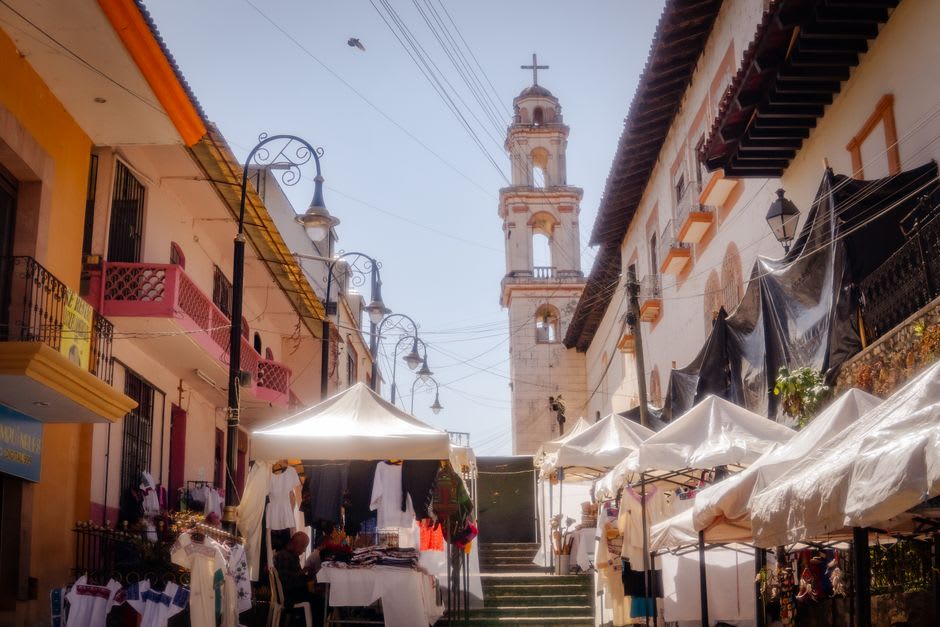
The plaza outside the Parroquia de San Juan Bautista is where the feria happens, and in November it is simply a plaza: old men on benches, a taco stand that opens around seven, pigeons working the churchyard stones. The church itself is worth ten minutes — whitewashed, colonial, the interior dark and cool in the way colonial interiors always manage. Around the square a few fondas serve caldo de hongos and enchiladas with salsa verde so sharp it makes your eyes water briefly. I ate dinner at Fonda La Sierra two nights in a row without any particular regret.
Getting There
ADO and AU run direct buses from TAPO in Mexico City — roughly three hours. From Puebla city the journey takes two and a half hours via Tulancingo or direct through the mountains on a route that is slower but considerably more dramatic. There is no reason to arrive by anything other than bus; the roads into the Sierra Norte are narrow and the trucks on them are confident.