
Chignahuapan
"I arrived expecting a craft town and found instead a lake lit by a thousand lanterns floating for the dead."
I came for the glass spheres. Every November, the road into Chignahuapan fills with trucks loaded with esferas bound for Christmas markets across Mexico — hand-blown, hand-painted, made in workshops that have been running since the 1960s. That was reason enough to make the two-hour drive from Puebla. What I did not expect was to spend that first evening standing at the edge of the thermal lagoon watching a thousand paper lanterns drift slowly across dark water while a brass band played somewhere behind me in the cold.
La Noche de las Ánimas
The Festival de las Animas happens in the final days of October and the first days of November, built around a ritual particular to this lake: globos de papel — large paper lanterns in white and amber — are lit from the shore and released to drift across the Laguna de Chignahuapan. The thermal water is dark and still enough that each lantern doubles itself in reflection, so you are watching two lights at once, one above the surface and one below. The town fills for this. Families arrive from Puebla city and beyond; the embankment gets crowded enough that finding a good position requires arriving before sunset. I got there at dusk and still had to negotiate my way to the railing. The cold at 2,800 meters is genuine — bring a real jacket, not the light layer you might carry in October at lower elevations. The music, the incense, the slow drift of light: it is one of those nights that is hard to describe without sounding like you are overselling it, so I will just say it was exactly what it looked like.
Esferas and the Workshop District
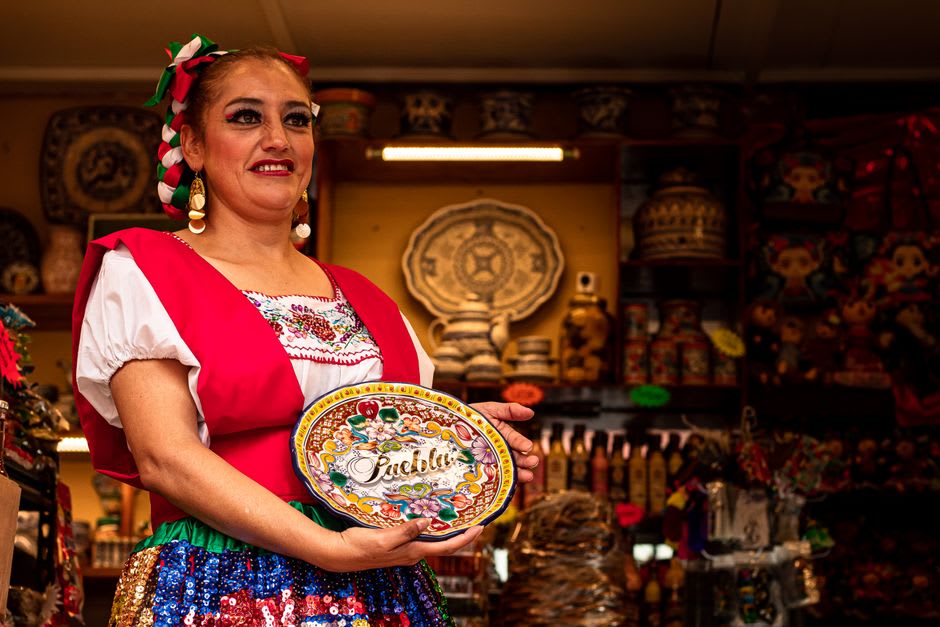
The glass sphere trade is not just decoration — it is the town’s economy, and if you arrive outside November, it is the main reason to come. Chignahuapan produces something like 60 percent of Mexico’s artisanal Christmas ornaments, most of them made in family workshops clustered in the barrios north of the zócalo. The Mercado de Artesanías on Calle Reforma sells finished pieces in every scale, but the more interesting thing is to walk into one of the talleres and watch someone actually work a glass tube over a gas flame. Most workshops near Barrio de la Luz let you in during working hours if you ask politely. The color work — esmaltado, the hand-painting done after the glass cools — is faster and more precise than it has any right to be. Before leaving the market, eat at one of the comedores on the north side: a bowl of caldo de hongos with blue corn tortillas, served at a table where someone else’s grandmother is arguing about the price of mushrooms.
The Lagoon Without the Festival
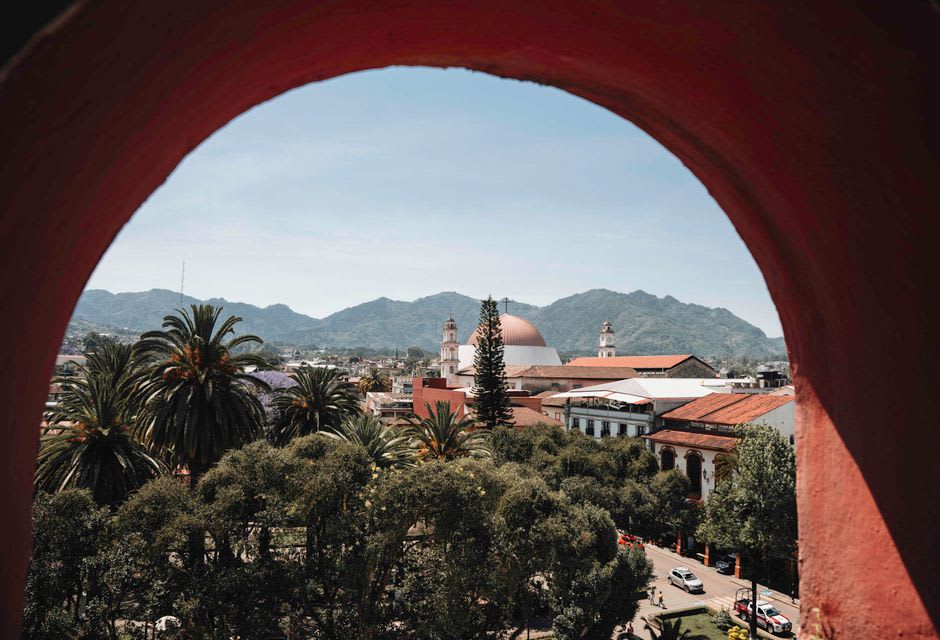
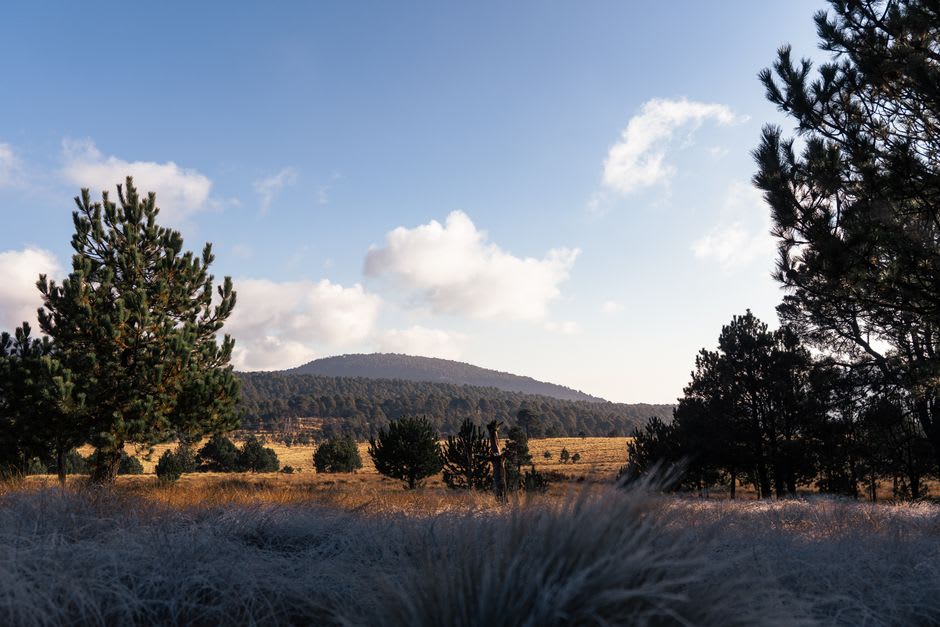
The Laguna de Chignahuapan is fed by thermal springs and stays warm year-round — a fact that becomes more interesting the colder the highland air gets. Several balnearios ring the shore; the Complejo Ecoturístico on the eastern bank lets you swim in a pool drawing from the same thermal source that hosts the lantern festival. The water holds around 30°C even in January. On a weekday morning in any non-festival month, the lake is nearly empty: a few families, a couple of rowboats for hire, and the pine forest closing in on three sides. I spent a morning on the water and found it genuinely restorative in a way that does not require any additional adjectives.
Getting There
Chignahuapan sits about 130 kilometers north of Puebla city — roughly two hours by car via Federal Highway 119, or two and a half by the direct ADO bus from CAPU terminal. The Festival de las Animas runs October 31 to November 2; arrive the evening of November 1 for the lantern release. Year-round, the town works as a day trip from Puebla, though staying one night lets you catch the lagoon at dawn before anyone else arrives.