Zaachila
"You descend a ladder into a room that is a thousand years old and find an owl-headed god waiting in the dark."
Zaachila is not on most lists. It does not have a world-class archaeological site, it does not have a famous craft tradition (though the mole negro sold from the Thursday market is worth traveling for), and it is not particularly scenic by the high standard the Oaxaca valley sets for scenery. What it has is Thursday, and the tombs, and the specific character of a Zapotec town that functions as the agricultural and social center of a valley without asking for outside attention.
Sixteen kilometers south of Oaxaca on the road toward Cuilapam, Zaachila was one of the last capitals of the Zapotec civilization — the city where the Zapotec ruling dynasty relocated after the decline of Monte Albán in the post-Classic period, and where the ruling class was buried in carved stone tombs until the Spanish arrival. The town was named for the Zapotec ruler Zaachila I, and the archaeological site that occupies the main hill above the market was the royal ceremonial center of those last Zapotec rulers.
I discovered Zaachila the way I discover most things in the Oaxaca valley: by missing my intended stop on the colectivo and ending up somewhere I had not planned to be. It was a Thursday, which turned out to be the most important detail.
The Tombs
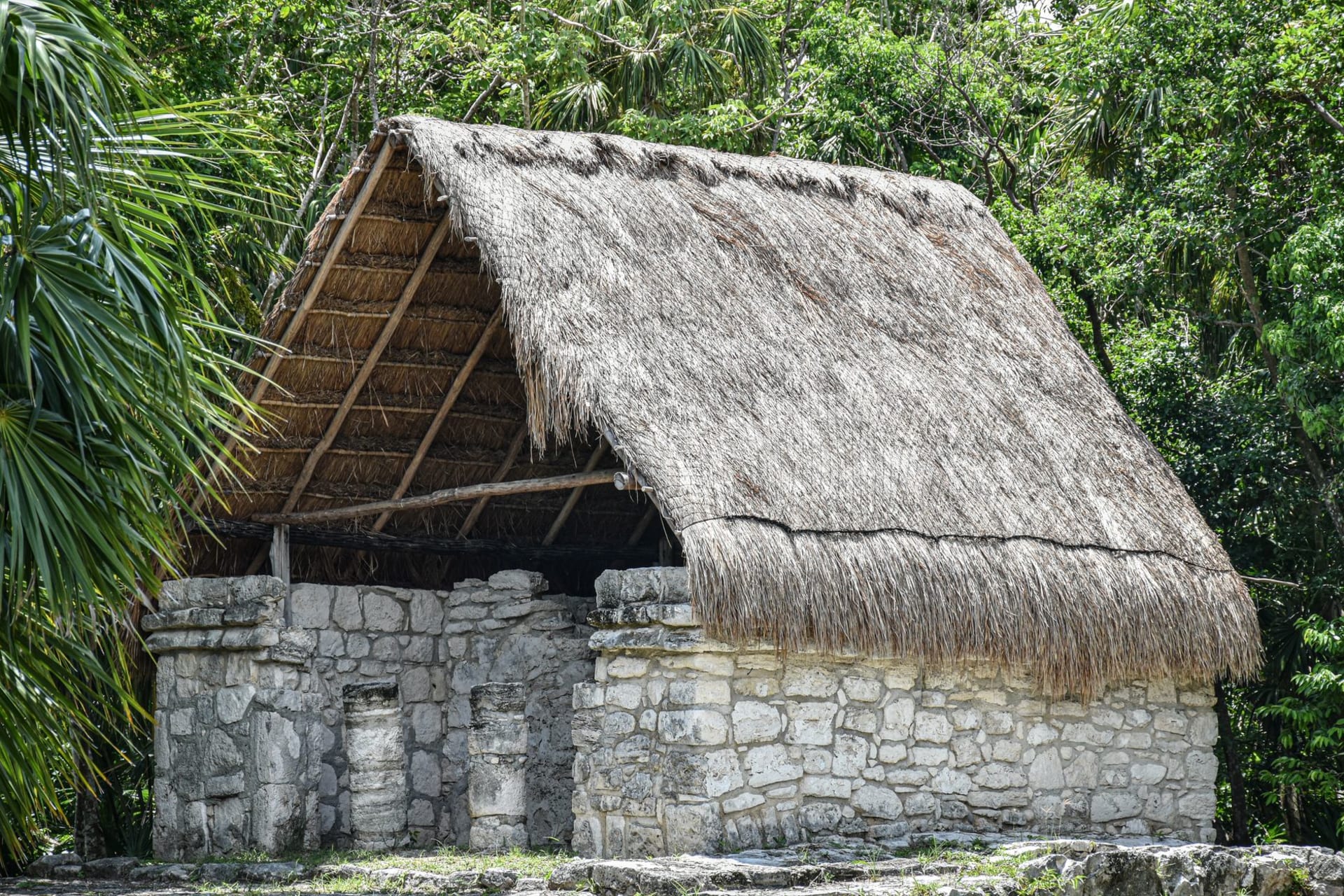
The archaeological zone at Zaachila is small by the standards of Monte Albán or Mitla — a hilltop with several excavated mounds and two accessible royal tombs beneath the main platform. The setting is pleasant in the low-key way of sites that have not been extensively developed for visitors: a caretaker at the entrance, a path through dry grass, a few explanatory signs in Spanish that assume a baseline of knowledge you may or may not have.
The tombs are the point. To reach them, you descend a narrow vertical ladder of perhaps three meters into an underground antechamber, then pass through a low doorway into the tomb proper. The ceiling is low enough to require a stoop. The walls are carved.
The carved figures in Tomb 1 are among the most striking in Zapotec mortuary art: owl-headed figures with human bodies — the owl deity Pitao Pezalao, lord of the underworld in Zapotec cosmology — facing the tomb’s threshold with the patient attention of guardians who have been at their post for approximately a thousand years. The figures are in good preservation. The detail of the carving — the feathered bodies, the specific angle of the heads, the objects held in the figures’ hands — is legible at close range in a way that rewards careful looking.
The darkness of the tomb is significant. The caretaker supplies a flashlight if you don’t have one, but the light it provides is narrow and makes the figures appear and disappear as you move the beam. At one point I stood still in the dark for a moment and let the flashlight rest, and the complete absence of light in a space carved by hand a thousand years ago for a purpose involving the dead produced a quality of attention I had not been expecting. Lia said later that it was the most gothic she had felt in Mexico, and she meant this as a compliment.
Above the tombs, on the platform surface, there are carved stone figures and architectural fragments in varying states of preservation. The site gives little of its original extent away — the town of Zaachila has grown around and over the archaeological zone, and the full extent of the pre-Hispanic settlement is buried beneath the market and the streets and the church, in the way so many Mexican sites are buried: not abandoned and preserved but absorbed and built upon, which is a different kind of continuity.
The Thursday Market
The market at Zaachila on Thursdays is the thing I did not plan to find and returned for specifically. It is a true regional market — the provisioning event for the southern valley communities — with the same logic and density as the Tlacolula Sunday market but smaller and, somehow, even less oriented toward outside visitors. I am sometimes the only non-Oaxacan person there. This is not a problem. It is, in the current state of tourism in the Oaxaca valley, a minor miracle.
The mole negro is the specific thing. Zaachila is known in the Oaxaca valley as a source of exceptional mole negro — the darkest and most complex of the seven Oaxacan moles, made with chile negro, chile mulato, chile chihuacle, toasted tortilla, burned chile seeds, and chocolate in a process that takes two days and produces a sauce of depths that resist description without becoming a cliché. At the Thursday market, the mole negro is sold from clay pots at the prepared food stalls in the covered section — not as a finished dish but also as a sauce to be taken home.
You can also eat it there. The stall where I ate on my second Thursday visit — run by a woman whose name I never caught and did not ask for a second time out of some embarrassing shyness about admitting I had forgotten — had three clay pots of different moles on a gas burner and a stack of corn tortillas in a cloth to the right. She served the negro on a tlayuda with black beans and tasajo. The table was a small folding plastic table. The chairs matched in the way plastic chairs only match when they have been bought at the same time and used continuously since. The mole negro at eleven in the morning, with a cup of coffee from a neighboring stall, cost the equivalent of three euros.
I have eaten mole negro in the best restaurants in Oaxaca city. The version from the clay pot at the Zaachila Thursday market was, by several measures, better. The restaurant version is consistent, controlled, photographable. The Thursday market version varies week to week depending on the specific chiles available and the specific decisions the cook made on Wednesday afternoon, and on the week I ate the best version, it recalibrated something in my understanding of what this dish actually is.
The chapulines here are cheaper than in Oaxaca city, and the market has produce from the southern valley — the chiles and vegetables grown in the irrigation zone — and live animals in the outer area: turkeys, chickens, occasionally a goat. The livestock section of a Mexican market is a transaction between agricultural communities that has been operating in roughly the same form for centuries and does not perform itself for an audience. Which is the best kind of transaction to witness.
Cuilapam de Guerrero, Six Kilometers Further
If you have the morning and any form of transport, six kilometers south of Zaachila is Cuilapam de Guerrero, where the ruins of an unfinished 16th-century Dominican convent stand — one of the most haunting colonial ruins in Oaxaca. The convent was begun by the Dominicans around 1555 and never completed; the open nave stands roofless, the columns supporting nothing but sky. José María Morelos, the revolutionary priest and military leader of the Mexican Independence movement, was executed in the courtyard of this convent in 1815.
The convent ruins sit alongside a completed church still in active use, the combination of the roofless nave and the functioning church being one of those spatial juxtapositions that Mexico handles with more equanimity than the contrast deserves. The ruins are accessible, free, and almost entirely unvisited by tourists who do not know they are there.
Getting there: From Oaxaca city, colectivos to Zaachila leave from near the second-class bus terminal and take about thirty minutes. Alternatively, taxis from the city center are affordable. The Thursday market runs from morning through early afternoon; arrive before noon for the most active market and the best selection at the mole stalls — the pots empty by one in the afternoon. The tombs are open year-round, Tuesday through Sunday.
When to go: Thursdays for the market. The tombs are worth the trip any day the site is open, but pairing them with the Thursday market turns the visit into a full morning that covers both the archaeological and the living dimensions of Zapotec culture in the same valley on the same day. The southern valley circuit — Zaachila, Cuilapam, and the church at Tlacochahuaya to the east — makes a complete day from Oaxaca.