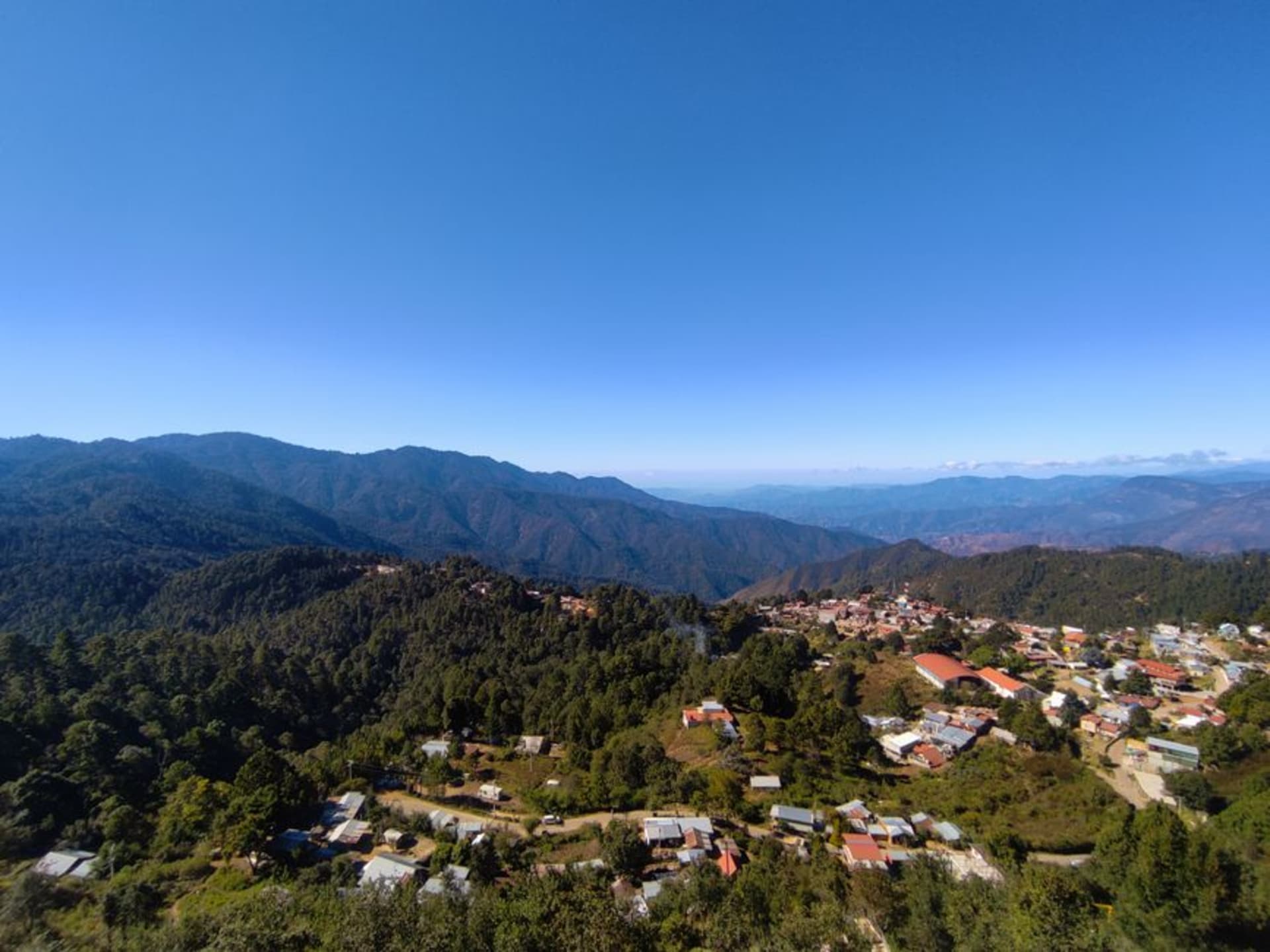
Villa Hidalgo Yalalag
"Some places exist to recalibrate your sense of how vast Mexico is, and Yalalag is one of them."
The road from Oaxaca city doesn’t so much climb as it argues with the mountain — two hours of hairpins through pine forest that slowly dissolves into cloud, arriving at Yalalag with an abruptness that feels earned. I came in late February, one week after carnival had ended, and spent my first hour in the main square watching fog thread between the church and the municipal palacio. A woman was selling memelas from a clay comal near the church steps. I ate two of them before I said anything to anyone. That seemed like the right pace to set.
When the Masks Come Out
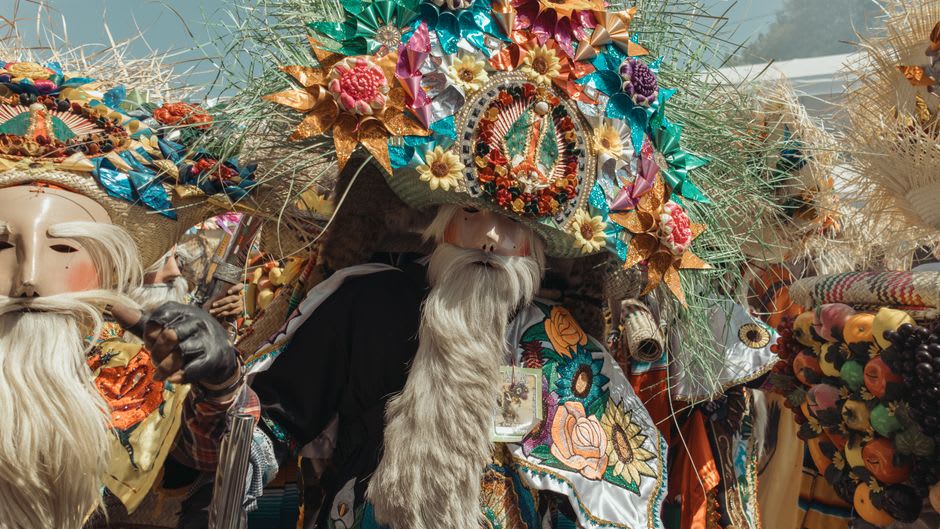
The Carnaval de Yalalag runs in the days before Ash Wednesday and belongs to a category of ritual I don’t quite have language for. The centerpiece is the dance of the huenches — men in elaborate carved wooden masks, some representing animals, some carrying a colonial memory the village has been processing for generations on its own terms. The masks themselves are worth a long look: painted in colors that feel invented for the occasion, grinning or grimacing in ways that shift depending on the light. Marimba plays continuously, not as background but as structural element — the sound so embedded in the proceedings that you stop hearing it as music and start hearing it as weather. A schoolteacher told me, without any particular drama, that the full meaning of certain dances is not something explained to visitors. He said it the way you might explain that a private letter exists: the letter is there, but you didn’t write it, and therefore you cannot entirely read it.
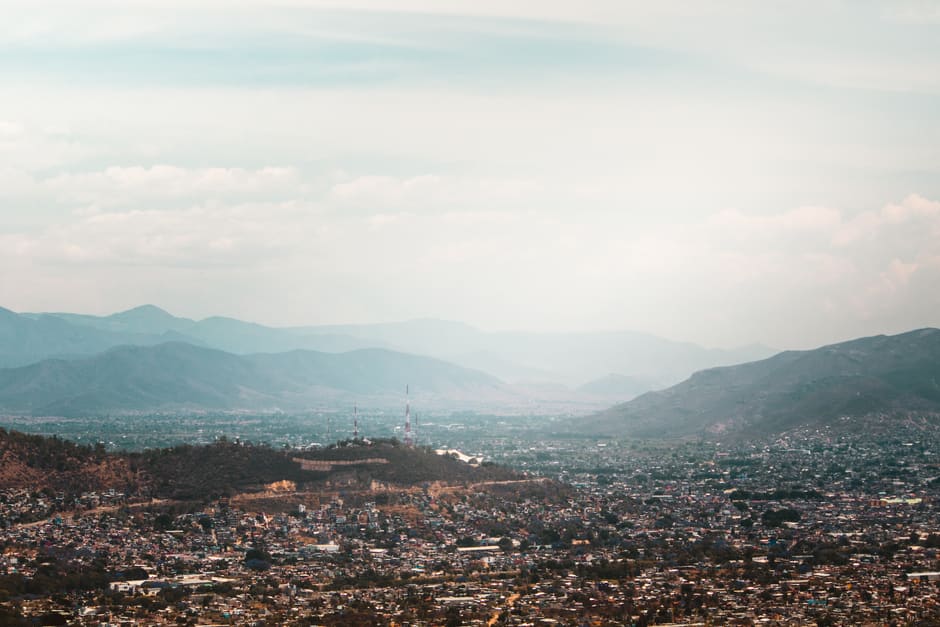
Silk Thread and Sunday Noise
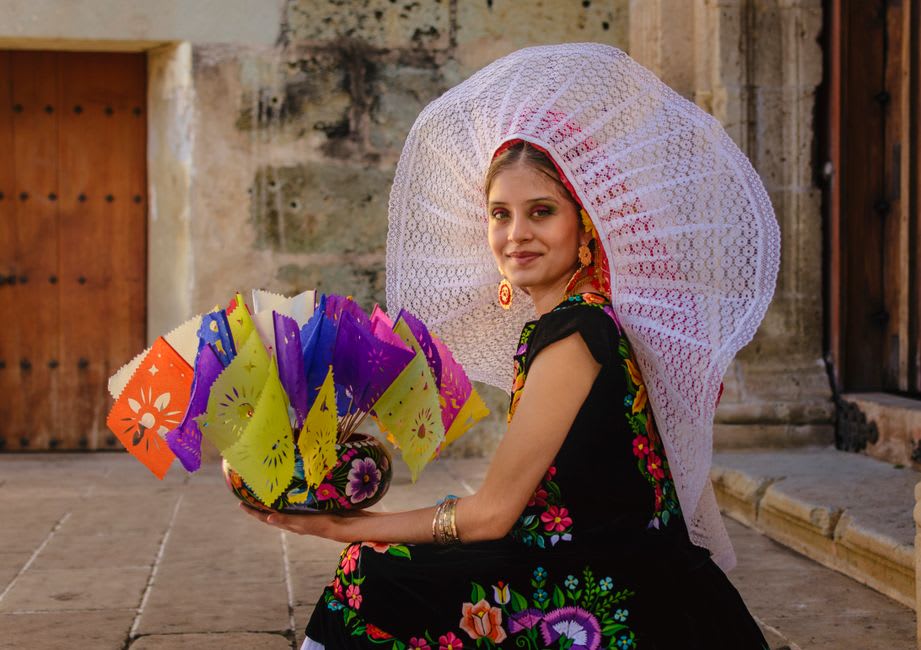
Yalalag’s embroidered huipiles are among the most recognizable in all of Oaxaca — large geometric flowers worked in silk thread on white cotton, a pattern so specific to this valley that you can identify a Yalalag garment from across a market floor. The Sunday tianguis fills the streets around the church with women from the surrounding communities, and it’s one of the few markets I’ve been to where textiles are worn, traded, and assessed with the same gravity as the produce. I spent longer than I planned watching two older women negotiate over a deep-red rebozo, their conversation conducted entirely in Zapotec. I didn’t understand a word and didn’t need to. If you want to buy embroidery here, know that a well-made huipil represents weeks of work — approach the price accordingly. Bargaining aggressively would simply be embarrassing.
How to Be in Yalalag
There is no boutique hotel here, no mezcal bar designed with travel photographers in mind. What there is: a couple of family-run hospedajes near the main square, a comedor on Calle Miguel Hidalgo that serves black bean soup with hierba santa in a way that will make you question why you eat anything else, and the kind of quietude that becomes more interesting the longer you sit inside it. Go to the market Sunday morning. Walk up to the mirador above the church in the late afternoon when the cloud layer has dropped below town. If you happen to arrive during carnival, do not position yourself as a spectator with a camera at the center. Sit further back, watch at the pace things actually move, and put the camera away most of the time.
Getting There
Second-class buses into the Sierra Norte leave from Oaxaca city’s Central de Abasto terminal, generally heading toward Villa Alta. The journey covers roughly 160 kilometers of mountain road and takes four to five hours depending on connections and season — ask at the terminal for current routing, as schedules shift. ADO does not serve Yalalag directly. A hired taxi from Oaxaca runs around 1,200–1,500 pesos and gives you control over timing, which matters if you are arriving for the Sunday market.