Teotitlán del Valle
"The cochineal insect produces a red so intense that when Spain sent it to Europe in the 1500s, it became the color of royal robes and military uniforms. The women here have been using it since before Spain existed."
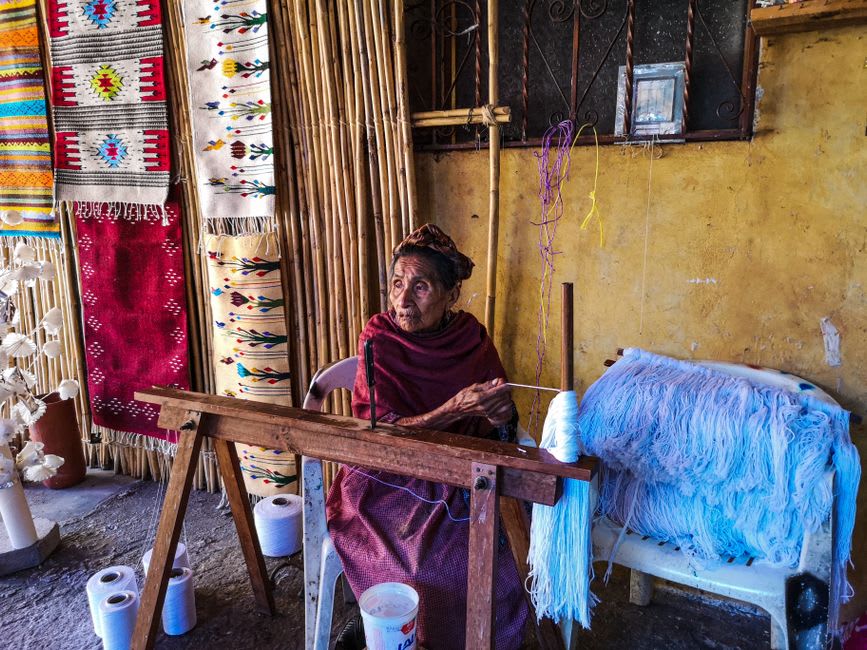
Teotitlán del Valle is 30 kilometers east of Oaxaca city in the Tlacolula valley, a Zapotec-speaking village of around 5,000 people where the primary occupation of most families is weaving. The weaving tradition here predates the Spanish conquest by centuries — the Zapotec textiles found in Monte Albán excavations show the same geometric vocabulary still used in the village today — and has survived colonialism, globalization, and decades of market pressure to commodify it by remaining in the hands of the people who created it.
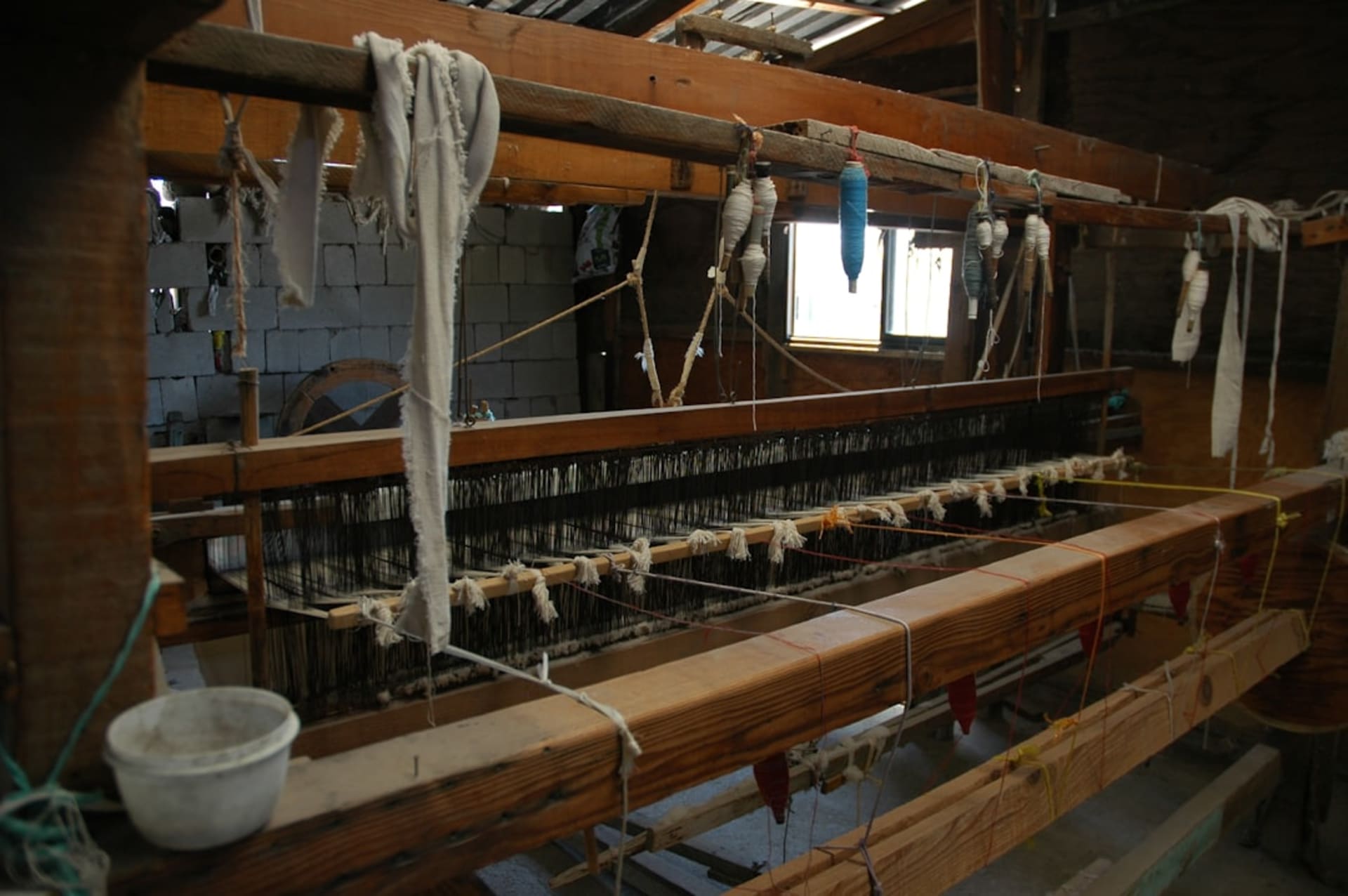
The village currently has approximately 700 registered weaving families. When I arrived on a Monday morning, the sound of wooden pedal looms operating was audible from the street before I found the open workshop doors.
The Dyes
What distinguishes Teotitlán del Valle from other weaving villages in Oaxaca and Mexico is the commitment to natural dyes — a choice that most traditional textile cultures abandoned decades ago when synthetic aniline dyes became cheaper and more consistent. Here, the majority of weavers (the precise percentage varies by workshop) still use the traditional dye plants and insects, for reasons that are both economic (the natural-dyed pieces command significantly higher prices in the market) and cultural (the dye knowledge is considered part of the Zapotec heritage that the community has decided to maintain).
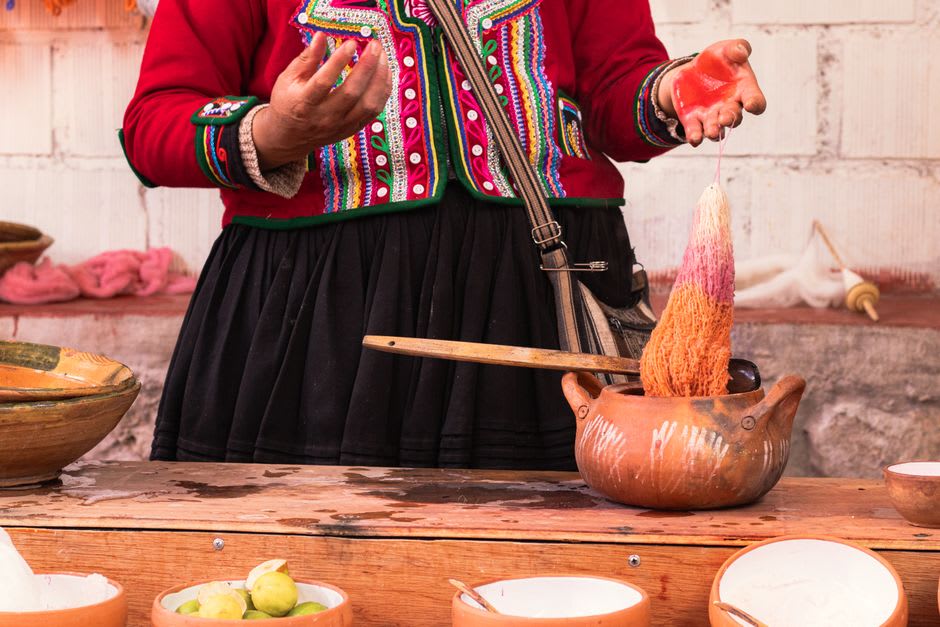
Cochineal (Dactylopius coccus) — a scale insect that parasitizes nopal cactus, producing carminic acid in its body as a defense mechanism — has been cultivated in Oaxaca since pre-Columbian times. The female insect (the male doesn’t produce the dye) is dried, ground, and dissolved in water to create a dye that ranges from pale pink (when diluted and mordanted with alum) to the most saturated crimson red available from any natural source (when concentrated, mordanted with iron). The Spanish found this dye when they arrived in the 16th century and immediately began exporting it to Europe, where it became the red of Hapsburg court dress and British military uniforms.
Watching the dye demonstration in a Teotitlán workshop — the cochineal insects ground in a metate, the powder dissolved, the skein of wool dipped and lifted with the first flush of red that appears immediately on contact with the dye bath — is the most efficient introduction to why these textiles cost what they do.
Indigo (Indigofera suffruticosa) — a different native plant, producing the blue that appears in the geometric patterns of most Teotitlán textiles — requires a fermentation vat and a more complex process than cochineal; the indigo blue can only be fixed in an alkaline, oxygen-depleted environment. The blue that results, layered over the cochineal red in the dyeing sequence, produces the purples and mauves that characterize the most sophisticated Teotitlán color work.
Marigold (Tagetes erecta, the same flower used in Day of the Dead altars throughout Mexico) produces the yellow that appears in the geometric patterns; pomegranate rind produces a brownish-gold; moss and lichen produce greys and taupes that synthetic dyes can approximate but not replicate.
The Designs
The geometric vocabulary of Teotitlán weaving comes from three sources operating simultaneously: pre-Columbian Zapotec geometric patterns (the stepped fret, the diamond, the zigzag), Spanish colonial design elements introduced after the conquest, and the 20th-century incorporation of Mayan and Aztec motifs that came into the village through the tourist market and were absorbed into the local vocabulary.
The most valuable pieces are those where the weaver’s own design sensibility is visible — not copying a standard template but composing an original arrangement of the traditional elements. The difference between a commercial piece (symmetrical, simplified, made quickly for the market) and an artisanal piece (more complex color work, more intricate geometric detail, the slight irregularities that come from a human hand maintaining tension on a pedal loom for hundreds of hours) is visible on examination.
Buying direct from the workshop — rather than from the market stalls or from intermediary shops in Oaxaca city — ensures that the money goes to the weaver and that you can see the piece’s origin. Most families speak Spanish alongside Zapotec and are willing to explain the dye sources and design choices for the pieces they’re selling.
Getting there: Colectivos from Oaxaca’s second-class terminal run the Tlacolula valley road past the Teotitlán turnoff (45 minutes), from which it’s a 10-minute walk or short mototaxi ride into the village center. Can be combined with Tlacolula Sunday market and Mitla ruins in a single day. The village’s own market happens on Sundays but the workshops are open throughout the week.
When to go: Year-round for the workshops. Mid-October through November for the natural dye demonstrations using fresh marigolds (harvest season). The village holds a Guelaguetza (Zapotec thanksgiving festival) in the rainy season, typically August.