Santa María del Tule
"I've circled a lot of trees in my life. This one took twenty minutes and I still wasn't sure I'd processed it."
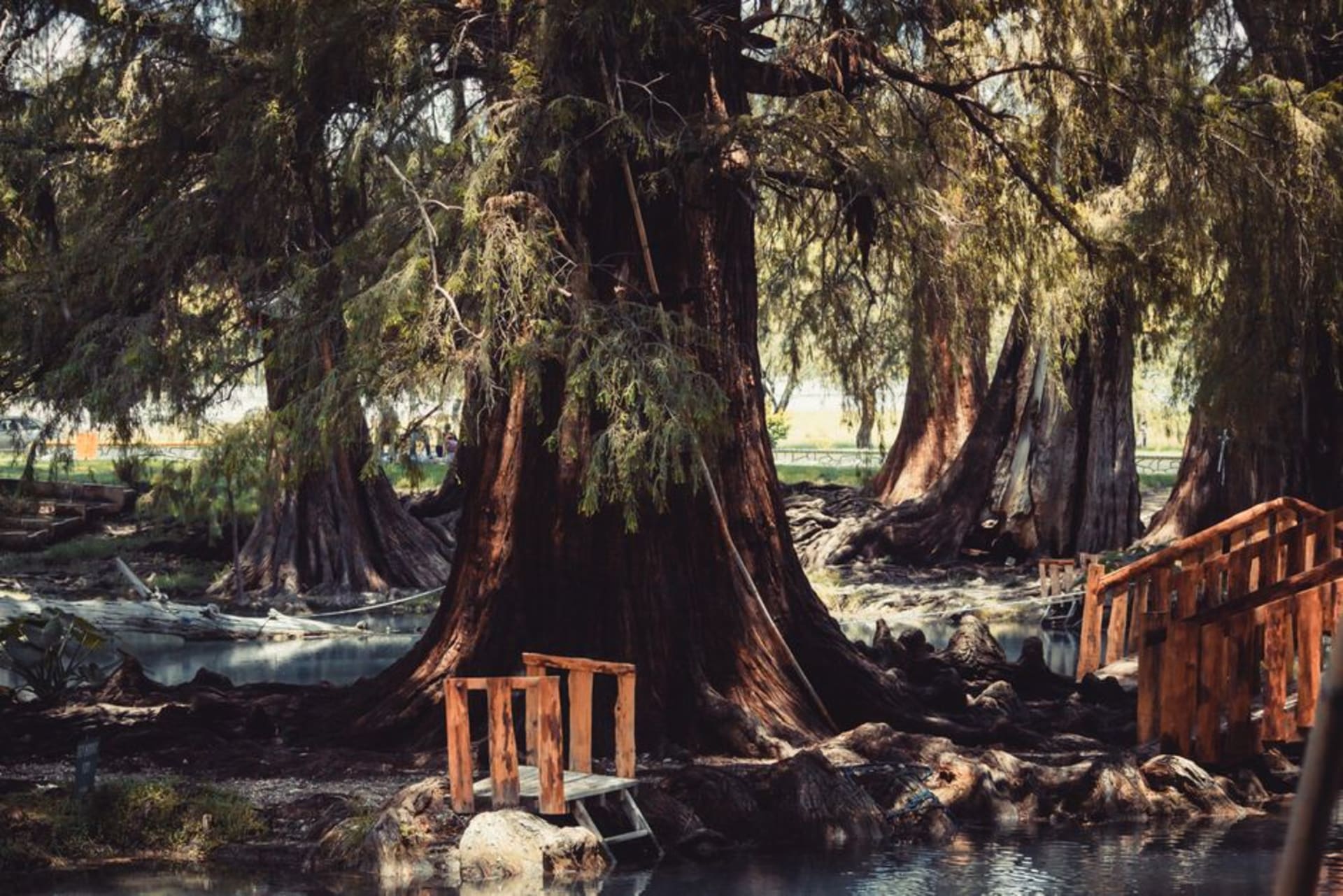
The colectivo drops you on the highway and you walk thirty meters toward the church and then stop, because the tree has already taken up most of the sky. I arrived around nine on a Tuesday morning, when the vendors were still arranging their folding tables and the tour buses from Oaxaca City hadn’t yet found the parking lot. For a few minutes I had the atrium almost to myself — me, two women selling tejate from clay pots, and something that looked from a distance like a hillside but was, on closer inspection, a cypress.
El Árbol del Tule
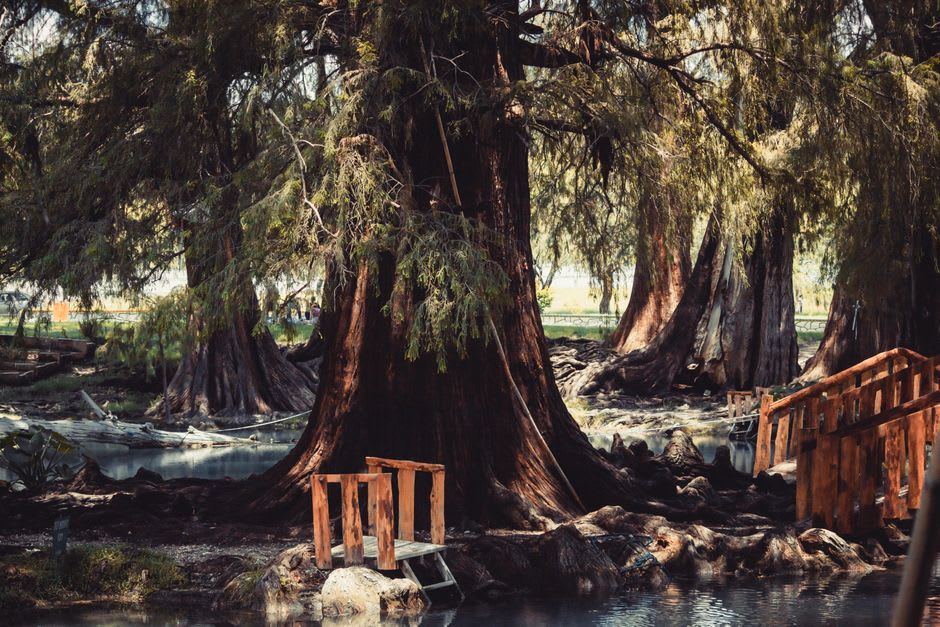
The signs around the base try to help. They point to shapes in the bark — an elephant here, a puma, a crocodile near the roots if you tilt your head and commit. I ended up following a local guide, a teenager who had clearly explained this trunk to several hundred tourists and still seemed to find it mildly funny that adults needed the animal key to make sense of what they were looking at. The ahuehuete is a Montezuma cypress, somewhere north of 2,000 years old, with the widest trunk of any tree on earth — 58 meters in circumference, around 14 meters across. Walking the full perimeter takes about twenty minutes if you stop to actually look at things, which you will. I went around twice and still left with the uneasy sense that I hadn’t fully registered it. There’s a scale problem: the tree is too large for the visual frame you’re standing inside. Your eye keeps trying to recategorize it as a wall or a geological feature. The signs with the elephant and the puma are not condescending — they’re genuinely necessary.
The Village the Tree Made
Santa María del Tule has a proper village to it — the Iglesia de Santa María de la Asunción sits right beside the tree, a 16th-century church whose considerable bulk is so absorbed by the cypress’s shadow that it reads as an afterthought, which historically it was not. Around the atrium, vendors run the usual Oaxacan range: chapulines in paper cones, tejate in clay cups, memelas off a comal, small carved wooden animals that have clearly absorbed the tree’s brand identity. I ate standing near the church steps — a tlayuda with tasajo, finished too quickly because I’d skipped breakfast in Oaxaca City. The food is vendor-market quality rather than restaurant quality, but at nine in the morning with the light still low across the churchyard, that distinction stops mattering.

How to Actually See It
Go early. The colectivos from Oaxaca’s Mercado de Abastos run before eight and the tree before the tour buses arrive — before the atrium fills with matching shirts and selfie sticks — is a meaningfully different experience. Hire one of the local guides for the animal shapes; they know which angle shows the elephant and they’ll stand patiently while you photograph the same section of bark six times. There’s a small entrance fee, around twenty pesos when I visited. Bring cash. The vendors don’t have card readers and the tejate, thick and cold from the clay pot, is not something to skip.
Getting There
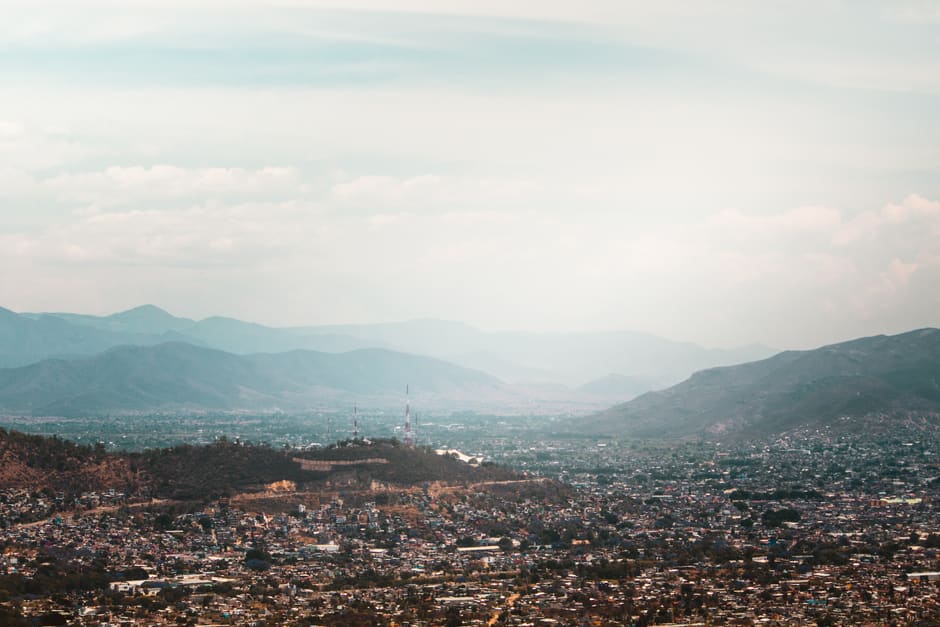
Santa María del Tule sits nine kilometers east of Oaxaca City on the highway toward Mitla. Colectivos depart regularly from outside the Mercado de Abastos and cost around fifteen pesos; the ride takes twenty to thirty minutes depending on traffic. The site is open daily. If you’re already planning a run to the Mitla ruins or the mezcal villages further along that corridor, this makes the obvious first stop of the morning.