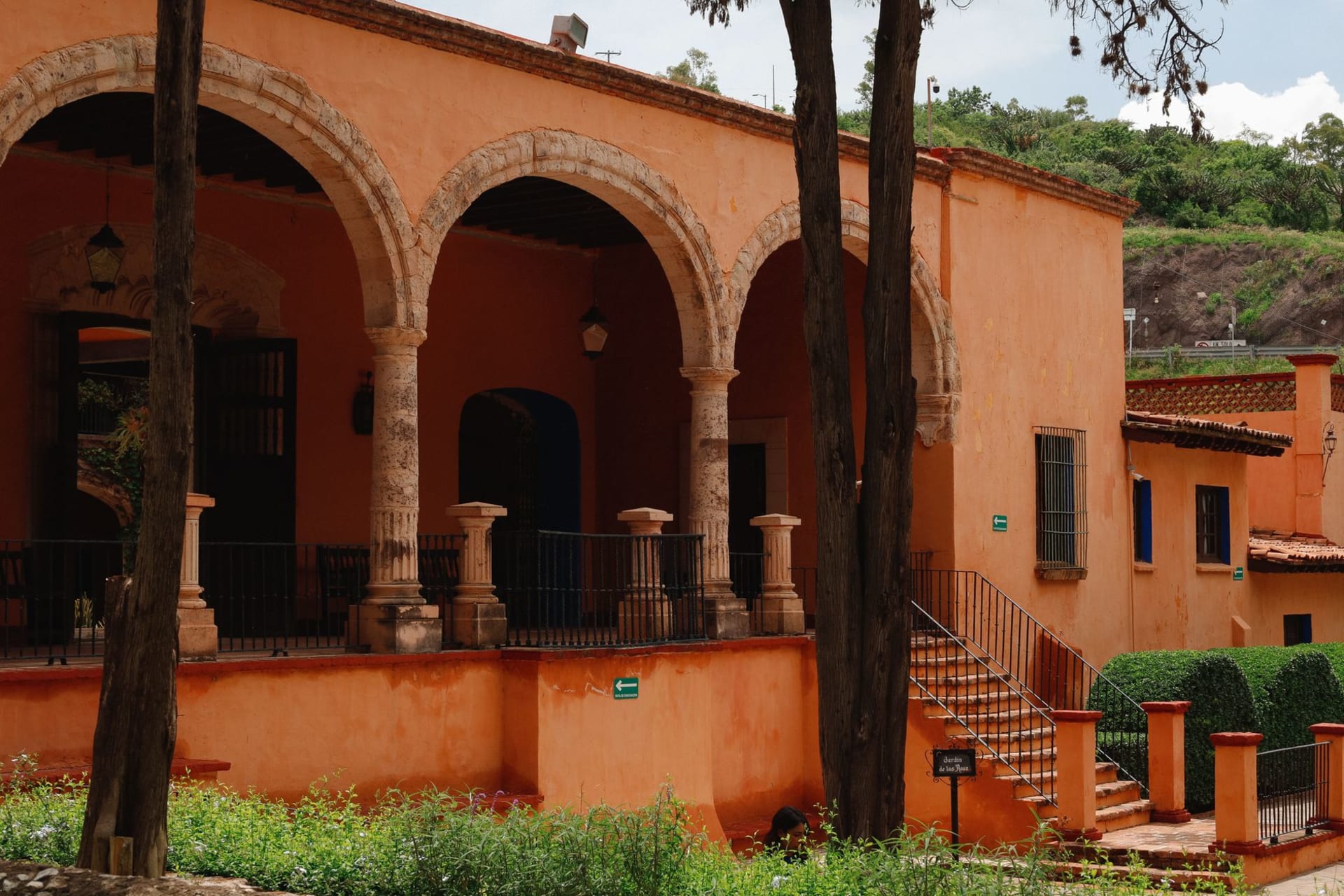
San Bartolo Coyotepec
"The potter's hands had been doing this for fifty years. The surface of the finished piece looked like it was made of black metal. It was made of clay from three kilometers away."
The road south from Oaxaca City toward Mitla passes through San Bartolo Coyotepec at kilometer twelve, and if you are driving it without stopping you have made a mistake. The village is, on its surface, unremarkable: a main street, a central plaza, a church, some workshop signs. The reason to stop is barro negro, and the reason barro negro matters is one of those stories about craft and place and a specific person that the history of decorative arts is built from.
Doña Rosa and the Origin of the Finish
The black clay pottery of the Oaxacan valley has been made for centuries — unglazed, black, functional, the kind of utilitarian ceramic that appears in archaeological contexts throughout the region. What changed in the twentieth century was Doña Rosa Real de Nieto, a potter from San Bartolo Coyotepec who developed or refined — accounts differ on the precise origin — the burnishing technique that produces the mirror finish that barro negro is now known for worldwide.
The technique involves polishing the unfired clay with a quartz stone in long, careful strokes that compress the surface and align the clay particles. When the piece is fired in a closed kiln using wood smoke that excludes oxygen, the carbon in the smoke is absorbed into the clay and the entire surface turns black. The burnished areas become mirror-bright. The matte areas stay soft black. The contrast between the two is how the decoration works.
Doña Rosa’s family workshop is still operating. Her descendants continue the work and the workshop is open to visitors, which is not a tourist arrangement in the sense of a performance — it is a working studio that accepts visitors in the way that skilled craftspeople have historically accepted visitors interested in the work. I watched a woman in her thirties building a large vase without a wheel, coiling clay up from a flat base, smoothing and shaping by hand, without tools except her own hands and a small flat stone.
The question “how long did that take to learn” is probably rude. I asked it anyway. The answer was thirty years, delivered without particular emphasis, as if thirty years were a reasonable time to spend learning something, which it is.

The Workshop and the Purchase
The village has multiple workshops and studios besides the Doña Rosa family operation, and walking through the main street you can step into several of them. The quality varies, but even the more modest pieces are made by hand from the local clay with the local technique, which is different from the mass-produced tourist ceramics sold in Oaxaca City markets.
I visited three workshops. In the second one, a man in his sixties showed me a series of pieces he had just finished — vessels ranging from small to very large, some purely functional, some decorative, the surfaces ranging from the deep matte black of unfired sections to the near-mirror finish of the burnished areas. One small vessel caught the light from the workshop window and seemed to reflect it back in a way that made it look like a piece of lacquered metal rather than fired earth.
I asked the price. He told me. It was more than I wanted to spend and less than the piece was worth and I thought about it for approximately thirty seconds and bought it. He wrapped it in newspaper with practiced efficiency, then added a second layer of newspaper without being asked, then placed it in a bag in the manner of someone who has watched a tourist drop a ceramic vessel in a parking lot before.
I carried it back to Oaxaca City wrapped in the newspaper inside my jacket, which was unnecessary but felt like the correct level of attention to give to a thing that had taken that long to learn to make. It lives on a shelf in my apartment in Mexico City now. Occasionally I pick it up and look at the surface in good light. The finish has not changed.
Getting There and the Road South
San Bartolo Coyotepec is on the main road south from Oaxaca City toward Mitla — the same road that passes Cuilapam de Guerrero, Zaachila, and eventually reaches the archaeological zone of Mitla about fifty kilometers further on. The village is a straightforward stop on any itinerary that includes Mitla or the Tlacolula Valley.
If you’re building a day trip from Oaxaca City, the logical route is: Cuilapam de Guerrero (the unfinished Dominican church and its extraordinary open chapel), then San Bartolo Coyotepec for the barro negro workshops, then south and east toward Teotitlán del Valle for the Zapotec rug weavers, then Mitla at the end of the day. This is an afternoon and evening of craft and archaeology that is among the more concentrated experiences available in the Oaxaca valley.
Buy something in San Bartolo. Not necessarily something expensive, not necessarily from the Doña Rosa workshop specifically — there are other excellent potters in the village. But the work deserves the support of being purchased by people who come specifically to see it made.
