
Oaxaca City
"I once drove up from the coast on a Tuesday just for a bowl of tasajo and a mezcal I had no business finishing alone. I regret nothing about that trip."
The overnight bus from Puerto Escondido deposits you on the outskirts of the city around five in the morning. The air catches you first — thin and cold and carrying something herby that turns out to be Mercado de Abastos already warming up for the day. I stood on the sidewalk with my bag and my jacket still in my hand, and a woman was grilling tasajo on a comal two meters away. That was 2022. I have since made that seven-hour journey more times than I can justify to anyone, including myself. Oaxaca City does not seduce you gradually. It simply makes itself indispensable, and you reorganize your schedule around it.
Thirty Ingredients, Three Days
The whole “Seven Moles of Oaxaca” thing sounds like tourism copy until a woman at Mercado 20 de Noviembre puts a bowl of mole negro in front of you that took three days and thirty-plus ingredients to make. It is black and complex and slightly bitter and nothing like what gets called mole outside of Mexico. I have eaten it with turkey, with chicken, with just a warm tortilla because sometimes that is enough. The tlayuda situation is equally serious — a giant crisp flatbread spread with asiento, black beans, quesillo, and a pile of thinly sliced tasajo, served at the comedores around the market by nine in the morning. The city has restaurants with wine lists and refined plating, and some of them are genuinely good. But the comedores inside Benito Juárez and 20 de Noviembre are where you understand what the city actually values, and at what price it values it.
What the Light Does to Santo Domingo
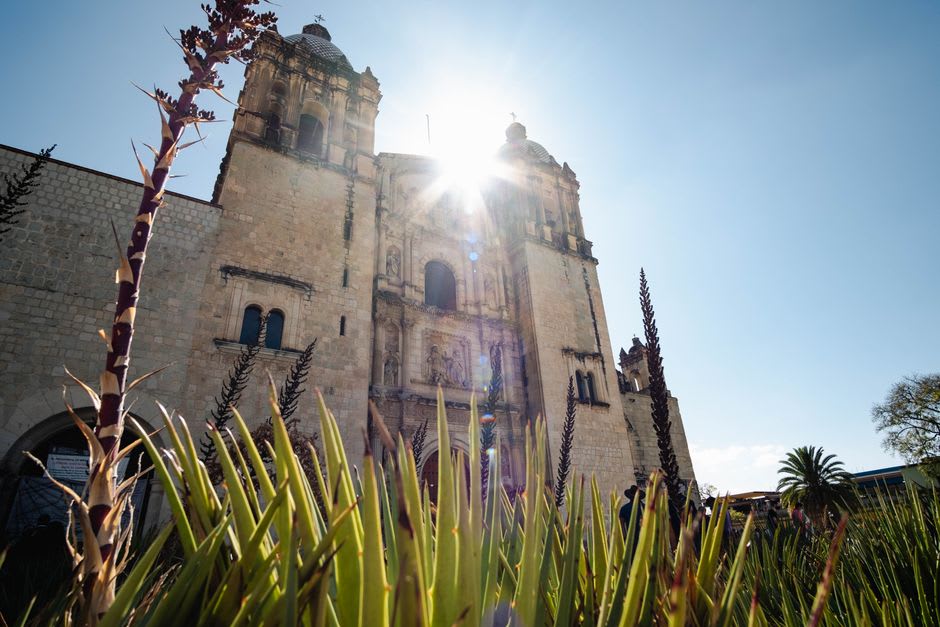
The church of Santo Domingo de Guzmán was built in the sixteenth century and the Dominicans apparently spared nothing. I have been inside at least eight times and I still find new gilded relief somewhere in the nave. But what I keep returning to is the exterior at around six in the evening, when the sky shifts from blue to orange and the stone facade does something I cannot quite account for — it seems to produce its own light rather than reflect anyone else’s. The pedestrian corridor of Macedonio Alcalá runs south from the church toward the zócalo, and on weekday evenings there is a specific hour before dark when the artisan stalls are still open and the tourist groups have moved on and the street feels genuinely like itself. I have sat at the same table at a café on that corridor four or five times and ordered the same chocolate caliente each time. Some rituals are not complicated.
The Unlabeled Bottle
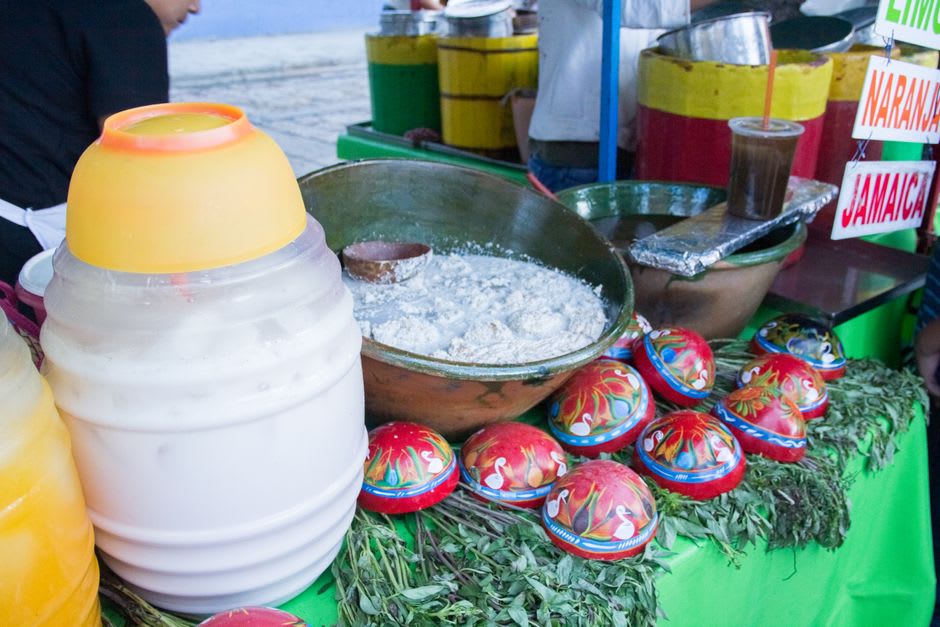
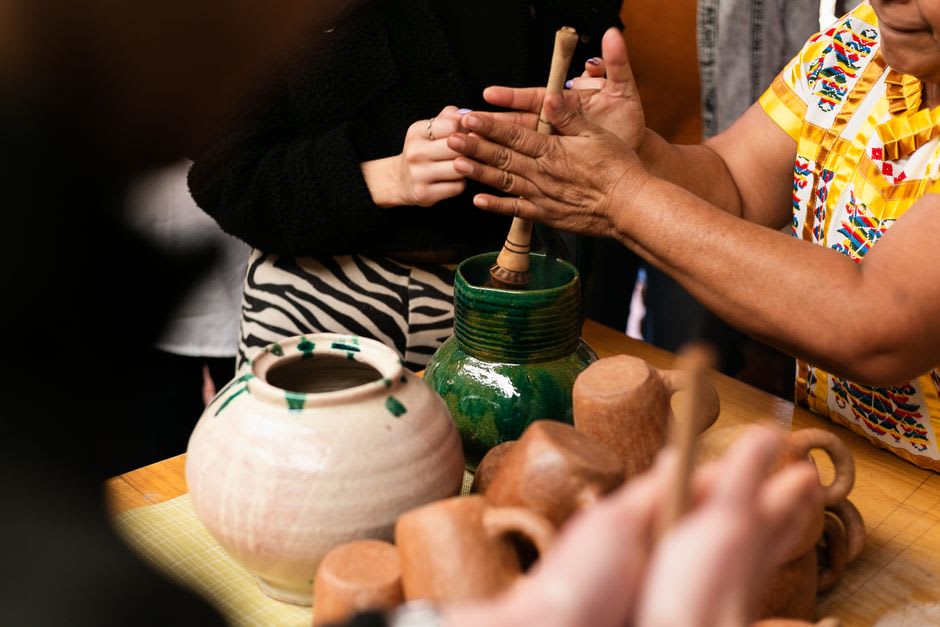
There is a version of mezcal tourism in Oaxaca City that involves guided tastings and production vocabulary and a great deal of ceremony. That is not what I do. What I do is find a stall at Mercado Benito Juárez mid-afternoon, sit down, and ask for whatever the vendor recommends. Nine times out of ten it is something from a small producer in the Cañada or the Sierra Juárez, poured into a clay copita, and it tastes like smoke and earth and nothing I can adequately describe. El Destilado on Calle 5 de Mayo is worth one visit if you want the more structured experience. But the education happens at the market stalls, with bottles that have no label and a price that makes you slightly suspicious, in the best possible way.
Getting There
From Puerto Escondido, the overnight OCC or ADO bus takes around seven hours through the Sierra Madre. The road winds considerably and is worth making once in daylight just to see the mountains. Oaxaca City sits at 1,500 meters — noticeably cooler than the coast year-round, so pack a layer regardless of season. November through April is the comfortable window, though December’s Noche de Rábanos is its own reason to make the trip.