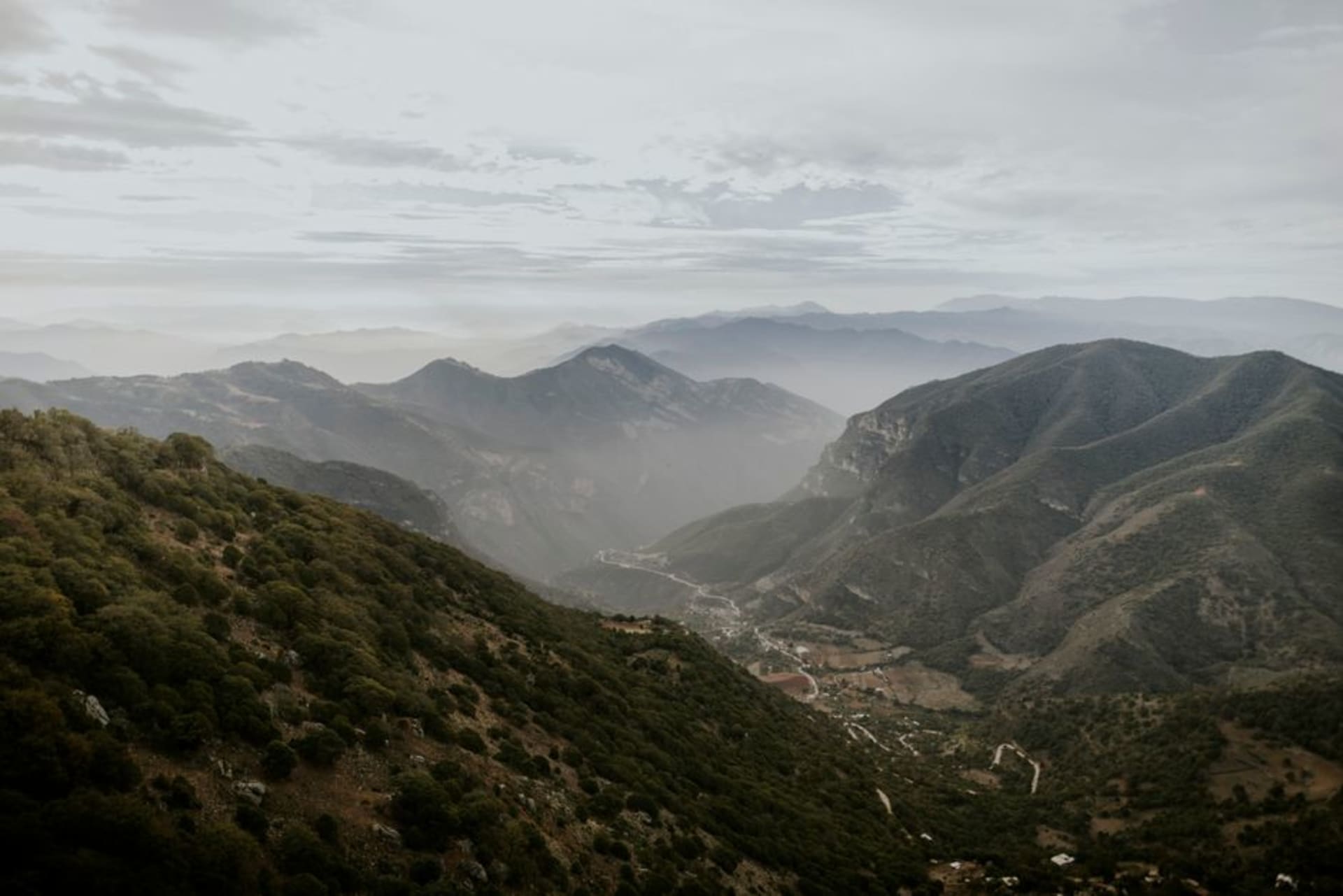
Huautla de Jiménez
"Huautla does not advertise its mysteries — you either understand why you came, or you do not."
I left Puerto Escondido at five in the morning and arrived in another world entirely. Not metaphorically — Huautla sits at nearly 1,700 meters, ringed in cloud forest, and by the time the road had coiled up past Teotitlán del Camino and through forty kilometers of pine-draped switchbacks, the coast was an abstraction. The town appeared in pieces through the fog: a painted concrete wall, a group of women in embroidered huipiles crossing without urgency, a market stall selling chicharrón from behind a curtain of mist. I had not known quite what to expect and the town seemed, for a moment, determined to keep it that way.
Forty Kilometers of Switchbacks
The approach from the valley floor is one of the more physically demanding drives in Oaxaca — not because the road is particularly bad, though it has its moments near the final pass, but because the altitude gain is relentless and the views, when the clouds part briefly, are alarming in the best sense. You go from dry scrubland near the highway junction at Teotitlán del Camino to cloud forest in under an hour: the vegetation shifts by elevation, the air thickens, fog moves laterally across the windshield in slow sheets. I pulled over twice just to stand in it. The town itself occupies a narrow ridge, houses stacked against the hillside in the way of Sierra towns everywhere, the main market street dropping steeply toward a valley that disappears entirely into white. There is a cold here that doesn’t feel cold at first — it’s the kind that settles into you slowly, through damp wool and afternoon shade, and you only notice it when you stop moving.
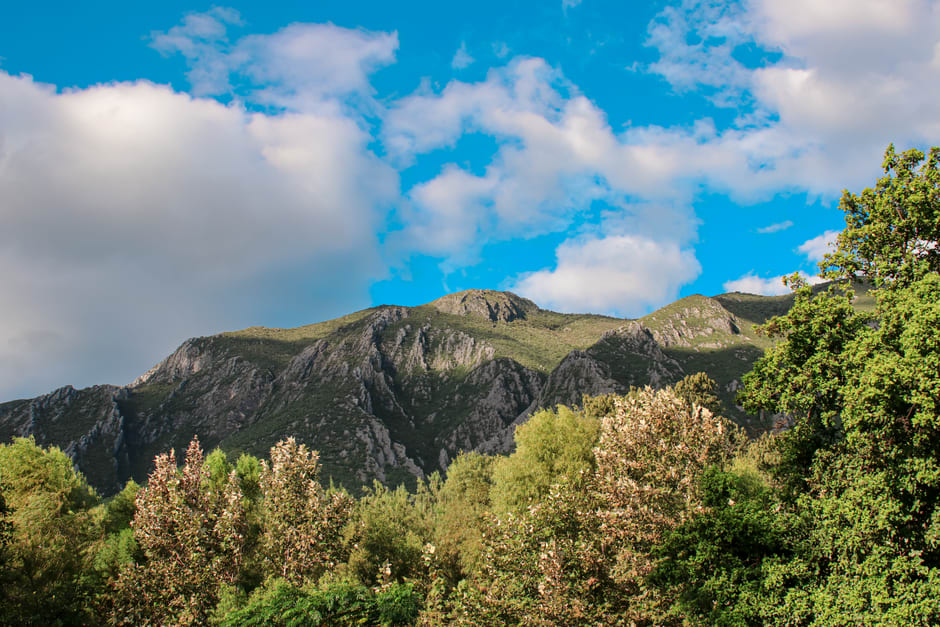
María Sabina’s Shadow
The name María Sabina appears on murals, on menus, on the covers of the books sold in the market. She was a Mazatec curandera who allowed R. Gordon Wasson — a New York banker with a consuming interest in ethnomycology — to attend a velada in 1955. The resulting article in Life magazine drew seekers from across the world, including at various points Allen Ginsberg and John Lennon, and turned a private ceremonial practice into something approaching a spectacle the town never quite asked for. You can visit the small museum near the central market and read the plaques; you can buy María Sabina coffee or embroidered tote bags in the tianguis. But if you spend enough time talking with anyone who actually lives here, you’ll find the relationship with that history is complicated — gratitude and resentment in approximately equal measure, the way a family might feel about a famous relative who told the wrong things to the wrong people. I didn’t come looking for ceremonies. Nobody offered me any.
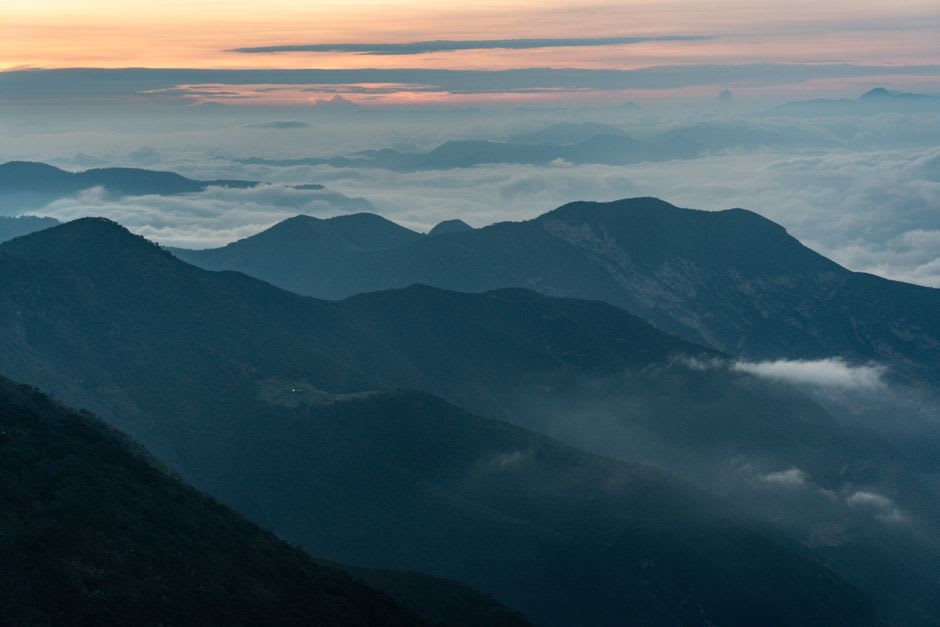
The Tuesday Market at Eight in the Morning
The tianguis spills down the main street from early morning: piles of dried chiles negros, fresh tlayudas the size of hubcaps, women selling tejate from clay pots, corridos playing from someone’s phone at a volume that implies a speaker hidden somewhere in the fog. I ate a bowl of caldo de hongos from a woman named Esperanza — mushrooms pulled from the surrounding sierra, epazote, a red chile I still can’t name, broth the color of rain on concrete. There is something particular about eating forest mushrooms in Huautla that exists entirely separate from anything ceremonial: they are just extraordinarily good. I went back the next morning and Esperanza was not surprised to see me.
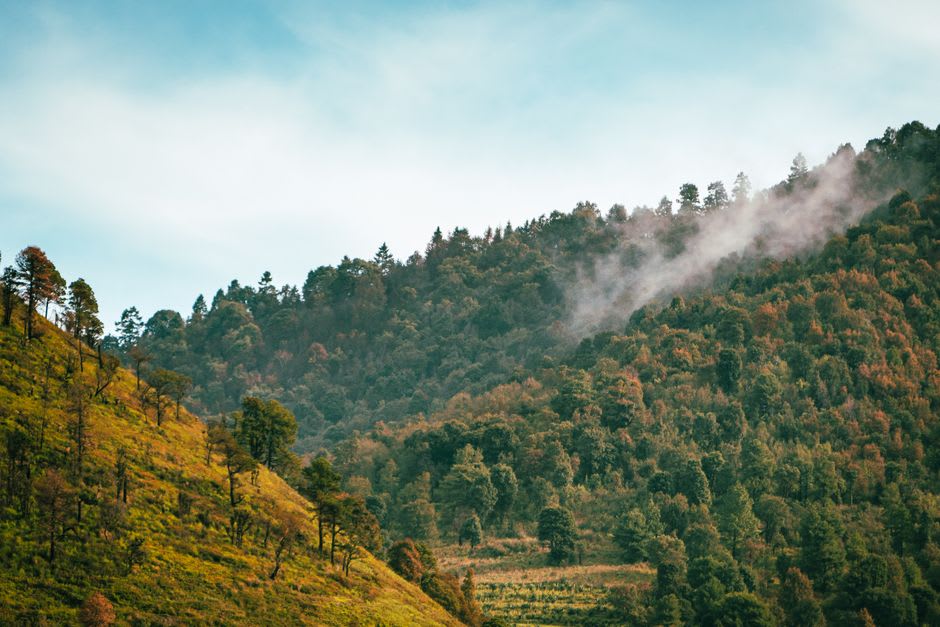
Getting There
From Puerto Escondido the journey runs nine to ten hours with a connection in Oaxaca City or via the junction at Teotitlán del Camino, where combis depart for the mountain run up Highway 182. ADO operates one direct service from Oaxaca City daily. Altitude is around 1,650 meters — bring at least one layer you didn’t think you’d need. The fog is not a weather event. It is the climate.