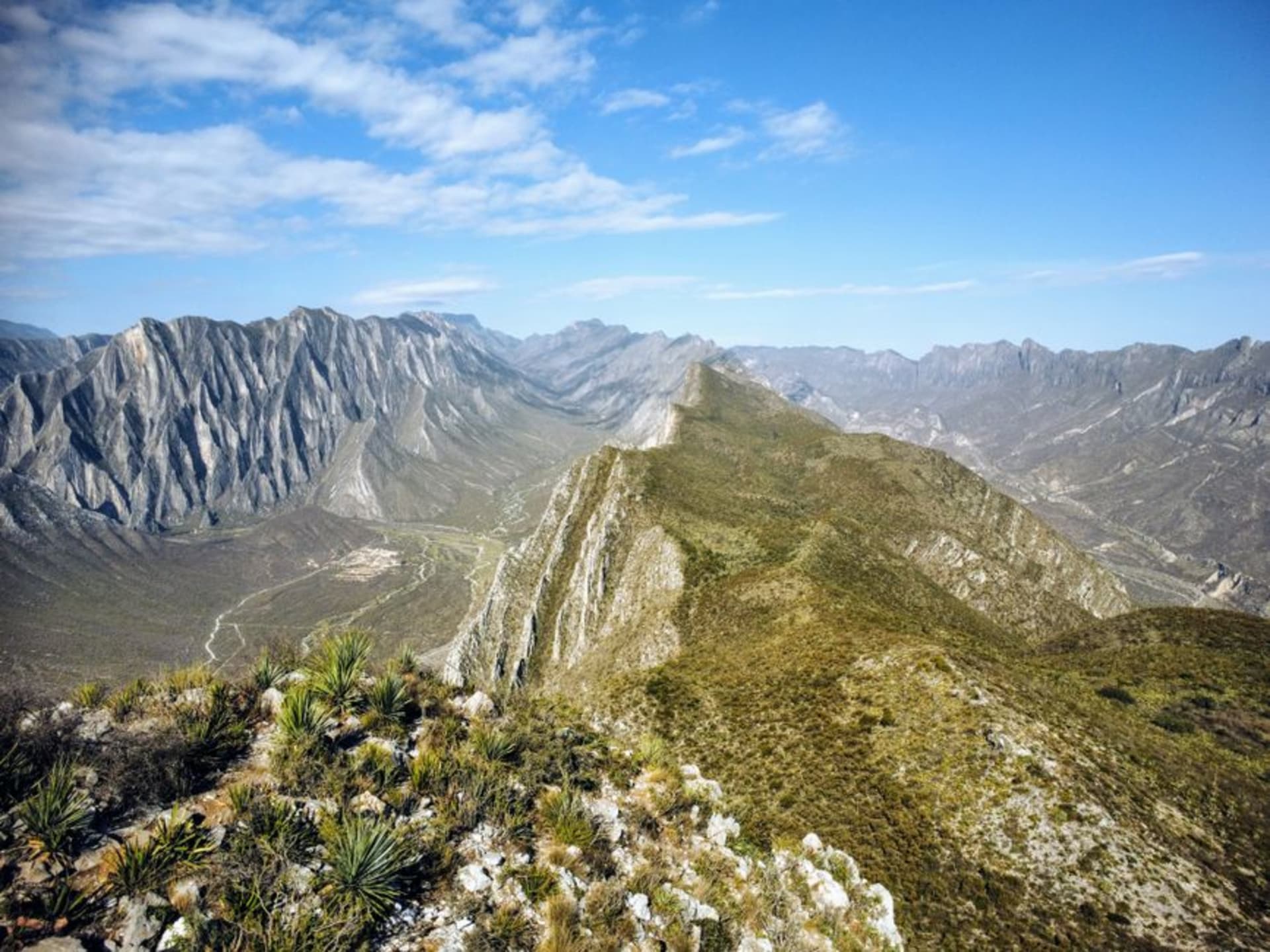
Rayones
"There's a moment where the road drops into the canyon and you realize you've left Monterrey's gravitational pull entirely. Rayones is what Nuevo León looked like before anyone decided it needed to be somewhere."
The moment the asphalt ends outside Santiago, the car changes its personality. Forty kilometers of washboard gravel follows, threading through oak and scrub pine, and by the time I rounded the final descent into Rayones I had lost my sense of direction entirely — which turned out to be appropriate. The village occupies the narrow flat where two canyons meet, and arriving from above you see it all at once: the white tower of the church, the plaza, the river, and the walls of the Sierra Madre rising on four sides like a decision that has already been made for you.
The River and the Canyon
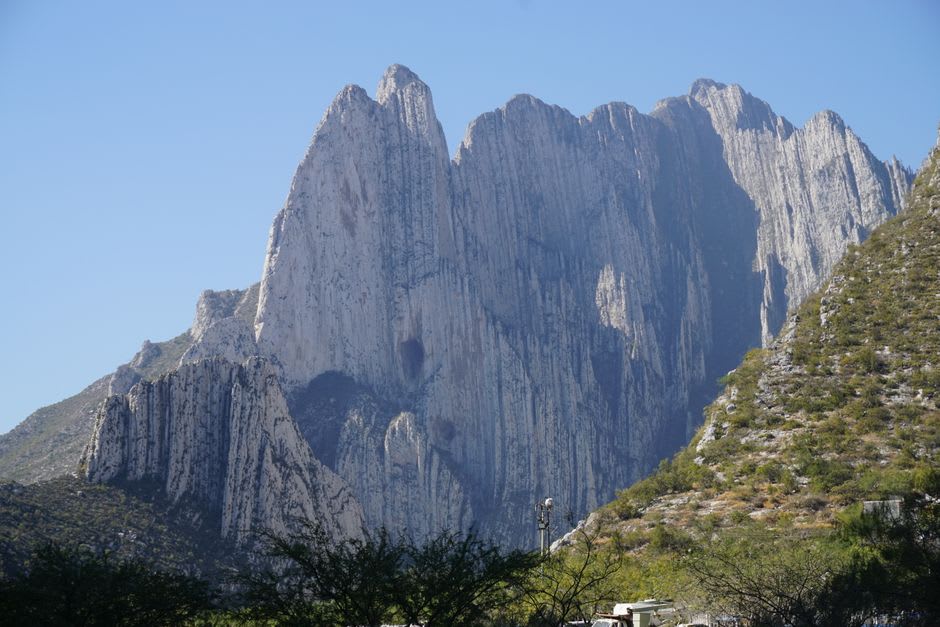
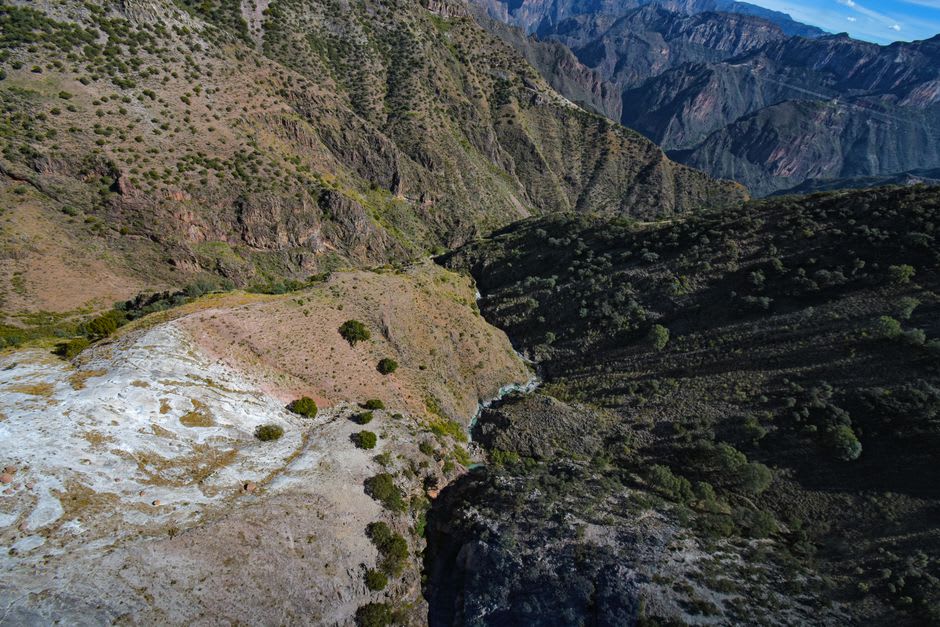
What anchors Rayones is water. The Río Rayones cuts through limestone in a way the plateau above gives no indication of — you could drive that gravel road expecting flatland and then suddenly the world drops. These canyons are not Copper Canyon grand; they are intimate, almost embarrassingly so. I walked downstream from the concrete bridge one morning for twenty minutes and had the whole riverbed to myself: ankle-deep pools, flat rocks sized for sitting, the sound of water doing what water does when no one has engineered it into anything useful. The walls catch afternoon light differently than morning light, which is the kind of thing that only matters if you’ve decided to stay, and I had. The juniper and madrone on the slopes carry a density that cuts the sun into something workable and holds the temperature down well into midday.
The Plaza, the Church, and Doña Caro’s Kitchen
Rayones has one café, or something that functions as one: a room attached to a house on the north side of the plaza where a woman I knew only as Doña Caro serves machacado con huevo in the mornings and frijoles a la charra in the afternoons. That is more or less the full menu, and I ate there twice without complaint. The machacado arrived with flour tortillas still warm from the comal and a glass of café de olla strong enough to reorganize the morning. The plaza itself is small and unremarkable in the best possible way. The Templo de San Francisco dates from the colonial period and has been recently repainted in a yellow that reads nearly gold in late light. On Sunday evenings, a few trucks park around the perimeter and families sit in the flatbeds without performing the act of relaxing — they simply do it.
Where to Sleep, What to Bring
There are no hotels in Rayones in the way that implies a building with a sign and a reception desk. What exists are a couple of casas de huéspedes — rooms in family homes, adequate mattresses, showers that run warm if you ask when the water was last heated. I stayed one night and wished I had arranged for two. If you arrive expecting to sleep well and wake to a cold sierra morning, that is exactly what happens. Bring provisions from Santiago — bread, fruit, a bag of coffee — because the single tienda closes around seven and keeps eccentric hours before that. Nobody here is waiting for you to need something; that is, once you adjust to it, the whole point.
Getting There
Rayones sits forty kilometers from Santiago, Nuevo León, on a gravel road that is passable in a standard car but rewards tires with some tread and a driver not in a hurry. From Monterrey, Santiago is roughly an hour; add another hour and a half for the sierra road. The clearest, driest months run October through April. There is no bus service into town and cell signal disappears well before you arrive — which is, depending on your disposition, either the main inconvenience or the main attraction.