Monterrey
"The mountain is inside the city. The art museum is one of the best in Latin America. The goat is roasted over mesquite and takes four hours."
Monterrey is the Mexico that the rest of Mexico sometimes forgets. The industrial capital of the north — steel mills, manufacturing, the headquarters of CEMEX and FEMSA and Grupo Alfa — doesn’t fit neatly into the colonial-baroque narrative that anchors most Mexico travel writing. It has almost no colonial architecture (the Spanish didn’t find silver here and didn’t invest accordingly), a climate that is punishing in summer, and a reputation built on commerce rather than culture.
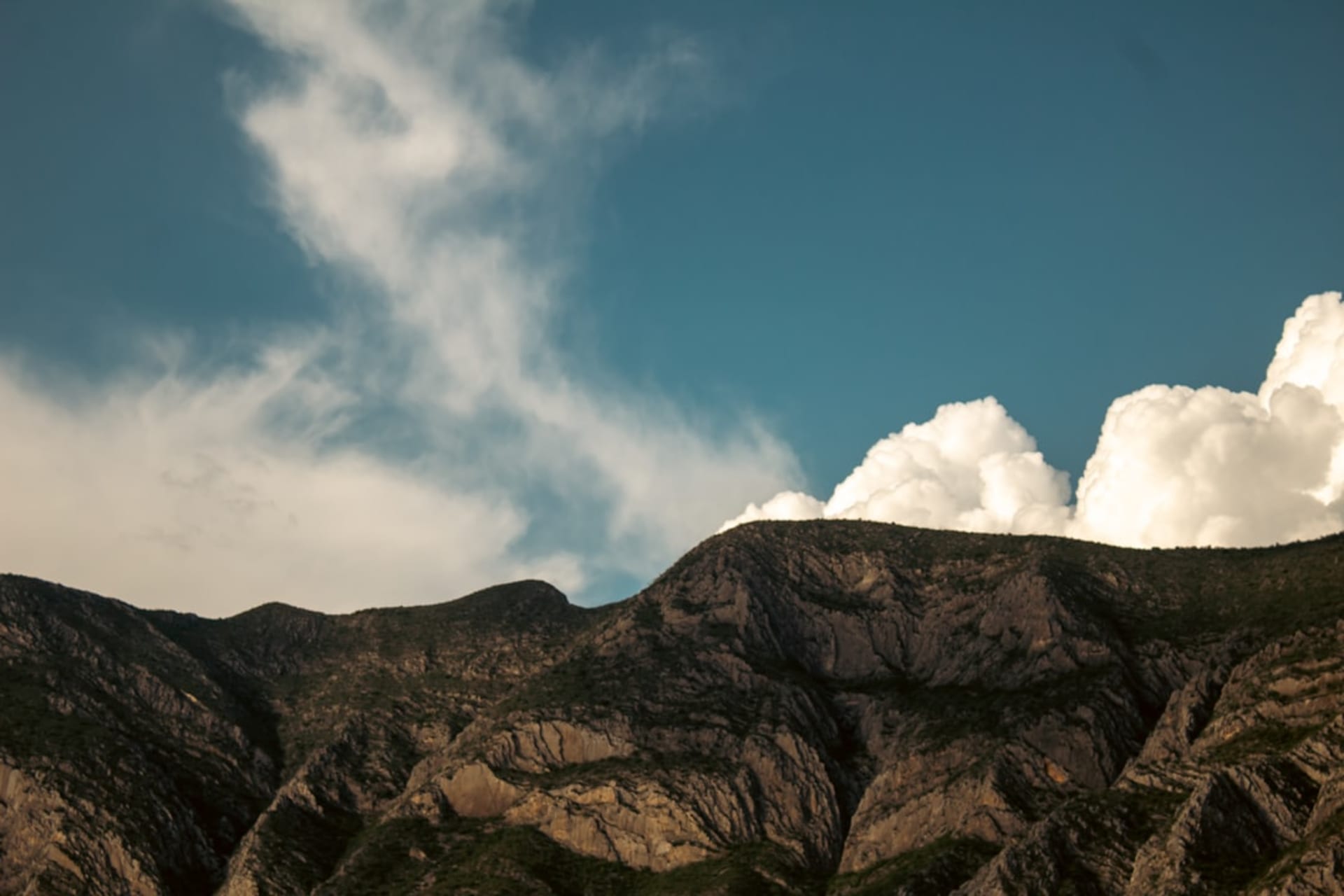
What the rest of Mexico underestimates is the setting and the money. The Cerro de la Silla — a distinctive saddle-shaped mountain that has become the city’s symbol — rises to 1,820 meters immediately behind the downtown skyline. The Sierra Madre Oriental surrounds the city on multiple sides. The canyon of the Santa Catarina River runs through the urban center. And the industrial wealth of the past century has produced cultural infrastructure — museums, galleries, a world-class art collection — that most Mexican cities four times the size don’t have.
MARCO and the Barrio Antiguo
The Museo de Arte Contemporáneo de Monterrey (MARCO) is the reason to take Monterrey seriously as a cultural destination. The building, designed by Ricardo Legorreta and opened in 1991, is a masterwork of Mexican modernism: geometric volumes in terracotta and purple, a central courtyard with a fountain dove by Juan Soriano at the entrance, natural light flooding the permanent galleries. The collection — Latin American contemporary art, rotating international exhibitions, photography — is the best of its kind in Mexico outside of Mexico City, and the programming budget ensures that the exhibitions are consistently significant.
MARCO sits on the edge of the Barrio Antiguo, the historic district that constitutes Monterrey’s closest approach to colonial character. The streets here date from the late 18th century; the buildings are modest one and two-story structures that have been converted into bars, galleries, and restaurants. On weekend nights the Barrio becomes the center of the city’s social life, with the density of a neighborhood that knows it’s the right place to be.
The Macroplaza and the Mountains
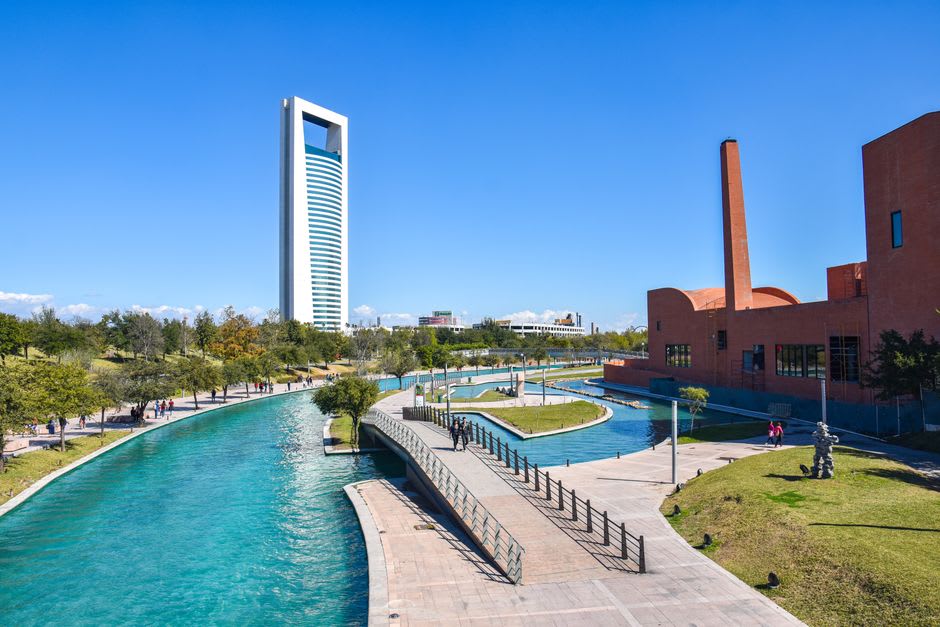
The Gran Plaza — known as the Macroplaza — is one of the largest public squares in the world: forty hectares of fountains, monuments, and public space connecting the Barrio Antiguo to the government district and the Santa Lucía riverwalk. It is ambitious to the point of being slightly inhuman in scale, but the monuments are genuinely interesting (the Faro de Comercio by Luis Barragán is an orange concrete beacon that shoots a laser beam at the Cerro de la Silla after dark) and the surrounding mountains make even an oversized plaza feel contained.
The Parque Fundidora occupies the site of the old steel foundry that drove the city’s 20th-century growth. The blast furnaces have been preserved as industrial monuments in a public park that also contains MARCO’s expansion wing, a baseball stadium, and the entrance to the Horno 3 steel furnace museum — a genuinely excellent industrial history museum where you can enter the interior of a restored blast furnace and understand what the city was built on.
The Food
Monterrey’s food culture is northern Mexico — meat, wheat, the rancho tradition — at its highest expression.
Cabrito — baby goat roasted slowly over mesquite wood, served whole or in pieces. The technique here, practiced for centuries by the cattle-ranching families of the Nuevo León sierra, produces a result that is unlike any other preparation of goat I have encountered: the skin crisps to a dark lacquer, the meat stays moist to the bone, the mesquite smoke is present but not overwhelming. El Rey del Cabrito on Constitución has been doing this since 1959; the dining room is large and functional and the cabrito requires four hours of advance preparation. Order ahead.
Machaca — dried, shredded beef, rehydrated and scrambled with eggs and chiles for breakfast. The northern version is leaner and saltier than the central Mexican interpretation. With flour tortillas made in Monterrey’s bakeries, it is one of the best breakfasts in Mexico.
Carne asada — grilled beef with flour tortillas, chiles toreados, and fresh guacamole. The Sunday carne asada is the social ritual of Monterrey’s middle class in the way that Sunday lunch is the social ritual of European families. Being invited to one is a privilege.
The Canyon Country
Forty-five minutes south of the city, the Cañón de la Huasteca cuts through the Sierra Madre in walls of red and orange limestone that rise three hundred meters from the canyon floor. The canyon is accessible by road and on foot, with hiking trails that range from a short walk to the canyon entrance to a multi-day traverse of the sierra.
The Cola de Caballo (Horsetail Falls) in the municipality of Santiago, forty minutes southeast, is the most visited natural attraction near the city: a 35-meter waterfall in a canyon setting, accessible by horse or on foot, surrounded by oak forest. Worth combining with the Cañón de la Huasteca for a full day outside the city.
Getting there: Monterrey’s Aeropuerto Internacional Mariano Escobedo has direct flights from most Mexican cities and major US destinations (Houston, Dallas, Los Angeles). It is the closest major Mexican city to Texas. Buses from Mexico City take approximately twelve hours; most travelers fly.
When to go: October through April. Monterrey in summer (May-September) is hot enough to be genuinely unpleasant — temperatures regularly exceed 40°C. The cultural calendar is richest in the fall and winter.