Cerralvo
"The dog sleeping in the shade of the church was not going to move. I respected that."
I’ll be direct about what Cerralvo is: a very small, very old colonial town in the northern Nuevo León desert with almost no visitors and nothing much to do except walk around the plaza and look at the church. This is a complete description of the experience and also an argument in its favor, depending on what you’re looking for.
I was looking for exactly this. I had spent two days in Monterrey, which is a large, loud, industrial city with excellent food and genuinely interesting art museums and traffic that makes Mexico City look patient. After Monterrey I wanted the opposite, and the northeast of Nuevo León is where the opposite lives.
The drive from Monterrey is about two hours northeast on Federal Highway 54, through the low scrub of the northern plains. The vegetation is the dry thorny stuff of the Tamaulipas Brushland — huisache, mesquite, prickly pear, the occasional nopal — and the landscape flattens progressively as you move away from the Sierra Madre. By the time Cerralvo appears, the terrain is nearly level in all directions, extending to a horizon that seems unusually far away. This is cattle ranching country, the same continuous plain that extends north into South Texas, and if you know Texas you recognize it.
The Oldest City in the Northeast
The claim of being the oldest continuously inhabited city in northeastern Mexico belongs to Cerralvo more convincingly than it belongs to most towns that make this kind of claim. Founded in 1644 during the colonial pacification of the northeast, it predates most of the region’s other significant settlements and has remained occupied through the full period that followed — colonial, independence, revolution, the modern era. The city that Luis de Carvajal y de la Cueva was attempting to build in the region in the 1580s came earlier, but that settlement was abandoned. Cerralvo held.
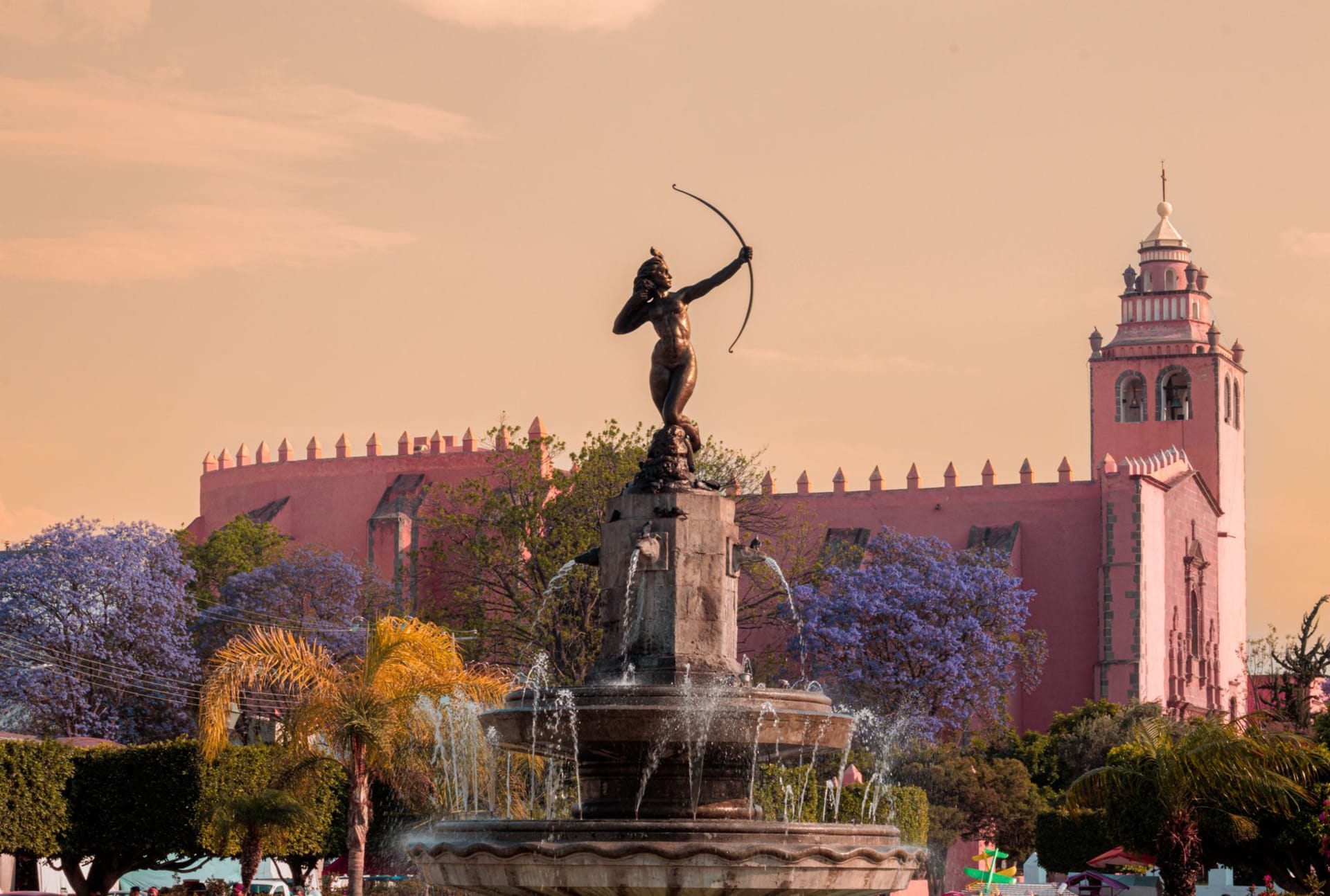
What this means practically is that the colonial infrastructure — the church, the plaza, the basic layout of the town — is intact and genuinely old in a way that is relatively rare in the northeast of Mexico, where most towns developed their current form in the 19th and 20th centuries. The Parroquia de San Juan Bautista is a solid, unshowy colonial church, not the architectural exclamation point that you find in the mining towns of the Bajío or the pilgrimage cities of the Guadalajara region. It is a frontier church, built to last and not to impress.
The plaza in front of it was empty when I arrived at two in the afternoon. There was one man crossing the far corner, walking fast, clearly going somewhere specific. There was a dog sleeping in the shade of the church steps, lying flat on its side in the way that dogs in hot climates sleep, entirely committed to immobility. The dog did not react to my arrival. It had made a decision about the afternoon.

Lunch at the Only Open Restaurant
I found exactly one restaurant open in Cerralvo on a Thursday afternoon. It was near the market building, a small comedor with three occupied tables and a menu that was essentially northern Mexican standards: carne asada, machaca, cabrito if you called ahead, beans, rice, flour tortillas.
I ordered carne asada, which arrived as a thin, well-seasoned piece of beef grilled over the direct flame that gives northeastern carne asada its specific slightly charred quality. The beans were charro-style — soupy pintos with bacon. The tortillas were flour, made that morning. It was unpretentious and completely satisfying in the way that straightforward food cooked without pretension consistently is.
The woman running the restaurant was curious about where I’d come from. Monterrey was the expected answer. France was less expected. She told me her son lived in Monterrey and we talked about that for a while. This is the texture of arriving alone in small Mexican towns: people are curious and direct about it, which I prefer to the transactional anonymity of tourist infrastructure.
I left Cerralvo at around four in the afternoon. I drove back to Monterrey on the same highway I’d arrived on, through the same flat scrub, watching the light on the mesquite go gold and then orange in the late afternoon.

Getting There
Cerralvo is about 100 kilometers northeast of Monterrey on Federal Highway 54. There are local bus services from Monterrey but they are infrequent; a car is the practical choice. The drive is straightforward and the road is good. There is no accommodation in Cerralvo — this is a half-day or full-day excursion from Monterrey. Go on a weekday if you want the experience of a town entirely undisturbed by tourism. The heat in summer is significant — the northern Nuevo León plains are genuinely hot from June through September. Come between October and March for manageable temperatures.