Bustamante
"Sixty kilometers from one of Mexico's largest industrial cities, the plaza was so quiet I could hear the fountain."
I drove to Bustamante on a Sunday afternoon from Monterrey, mostly because I was tired of Monterrey and wanted hills. The highway north from the city runs through industrial landscape for the first twenty minutes — factories, logistics parks, the infrastructure of a serious manufacturing economy — and then the terrain starts to change. The flat valley gives way to limestone foothills, the ochre and grey of the Sierra Madre Oriental beginning to organize itself into something dramatic, and by the time I reached the turnoff for Bustamante the city behind me might have been a different country.
Monterrey is an hour away by road and seems much further.
The Cave
The Cueva del Infierno — the Cave of Hell — is the reason most people make the drive from Monterrey, and it is a legitimate reason. The cave system extends several hundred meters into the limestone hillside above the town, with chambers of stalactites and stalagmites that took the kind of time to form that makes you adjust your sense of scale.
Guided tours leave from the entrance at regular intervals. My guide was a man in his fifties who had apparently been leading these tours for many years and had not grown bored of the formations. This is more unusual than it sounds. I have done cave tours where the guide has the manner of someone running a very slow errand. This man stopped at a particular stalactite cluster and pointed out the way the mineral deposits had created a column that was very close to, but had not yet connected with, the stalagmite below it. He explained how long this had taken. He watched my face while I processed this information.
“Another two hundred years,” he said, when I asked how much longer before the two formations would join. He said it with the satisfaction of someone who has personally scheduled it.
The formations themselves are exceptional — some of them translucent, the columns lit from below by the guide’s flashlight turning colors that stalactites apparently shouldn’t have. The cave stays at a constant temperature regardless of the season, which means in the November heat it was refreshingly cool. I came out blinking into the afternoon light and found I had been underground for nearly an hour and a half.

The Church and the Plaza
The parish church of Bustamante contains baroque altarpieces that seem, on first encounter, to be in the wrong place. Churches with altarpieces this elaborate are usually in state capitals, in wealthy colonial cities, in places that had the money and the population to produce or import something this significant. Bustamante is a small town in the foothills of Nuevo León, and the altarpieces are gilded and complex and layered with figures in a way that would not be out of place in Zacatecas or San Luis Potosí.
The explanation, as far as I could reconstruct it, is the silver and mining wealth that moved through this part of the Sierra Madre Oriental in the colonial period — money that arrived, got spent, and left the churches behind. France has this too, in small market towns in Burgundy or the Auvergne with churches whose scale and decoration speak to a wealth that has long since departed. You look at the altarpiece and you’re looking at the past of a place, not its present.
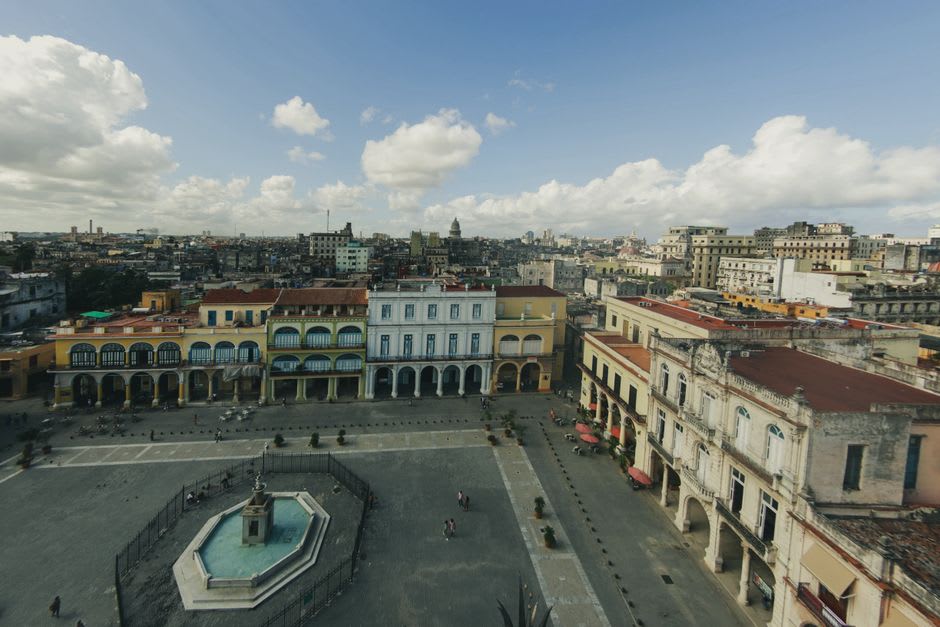
The plaza in front of the church was genuinely, completely quiet on that Sunday afternoon. Two older men on a bench. A woman with a child at the fountain. The sound of the water. I sat there for half an hour before going to find something to eat, which took me past the citrus orchards at the edge of town — orange trees visible over low walls, the smell of them in the air.
The Drive and the Orchards
The road between Monterrey and Bustamante passes through the beginning of the Nuevo León sierra country, and it is a good drive. The limestone is dramatic here — the same geology that produces the Cañón de Potrero Chico further south, tall pale walls and vertical faces. The orchards in the valley around Bustamante are a different texture: orderly rows of citrus visible against the sierra backdrop, an agricultural landscape inserted into something much older and more geological.
I bought oranges from a roadside stand on the way back to Monterrey and ate two of them in the car, which is the best possible use of fresh citrus. They were very sweet. The drive back into Monterrey — through the industrial zone, the highway noise returning, the city reassembling itself around me — felt like a different kind of Mexico than the one I had spent the afternoon in.