Tepic
"I spent four hours in the Huichol market buying things I cannot afford and eating tejuino from a street stall and I am still not sure I got out in time."
I came to Tepic without high expectations, which is my fault for not paying better attention. I had read that it was a transit city — a place people passed through on the way to Mazatlán or Puerto Vallarta or the Nayarit coast — and had absorbed this description uncritically. I stayed for a night and spent most of the next day in the permanent market, and I left wishing I had scheduled two.
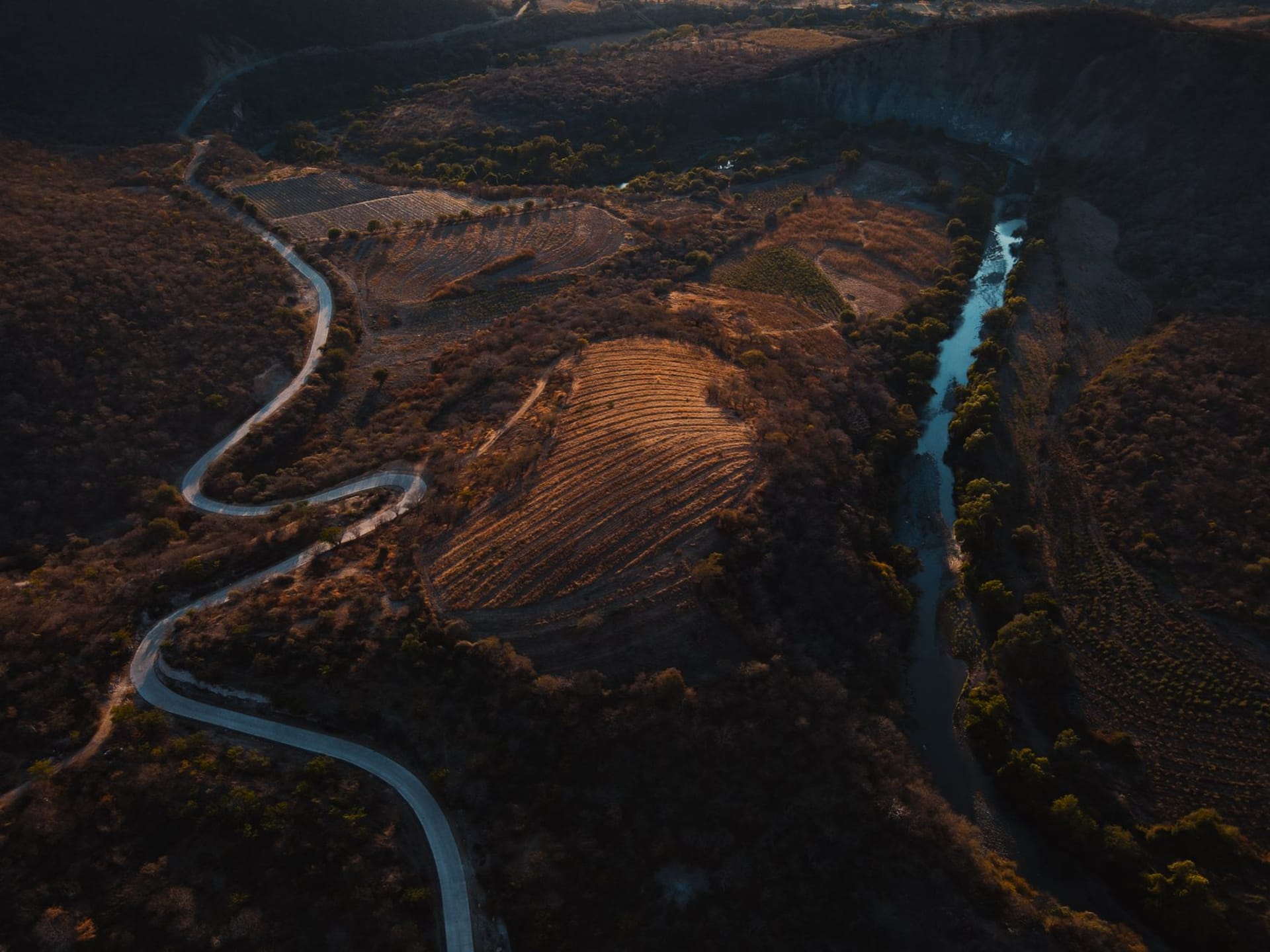
Tepic sits in the foothills of the western Sierra Madre at about 900 meters, which gives it a climate that is pleasantly temperate compared to the coastal cities either side of it. The city is medium-sized and colonial in its bones: a central square, a cathedral, a grid of streets that radiates outward from the historic core. It is not, on the surface, the most spectacular city in this part of Mexico. The surface is misleading.
The Wixáritari Market
The Huichol — who call themselves Wixáritari — are an indigenous people of the Sierra Madre Occidental whose homeland straddles the borders of Nayarit, Jalisco, Durango, and Zacatecas. They are known, among other things, for a material culture that is extraordinary: yarn paintings called nierika, beaded objects that cover entire surfaces in patterns drawn from their cosmological and ceremonial world, embroidered clothing in colors that I would have told you were excessive if I hadn’t seen them working together.
The permanent Wixáritari market in Tepic, inside the main market building, is a different category of experience from what you see on the tourist circuit. The beaded skulls and deer heads sold in Puerto Vallarta shops are mass-produced pieces designed for export, and they are made with different materials and different intentions than what the artisans in Tepic are selling. The difference is visible and significant the moment you compare them.
I spent four hours at those stalls. The nierika — the yarn paintings — depict cosmological narratives: deer, serpents, corn, the peyote cactus that is central to Wixáritari ceremony, the sun. The artisan at one table explained some of the iconography in the painting I was holding, in Spanish, with the patient but slightly resigned air of someone who has had this conversation many times and knows that the tourist will understand perhaps thirty percent of what they are told. I understood perhaps twenty percent. I bought the painting.
I also bought a small beaded gourd that I had no practical use for and a piece of embroidery whose colors — turquoise, orange, deep red, a very specific yellow — were so precisely right together that I simply could not leave without it. My budget for the Tepic visit had not anticipated the Wixáritari market. This is the market’s fault.
Tejuino and the Street
Between stalls I ate. Outside the market building, a woman was selling tejuino from a large container — fermented corn drink, served cold over shaved ice, with a squeeze of lime and a pinch of salt. Tejuino is technically alcoholic in the sense that it has fermented, but the alcohol content is low enough that it functions as a refreshment rather than a decision. It tastes earthy and slightly sour, cold and immediately refreshing in the heat of the market entrance. I had two cups.
Near the market, I ate tacos from a cart — simple tacos de frijoles with crumbled cheese, the kind of thing that costs twelve pesos and is exactly what you want when you’ve been standing in a market for three hours. Mexican street food operates on the principle that the best thing to eat is whatever is being cooked closest to you at the moment you’re hungry, and in Tepic this principle produced good results consistently.
The Museo and the Church
The Museo Regional de Nayarit, a short walk from the central square, is small and curated well. The pre-Hispanic ceramic collection is particularly strong — figurines from the shaft tomb tradition of western Mexico, the same tradition that produces the famous “Colima dogs,” in this case Nayarit-specific pieces with the distinctive flattened forms and narrative detail that make western Mexican ceramics unlike anything from central or Oaxacan traditions. I spent forty minutes there and could have spent two hours.
The La Cruz de Zacate church, on the north side of the historic center, has a cross-shaped atrium that is unusual in Mexican colonial religious architecture. The cross shape allowed outdoor processions and ceremonies in four different directions simultaneously, a practical solution to converting large populations that, like the open chapels of Morelos and Puebla, tells you something about the scale and urgency of the colonial religious project. The church itself is late colonial, with a facade that sits somewhere between austere and ornate in the way Nayarit colonial architecture tends to.
Tepic is three hours from Puerto Vallarta and five hours from Guadalajara by highway. It deserves to be a destination, not a transit. I am trying to say this more loudly.
