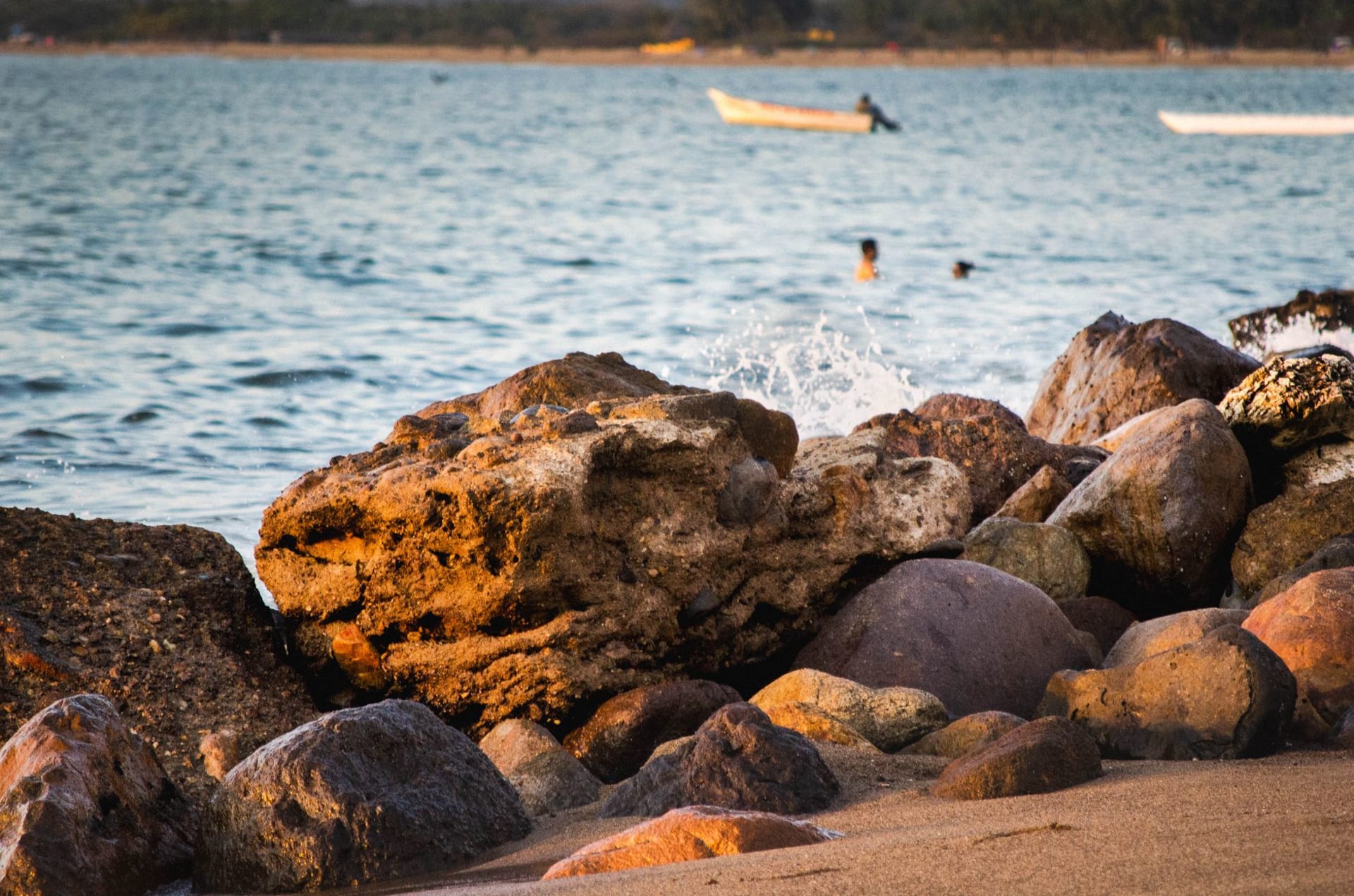
Rincón de Guayabitos
"I was, as far as I could tell, the only visibly foreign person on the beach. It was the most relaxed I'd felt in months."
I found Rincón de Guayabitos by accident, which is probably the best way to find it. I was driving north from Puerto Vallarta toward Tepic and stopped for fuel in a town called La Peñita de Jaltemba, which is the municipality that also contains Guayabitos. Someone at the fuel station mentioned the beach. I had no particular plan. I drove the two kilometers to the coast, saw the bay, and booked two nights at the first hotel I found.
The bay is the thing. It’s a wide crescent protected by a headland to the north and a small island offshore, which means the water inside is calm in a way that Pacific Mexico rarely is — the kind of calm where you can float on your back and watch the pelicans without worrying about being knocked over. The beach itself is clean and wide, with the particular grey-tan sand of the Nayarit coast. Fishing lanchas pulled up near the waterline. A few palapa restaurants at the back edge of the beach.
The Domestic Beach Economy
What made Guayabitos interesting to me wasn’t the beach, which is genuinely good, but the social texture of it. The hotels are modest — two and three-star family places with pools and small restaurants, the kind of hotels that charge reasonable prices because they’re competing for Mexican domestic tourists, not for international travelers willing to pay Puerto Vallarta rates. The restaurants on the beach serve whole fried fish and ceviche and cold beer at prices that reflect the same competitive reality.
The families there were from Guadalajara mostly, with some from Tepic and the Nayarit interior. Big groups, multiple generations, children running into the water while grandparents watched from plastic chairs under umbrellas. It is exactly the atmosphere of the French family beach resorts I grew up visiting — Saint-Jean-de-Luz, the Atlantic coast, places where the visitors are domestic and the prices are honest and nobody is performing for Instagram. I had not expected to find this feeling in Mexico, and finding it gave me a specific kind of comfort.
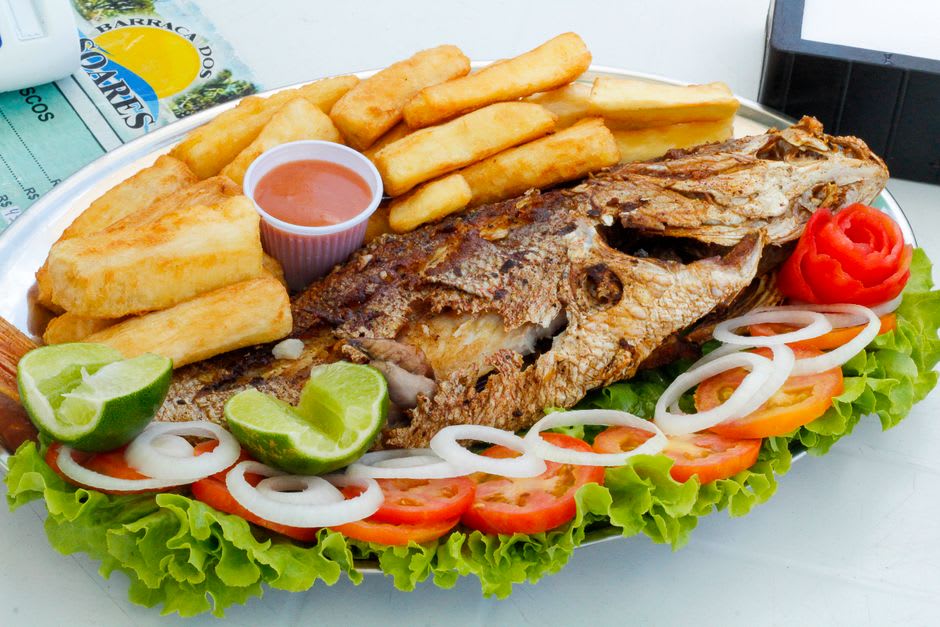
I ate snapper both evenings, which was the right decision both times. The first night it was a whole grilled huachinango with lime and chiles and a mound of rice, at a palapa restaurant where the tables were plastic and the fish had been in the water that morning. The second night was essentially the same meal at a different palapa and was equally good. Straightforward cooking with good ingredients requires no augmentation.
The Lagoon and the Lanchas
The Laguna de Copalita is a freshwater lagoon accessible by lancha from the beach — the boat operators charge a small fee and take you through a narrow channel between the beach and the lagoon. The lagoon is surrounded by mangroves, and the transition from salt to fresh water happens in a matter of meters, which is visible in the vegetation and audible in the change in bird calls.
I went in the morning, when the herons were working the shallows at the mangrove edges. Great blue herons standing absolutely still in ankle-deep water, the same patient stillness I associate with professional fishing. There were also wood storks — those prehistoric-looking birds with bald heads and massive bills — and at least two species of egret I couldn’t identify. The whole excursion took about ninety minutes and cost less than a coffee in Puerto Vallarta.
The lancha driver pointed out a freshwater fish in the shallows of the lagoon that I couldn’t identify — dark green, maybe 30 centimeters long, moving slowly near the surface. He named it in Spanish. I’ve forgotten the name. It was clearly not alarmed by the boat, which is either a sign of healthy fish density or a sign that the tourists who visit are too well-behaved to throw things, probably both.

Getting There
Guayabitos is about 60 kilometers north of Puerto Vallarta on the coastal highway. Buses run regularly from Puerto Vallarta’s bus terminal — the journey is about 90 minutes. From Tepic, the capital of Nayarit, it’s about 90 kilometers south, also about 90 minutes. The town has no high season in the international tourist sense, but Mexican school holidays — July and August, Semana Santa, December holidays — bring higher prices and more people. Come in November through June for the combination of good weather and manageable crowds. Stay at least two nights to actually feel like you’ve been somewhere rather than just passing through.