Punta Mita
"January morning: four people on the best wave on the bay, and a humpback breaching two hundred meters outside."
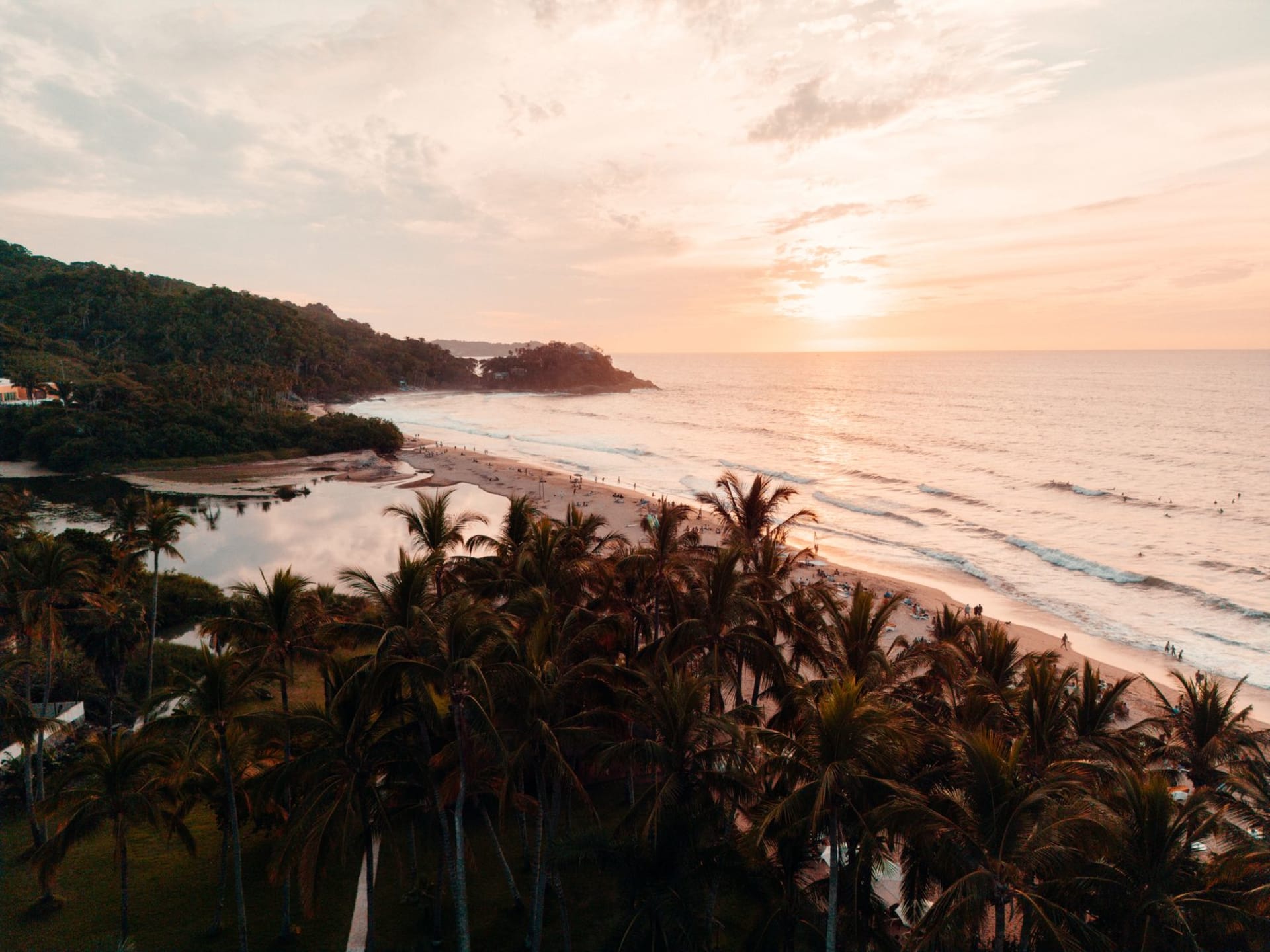
Punta Mita is a contradiction that Mexico handles with characteristic composure. On one side of the peninsula there is a Four Seasons resort — security gate, manicured lawns, golf carts, the specific silence of expensive leisure — and on the other side there is one of the most serious surf breaks in Nayarit, accessible by panga, where the water is cold enough in January that your face goes numb within twenty minutes. Both sides occupy the same piece of land. Neither seems particularly bothered by the other.
The peninsula extends west from the northern end of Banderas Bay, the horseshoe-shaped bay shared by Puerto Vallarta at the southern end (in Jalisco) and the Nayarit coast to the north. The tip of the peninsula — Punta Mita proper — sits at the bay’s entrance. To the west, the Pacific. To the east, the sheltered inner bay. To the south, on clear days, you can see the Marieta Islands — a cluster of volcanic formations the Mexican navy used for target practice for decades and then, finding them beautiful despite the craters, turned into a protected reserve with hidden beaches accessible only by boat.
I drove to Punta Mita from Puerto Vallarta on a December morning, having heard about the El Anclote break from a surfer I met at a fish taco stand in Bucerias. I was not an adequate surfer for the main break — it is an outer reef, fast and hollow, the domain of people who know exactly what they’re doing — but I paddled out on a smaller inside wave and watched the lineup from a safe distance. The waves were head-high and peeling in a way that produced long rides. Four surfers were out, two of them excellent. The crowd ratio was better than anything in Europe and better than anything in Mexico south of this latitude.
The Surf
Punta Mita has several breaks of different characters depending on conditions and swell direction.
El Anclote is the main surf town — a beach and break at the northeastern tip of the peninsula, before the private resort zone begins. The break works on north swells from October through March and produces a powerful right and a shorter left. It is not for beginners. The local surf shops at El Anclote rent boards and give lessons for those who want to learn on easier inside waves first.
La Lancha is a beach break south of El Anclote with friendlier waves — more forgiving in size and shape, workable for intermediate surfers, sand bottom rather than reef. More easily accessible from the road.
The outer reefs accessible by panga — El Faro and the main Punta Mita point break among them — are where the peninsula’s reputation was built. These are world-class waves by any objective standard: fast, hollow, consistently good when the swell cooperates. Hiring a panga to reach them is inexpensive and the boat drivers know the lineup and the conditions better than any surf report. Sitting in a lineup at a panga-access break with a small group, the peninsula behind you and nothing in front but the Pacific, is one of the better experiences available in Mexico for anyone who surfs.
El Morro and the Blowhole
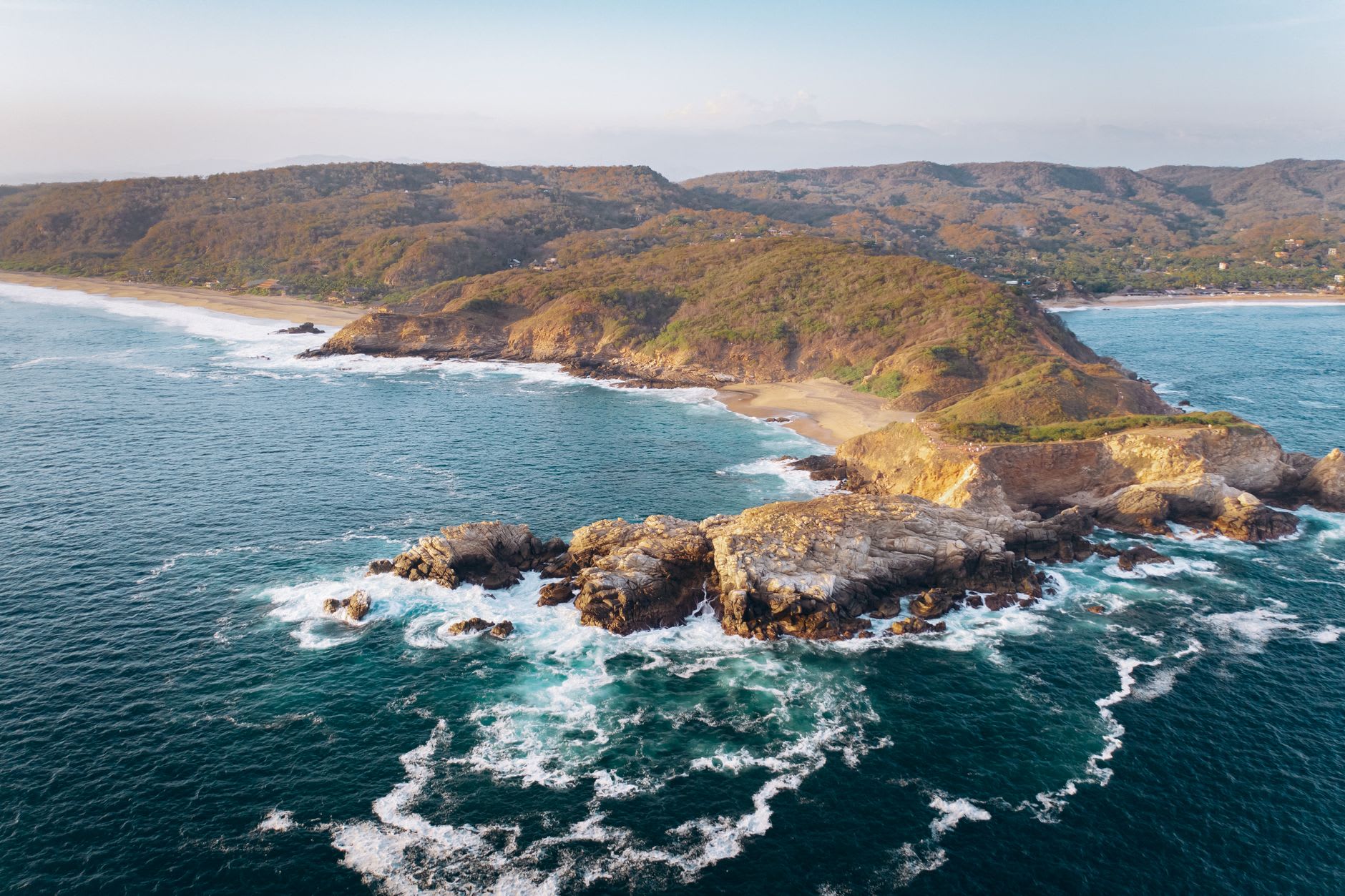
El Morro is a rocky islet about a kilometer offshore from the western side of the peninsula — a volcanic plug rising from the water, its surface inhabited by magnificent frigatebirds, blue-footed boobies, and in season various species of tern. The islet is reachable by panga from El Anclote in about twenty minutes.
What El Morro is known for, beyond the surf on its outer face, is the blowhole on its western side where incoming swells are channeled through a cave in the rock and forced up through a narrow opening in the surface. The shape of the opening is heart-like — enough so that it has become a minor social-media landmark — but the effect in person is less romantic and more physically dramatic: on a medium-to-large swell, the blowhole erupts every thirty to forty seconds with a jet of water and a sound — a low thud followed by a rushing exhale — that you feel in your sternum at fifty meters distance.
The panga drivers who do El Morro tours know the timing and approach from the sheltered side. The ride through the inner channel, the volcanic rock walls of the islet close on both sides with surge running beneath the boat, is briefly alarming in the best way. Standing on the islet’s accessible ledge and watching the blowhole through a swell cycle — the pause, the pressure building, the eruption, the white water collapsing — is hypnotic in the way powerful water processes always are. Lia photographed the blowhole for twenty minutes and showed me the results afterward. None of the photographs communicated the sound.
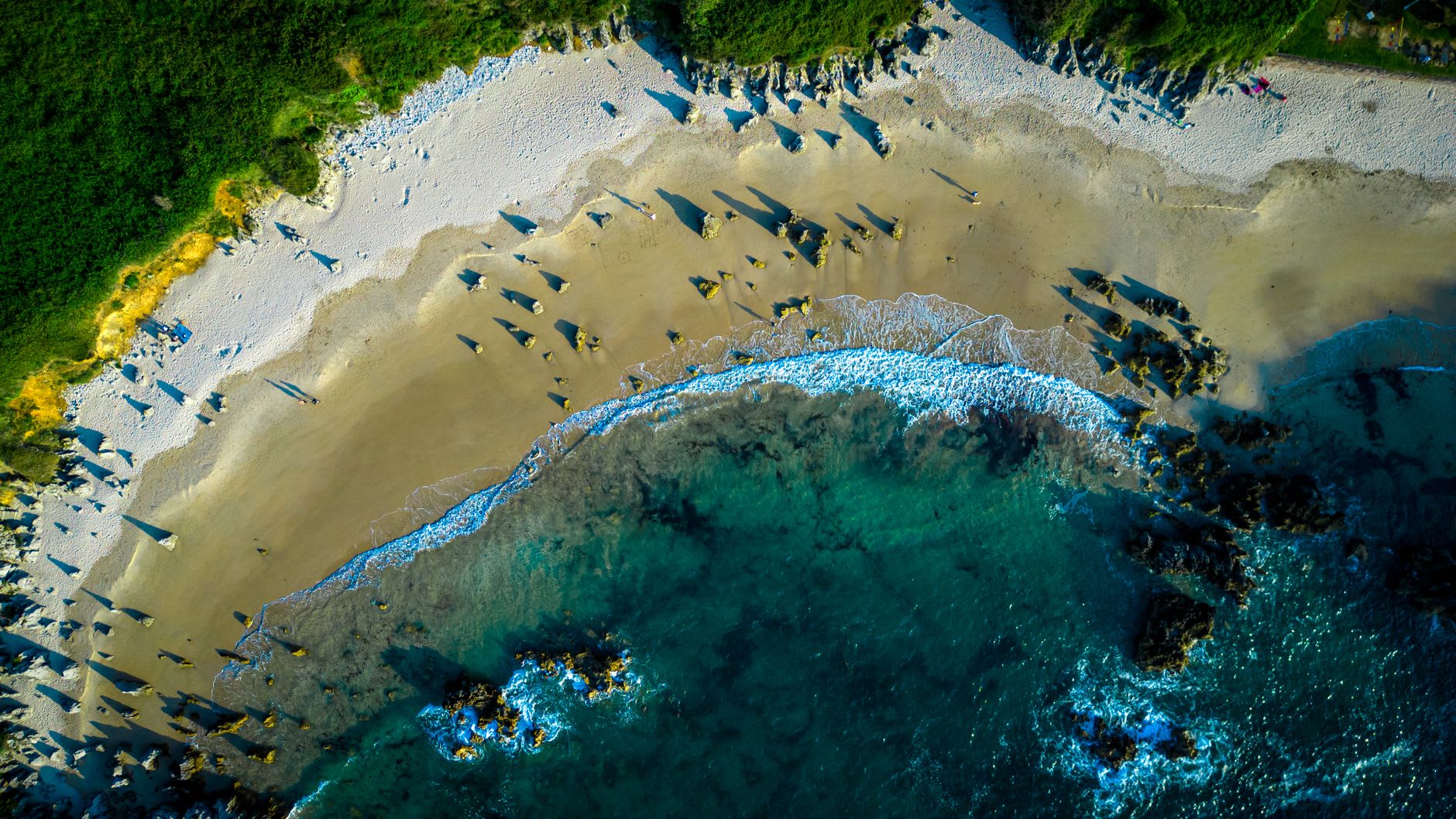
The blue-footed boobies on the islet are indifferent to human presence at a range that feels inappropriate — they nest on the accessible ledges and do not move when you approach within a meter. I photographed one from a distance that would have alarmed any wildlife photographer with better instincts than mine. It regarded me with the blank confidence of a species that has decided humans are not interesting enough to flee from.
The Whales
Humpback whales use Banderas Bay from approximately December through March as a breeding and calving ground. The bay is deep and sheltered, warmer than the open Pacific in winter, and the whales arrive reliably enough that the whale-watching operators of Puerto Vallarta and Punta Mita have built a business around guaranteeing sightings during those months.
I hired a panga from El Anclote on a January morning with Lia, a guide named Salvador who had been doing this for eleven years, and a French couple from Lyon who were, like us, in a state of barely contained excitement. The protocol is straightforward: approach slowly, cut the engine at a hundred meters, let the boat drift. The whales surface in their own time.
What I was not prepared for was the scale. I have seen cetaceans in documentaries and understood they were large. The first humpback that surfaced fifteen meters from our stationary panga was not the conceptual large of documentary footage. It was an animal of physical mass that displaced water in a wave that rocked our boat. Its breath — the blow — came with a smell: salty, faintly fishy, unmistakably alive in a way that the word “alive” had not previously communicated to me applied to something that large. It surfaced three times, dove, and a juvenile appeared alongside it. Smaller, but not small.
Salvador said something in Spanish I only partially caught but asked him to repeat slowly: “Every year I see them and every year I am surprised.” He had been seeing them for eleven years. He still meant it.
The Four Seasons Problem
There is a point on the road into Punta Mita where a private security gate marks the beginning of the resort zone — the Four Seasons on one side, a Ritz-Carlton on the other, private gated communities beyond. The gate is jarring not because the resorts are bad (they are apparently very good) but because the privatization of a coastal peninsula closes options permanently.
The Mexican constitution guarantees public access to all beaches, but navigating the practical reality of reaching beaches within resort zones requires a boat. The locals who have been surfing Punta Mita since before the resorts arrived — Salvador among them — have organized this reality into the panga service accordingly. It is a workaround for a problem that should not exist. It functions. It should not have to.
Getting there: From Puerto Vallarta, the drive to El Anclote takes forty-five to sixty minutes north on the highway toward Tepic, then west at Higuera Blanca. Taxis from Puerto Vallarta are available and not prohibitively expensive. Local buses from Bucerias cover the route.
When to go: December through March for whale watching — this is the window and it is reliable. October through April for consistent surf. June and July bring south swells that can produce good waves on the point breaks. The peninsula in high season (December through March) is busy in the resort zone but the surf beach at El Anclote retains its local character and the panga operators work every day that the Pacific gives them something to work with.