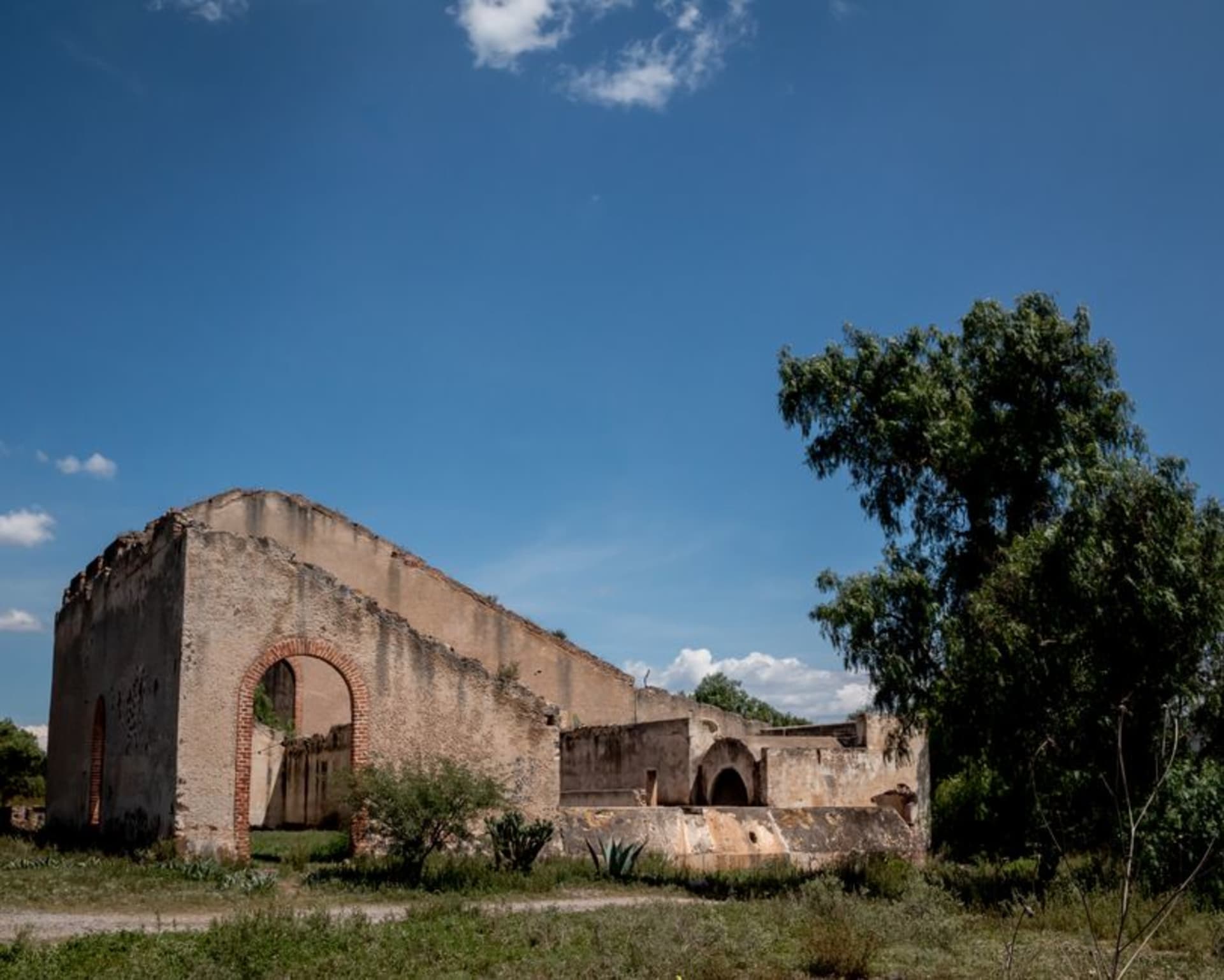
Ixtlán del Río
"I had El Cerrito entirely to myself for an hour, which felt like a strange privilege for a thousand-year-old pyramid sitting next to a highway."
I pulled off the highway on the eastern edge of Ixtlán del Río around eleven in the morning, the kind of hour when you haven’t quite committed to stopping anywhere. I’d seen El Cerrito mentioned in a single line in something I’d read weeks earlier — no photograph, no context — and that was enough. The turnoff is easy to miss: a low fence, a sign the color of bureaucracy, a dirt area that may or may not count as a parking lot. The caretaker’s booth was unoccupied. I let myself through the gate, paid the modest entry fee into a collection can, and walked into a site that was, completely, mine.
El Cerrito and the Round Temple
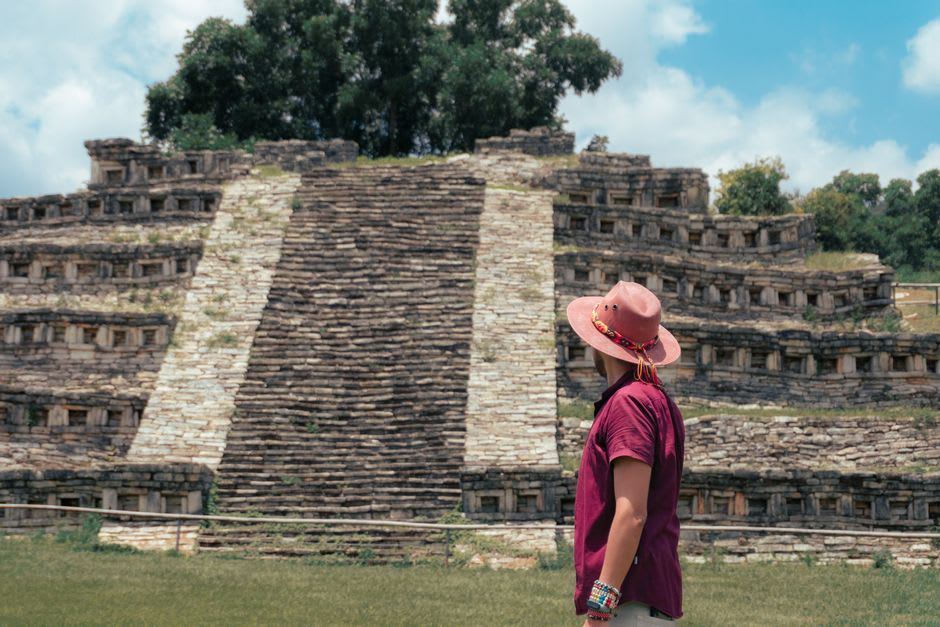
The round temple is the thing. It stands at the center of the complex — circular, tiered, built in a style that doesn’t quite match anything you’d see at Teotihuacan or Monte Albán. Archaeologists connect it to the Aztatlán tradition, a culture that spread through western Mexico between roughly 900 and 1200 CE, and they note stylistic echoes of the Gulf Coast — a sign of trade networks, migration, or something we still don’t fully understand. I am not an archaeologist. What I know is that standing at the base of the round temple, with the highway audible a few hundred meters away and no other visitor in sight, the site produces a specific quiet that the famous ruins cannot replicate. Chichén Itzá has its grandeur but also a thousand people and recorded narration. El Cerrito has a lizard on the top step and whatever interpretation you bring yourself. The platforms are well-maintained; the signage is minimal to the point of being useful only if you already know what you’re looking at. That turns out to be fine.
The Town Behind the Highway
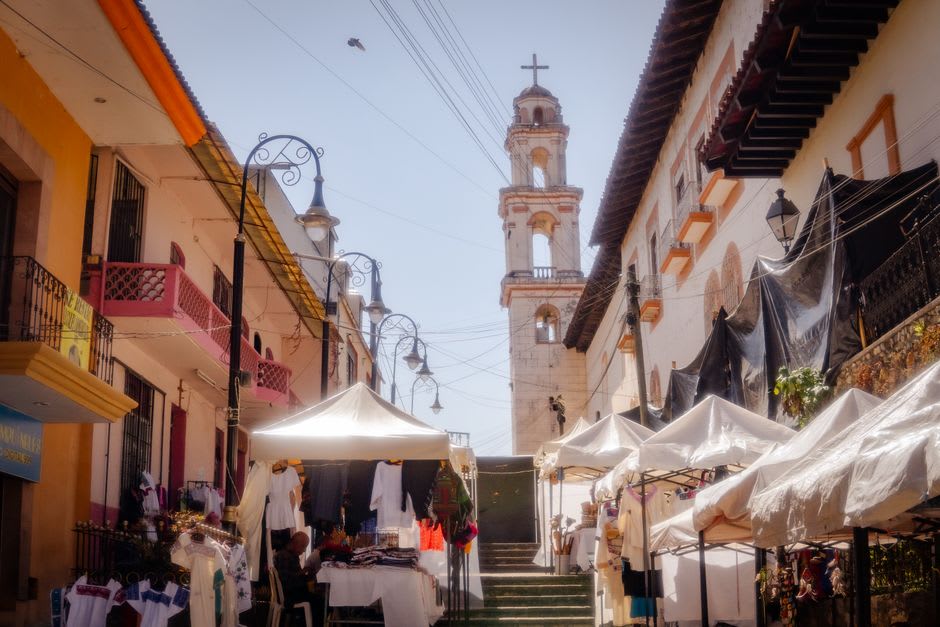
The town center is six or seven blocks from the highway, far enough that most through-traffic never touches it. The main plaza has the quality of Mexican provincial spaces that haven’t been renovated into Instagram utility: paint flaking from the kiosk, benches at odd angles, taco stands setting up around noon. I ate birria at a small fonda on the street running north from the church — plastic stools, a television playing regional news, an owner who didn’t ask where I was from. The birria here is drier than the Guadalajara style, closer to a stew with the broth served separately, and it comes with a house salsa that has more heat than it advertises. The Parroquia de San Juan Bautista faces the plaza: late colonial, modestly scaled, with a facade that shows its age without apology. It’s the kind of church that doesn’t try to impress, which is sometimes the most impressive thing.
Go in the Morning
By ten-thirty the sun is high enough over El Cerrito that the shadows are flat and the stones look bleached. I arrived at eleven and it was already warm; an hour earlier and the light on the platforms would have been better. Bring water — the site has no vendor, no café, nothing. The entry fee when I visited was fifty pesos, cash only; the caretaker may or may not be present, but there’s usually a container for the money. Give yourself ninety minutes at the ruins: more than you think you’ll need, less than you’ll wish you’d taken. Allow another hour for the plaza and lunch in town. This is either a half-day from Tepic or a considered pause on the drive between Guadalajara and the coast — the kind of stop that turns a transit day into something worth remembering.
Getting There
Ixtlán del Río sits on Federal Highway 15, about 75 kilometers east of Tepic and 180 kilometers northwest of Guadalajara — roughly an hour from Tepic by car, two from Guadalajara. Buses on the Tepic-Guadalajara corridor stop in town; Omnibus de México and ETN both serve the route from their respective central stations. Visit between November and April for manageable temperatures and dry roads.