Compostela
"A place that was briefly the edge of the known Spanish world and is now a stop on the way somewhere else. I mean that as a compliment."
Most people who drive from Tepic to Puerto Vallarta treat Compostela as a fuel stop and nothing else. I had read enough about its history to slow down, and I’m glad I did, though I’ll admit it took some effort to get off the highway — the main road bypasses the town center, and there’s a moment of uncertainty about which exit to take.
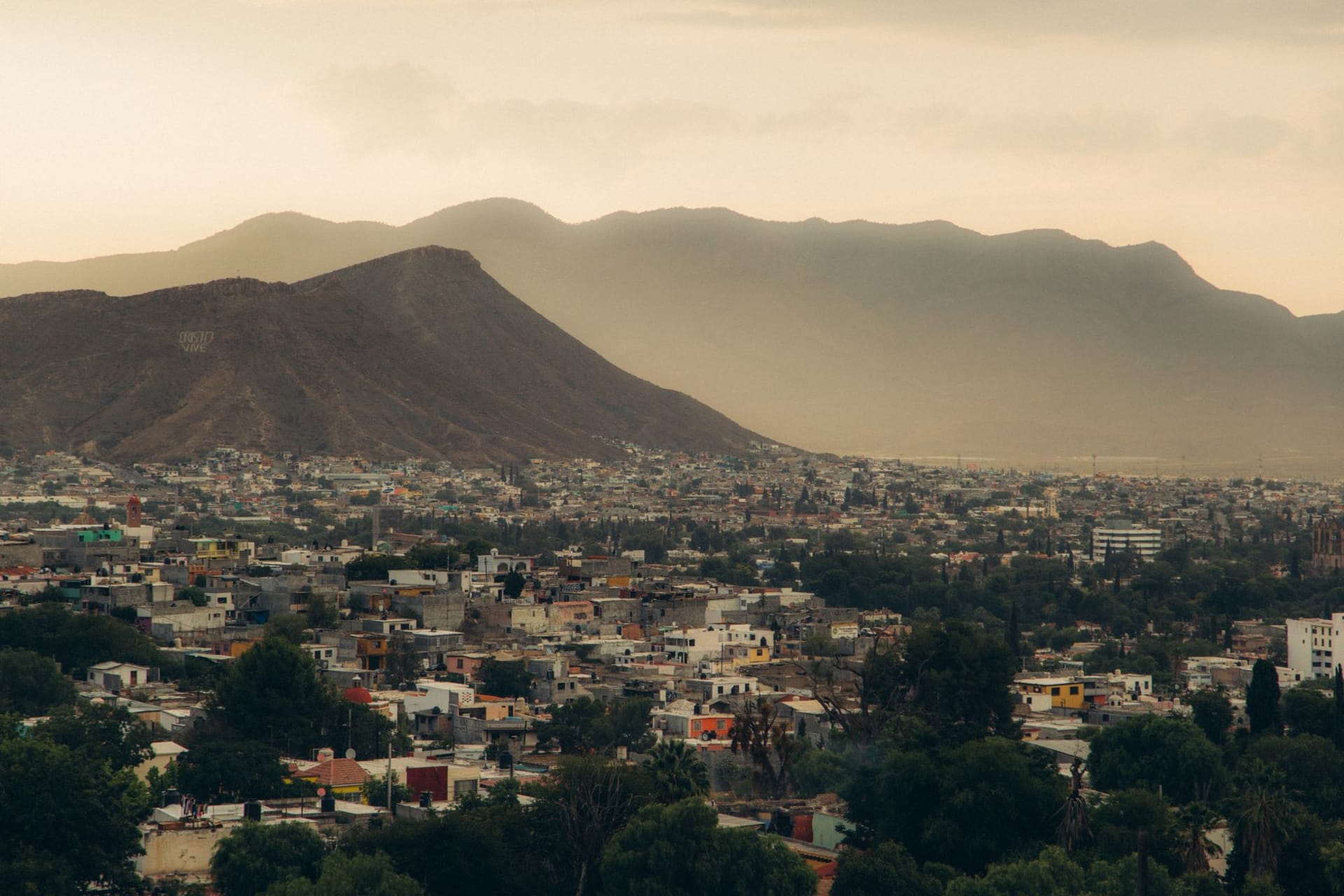
The valley that Compostela sits in is not what I expected. I had anticipated the lush tropical vegetation of the Nayarit coast, the kind of landscape that starts about thirty kilometers to the south. Instead the valley is drier, more agricultural, with a flatness that accommodates the tobacco fields that have been farmed here since the colonial period. Nayarit tobacco is used in Mexican cigar production and in some domestic cigarette brands, and in late spring when the leaves are being processed, apparently the air in the valley carries a sweetness that I’m told is more pleasant than tobacco usually smells. I was there in February, which is before the harvest.
Before Coronado Left
The history here is genuinely startling if you think about the distances involved. In 1540, Francisco Vásquez de Coronado departed from Compostela at the head of an expedition that would travel through what is now Arizona, New Mexico, Texas, Oklahoma, and Kansas before turning back. He was looking for the Seven Cities of Cibola, the mythical rich cities of gold. He didn’t find them. But the expedition traversed territory that Spanish boots had never crossed, and it started from this valley on the Pacific coast, which was then called the New Kingdom of Galicia.
Compostela was the capital of that kingdom — the administrative center for a vast and poorly understood territory stretching from the Pacific coast inland. Coronado was its governor before he became an explorer. The town that served as the launchpad for one of the most ambitious overland journeys in the history of the Americas is now a market town of maybe twenty thousand people serving the agricultural communities between the sierra and the coast. History has a way of redistributing significance.
The Parroquia de Santiago Apóstol is the main architectural remnant of the colonial period and it’s a good one — a baroque facade with the familiar carved stonework of Nayarit colonial religious architecture, the church named for Saint James, which is also the source of the town’s name (after Santiago de Compostela, the pilgrimage destination in Galicia, Spain). The plaza in front of it is well-maintained and largely empty in the middle of a weekday afternoon, with the usual population of retirees and schoolchildren that you find in Mexican town plazas at the hours when the productive population is working.

The Market and the Mango
The market in Compostela operates daily and serves the surrounding agricultural communities. I walked through it looking for something to eat and found, near the entrance, a woman selling mangoes from a crate. They were Manila mangoes — the small, kidney-shaped, intensely sweet variety that grows in the coastal lowlands of western Mexico and is unlike the mangoes I had known in France, which are mostly Kenyan or Brazilian and designed for supermarket durability rather than flavor.
She cut one for me while I waited, peeled it with a paring knife in a continuous spiral, and handed it over on a small stick. I ate it at the entrance to the market. It cost twelve pesos. The sweetness was at a level that makes you momentarily reassess your assumptions about fruit.
The valley light I mentioned at the beginning is something I’ve tried to describe to Lia and not managed to convey properly. It’s different from the coastal light to the south — less intense, more diffuse, filtered by the dust and moisture of an agricultural valley at altitude. The tobacco fields and the dry hillsides catch it differently than the coast does. It is the specific light of an interior valley that is neither mountain nor beach, and I found it unexpectedly beautiful for a place I stopped at because of a historical footnote.

Getting There
Compostela is on Federal Highway 200 between Tepic and Puerto Vallarta, about 50 kilometers south of Tepic and 90 kilometers north of Puerto Vallarta. Buses running the coastal route stop here. The town is easy to visit as a stop on the road between the two cities — plan an hour and a half to see the church, walk the plaza, and eat something at the market. If you’re interested in the colonial history, the Presidencia Municipal sometimes has basic local history exhibits. Come in the dry season — November through April — when the roads are easy and the valley is at its most photogenic.