Tzintzuntzan
"The Purépecha were the only civilization the Aztecs never conquered. Their empire ended with the Spanish, not with Tenochtitlán."
Tzintzuntzan (the name means “place of the hummingbirds” in the Purépecha language) was the capital of the Purépecha empire — the rival civilization that occupied the Michoacán highlands and successfully resisted every Aztec military campaign for a century before the Spanish conquest. When Hernán Cortés sent his lieutenant Nuño de Guzmán to conquer Michoacán in 1522, the Purépecha cazonci (king) Tangaxuan II surrendered without significant military resistance, having seen what happened to the Aztecs. Guzmán had him burned at the stake anyway.
The site on the shores of Lake Pátzcuaro — the Zona Arqueológica de Tzintzuntzan — preserves the great ceremonial platform of the Purépecha capital, with five of the distinctive Purépecha pyramid temples (yácatas) still standing in substantial form. The town around the ruins is a small colonial village with a 16th-century Franciscan convent, the olive trees planted by Bishop Vasco de Quiroga in 1548 (still producing olives; probably the oldest cultivated olive trees in the Americas), and a Day of the Dead tradition of extraordinary quality.
The Yácatas
The Purépecha built their ceremonial structures in a form distinctive from the Aztec or Maya pyramid — the yácata combines a rectangular stepped platform with a circular cone, the two forms joined at the front. The five yácatas at Tzintzuntzan stand on a 450-meter-long platform above the lake, in conditions of preservation that allow the original architectural forms to be read clearly despite the centuries of deterioration.
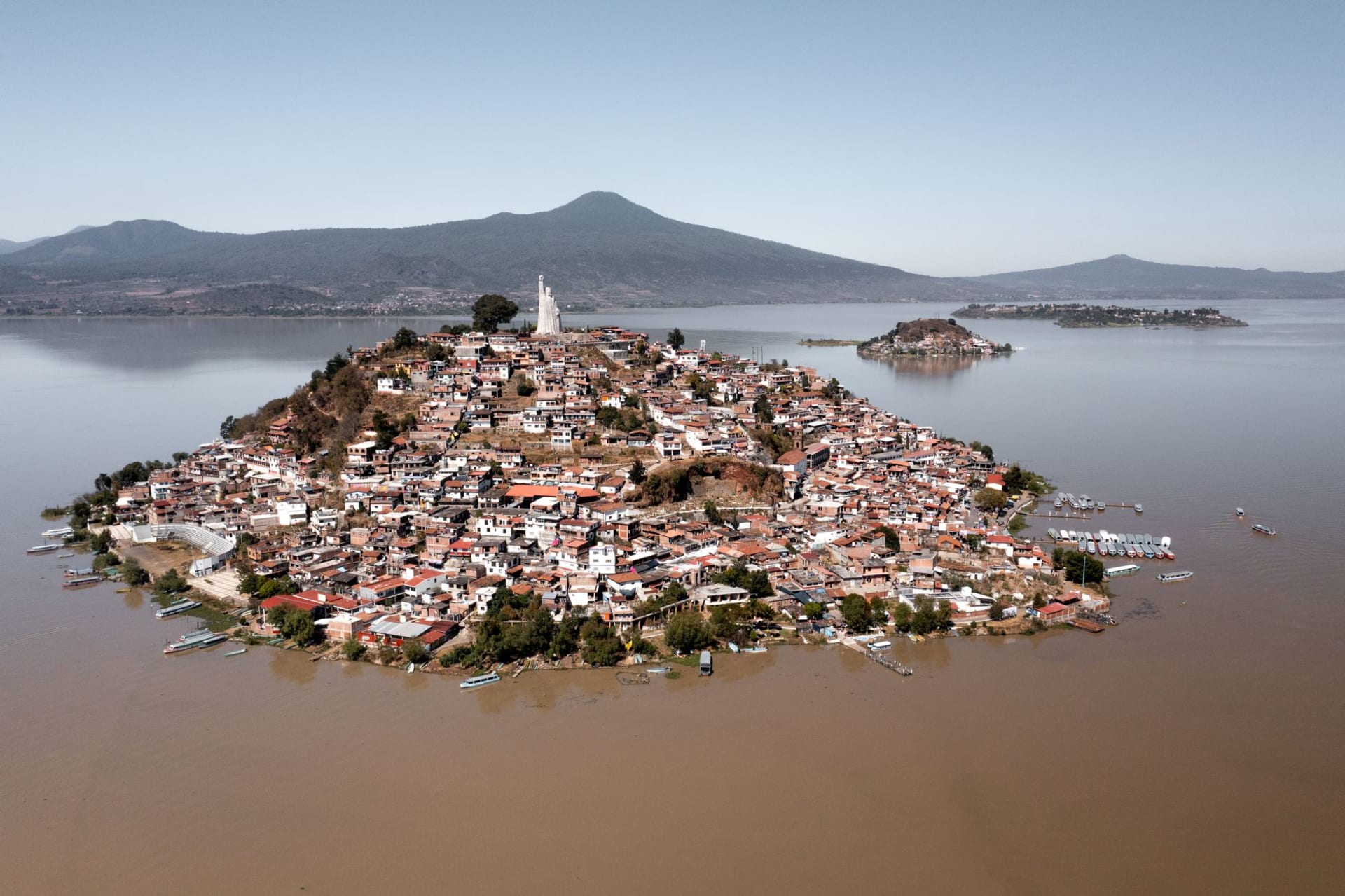
The view from the platform: Lake Pátzcuaro spreading to the south and west, the island of Janitzio visible in the middle distance (where the Day of the Dead cemetery vigil happens; Tzintzuntzan’s own cemetery is less famous but closer and often more affecting), the Michoacán highland ridges behind the lake, and the modern town of Tzintzuntzan directly below the platform’s southern edge.
The site is never crowded. On most mornings it is entirely empty except for the groundskeepers. This is the correct condition for walking the pre-Columbian capital of an empire that controlled the western half of what is now Mexico.
The Franciscan Complex and the Olive Trees
The Ex-Convento de San Francisco — built by the Franciscans beginning in 1525, three years after the Spanish arrived, on land and with labor provided by the Purépecha community — is one of the earliest Franciscan foundations in Mexico and has the particular quality of colonial religious architecture that was built quickly by a community that was not yet sure it would survive.
The olive trees in the convent atrium are the most extraordinary aspect of the visit. Vasco de Quiroga — the bishop who reformed the colonial treatment of the Michoacán indigenous communities and is still revered locally as Tata Vasco — planted the original olive trees here in 1548, bringing cuttings from Spain. The current trees are believed to be direct descendants of the 1548 planting, making them among the oldest planted trees in the Americas. They produce olives in October, which the convent community still harvests.
The atrium where the trees grow, between the convent walls, has the specific quality of a place where something living has been maintained continuously for nearly five centuries.
The Day of the Dead
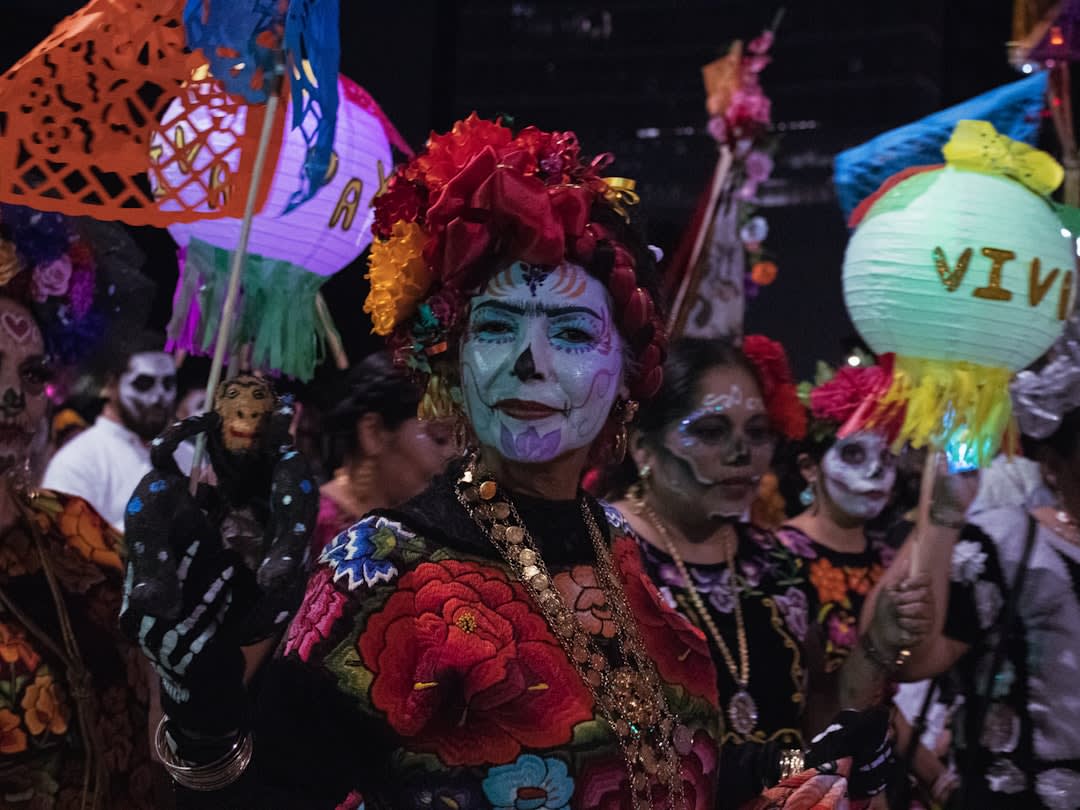
Tzintzuntzan’s Día de los Muertos cemetery (November 1-2) is not as famous as Janitzio’s but is, for most visitors, more accessible and more genuinely intimate — the family vigils at the graves, the marigold petals on the walkways between the stones, the candles and copal smoke and the specific darkness of a rural Michoacán graveyard at midnight. The Purépecha tradition of night vigils at the graves of the recently dead is one of the oldest and most continuous practices in Mexico’s Day of the Dead calendar.
Getting there: Colectivos from Pátzcuaro town (20 minutes) run frequently. Pátzcuaro is 45 minutes from Morelia by bus. The archaeological site is at the north end of the town, walkable from the bus stop. November 1-2 for Day of the Dead (accommodation in Pátzcuaro, day visits to the cemetery).
When to go: Year-round for the ruins. November 1-2 for the cemetery. October for olive harvest at the convent. The lake climate is mild throughout the year.