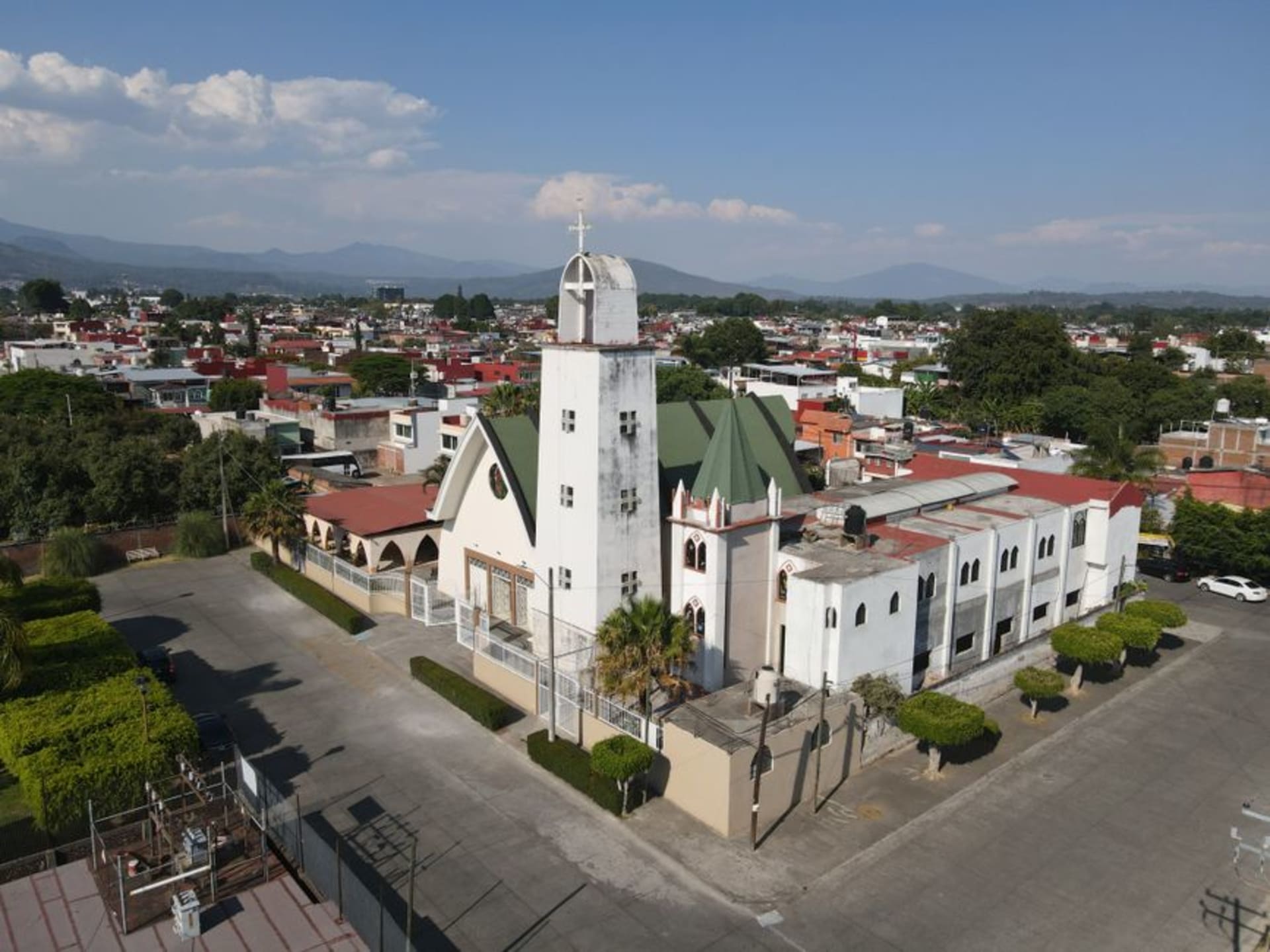
There is something particular about arriving in a Mexican town whose history is tangled with your own country’s worst imperial impulses. I drove into Tacámbaro from the north, past avocado orchards so dense and well-tended they looked less like farms and more like a considered statement about local priorities. The town announces itself on a hillside — cobblestones, a church tower, the kind of view that explains why people have been living here since the sixteenth century. What it doesn’t announce from the road is that in 1865, Belgian soldiers died here by the hundreds fighting for a French-backed emperor, and the town has been thinking about it, quietly and seriously, ever since.
A Battle That History Almost Forgot
The Museo de la Batalla de Tacámbaro sits near the main plaza and takes its subject seriously in a way that modest municipal museums sometimes don’t. I arrived expecting a few dusty rifles and hand-lettered placards. What I found was a carefully assembled account of April 11, 1865, when Republican forces under General Vicente Riva Palacio defeated the Belgian Zouave contingent garrisoned here as part of Maximilian’s imperial project. The Belgians were fighting under French Imperial auspices. I am French. The room had opinions about this, or at least I projected some onto it.
The museum doesn’t let Maximilian off the hook, nor does it oversimplify. The battle mattered because it was one of the first significant Republican victories of that campaign season — proof that the empire’s grip on the interior was already slipping. What struck me was how thoroughly the town has absorbed this episode without making it a spectacle. The pride is real, and so is the historiographical sobriety. Tacámbaro understood before Mexico City did what the final outcome would be.
Cobblestones and Carnitas
The Jardín Principal holds the town’s social life in the way Michoacán plazas tend to — families in the evening, vendors selling esquites from carts, old men on benches conducting the serious business of not talking much. I ate lunch at a small comedor on Calle Hidalgo, which had no written menu, only a woman who told me what was ready: carnitas, frijoles negros, rice, fresh tortillas. The carnitas were Michoacán carnitas, which is to say they were the standard against which all other carnitas are measured — fatty, crisped at the edges, served with their own rendered lard still pooling in the bowl.
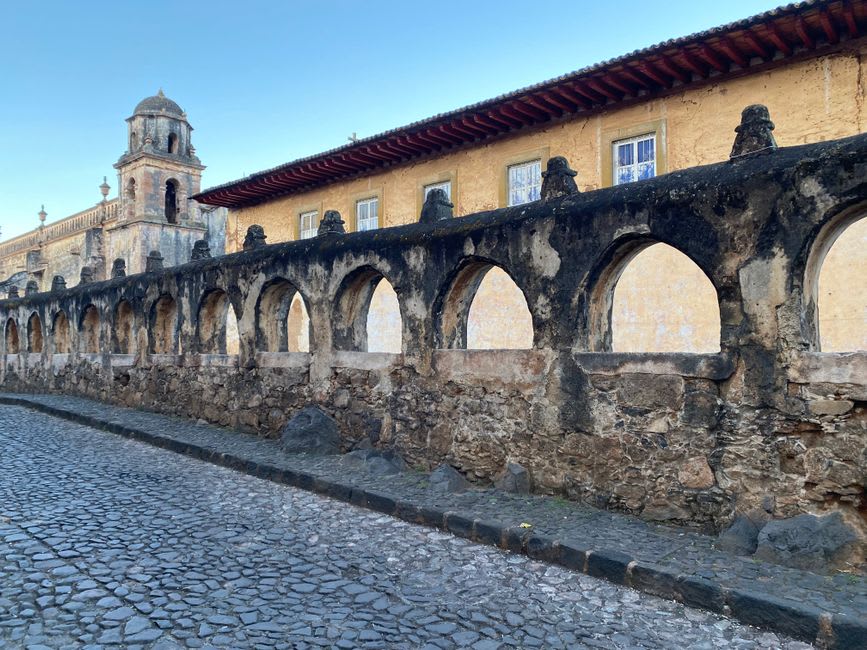
The cobblestone streets here have real gradient. Walking from the plaza up toward the convent, I stopped twice to look back at the valley and the avocado-green hills beyond. In the late afternoon, the light hits them sideways and everything turns briefly gold — the kind of light that makes even a practical agricultural landscape feel briefly mythological.
San Buenaventura
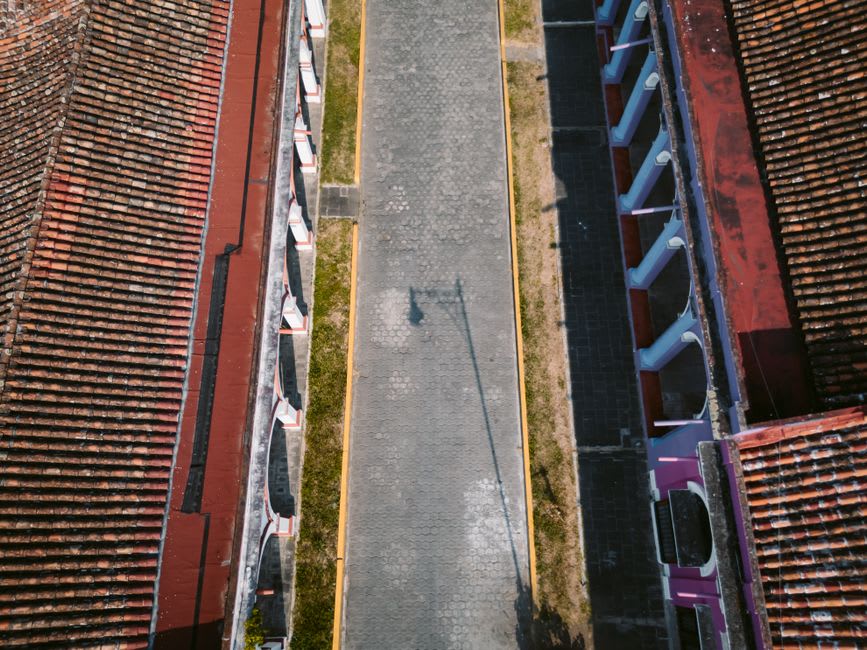
The Ex-Convento de San Buenaventura dates to the mid-sixteenth century, built by Franciscan missionaries in the decades after the Spanish consolidated control of Michoacán. It is large, austere, and better preserved than many I’ve seen in the state. The interior courtyard has that quality of enforced quiet that old convents always carry — not silence exactly, but a kind of acoustic weight. Pale stone, hard midday light. I spent longer there than I intended, mostly sitting on a low wall trying to understand what it meant to build something this permanent in a landscape you had only just arrived in and never fully understood. The Franciscans had opinions about permanence. Tacámbaro has outlasted all of them.
Getting There
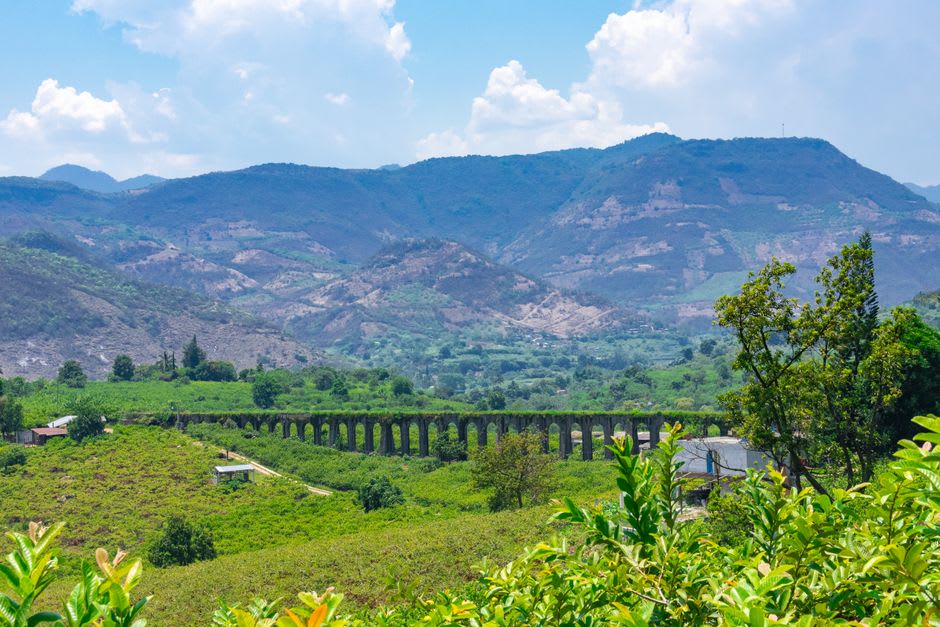
Tacámbaro sits roughly 80 kilometers south of Morelia and about 50 from Pátzcuaro. The most practical approach is from Pátzcuaro — take the road toward Ario de Rosales and branch south. Combis run the route from Pátzcuaro’s central market through the morning hours. The drive takes around an hour through increasingly lush avocado country. Morelia is the logical hub if you’re coming from further afield; there are no direct long-distance buses.