Huandacareo
"Floating in a thermal pool while staring at a colonial church tower is exactly the kind of accidental Mexico afternoon that never shows up in any guide but ends up being the one you remember."
I had a three-hour window between Morelia and Zinapécuaro, and someone at a taquería in the capital had mentioned Huandacareo the way you mention a restaurant you’re not sure is still open — half-shrug, worth a look. The town sits just off the highway, a few kilometers north of the main road, and most cars stay on the asphalt. I turned anyway. What I found was a colonial grid of quiet streets, a zócalo that smelled of cut grass, and two blocks from the church, a gate with hand-painted lettering that read Balneario — hot springs — and cost thirty pesos to enter.
The Thermal Baths
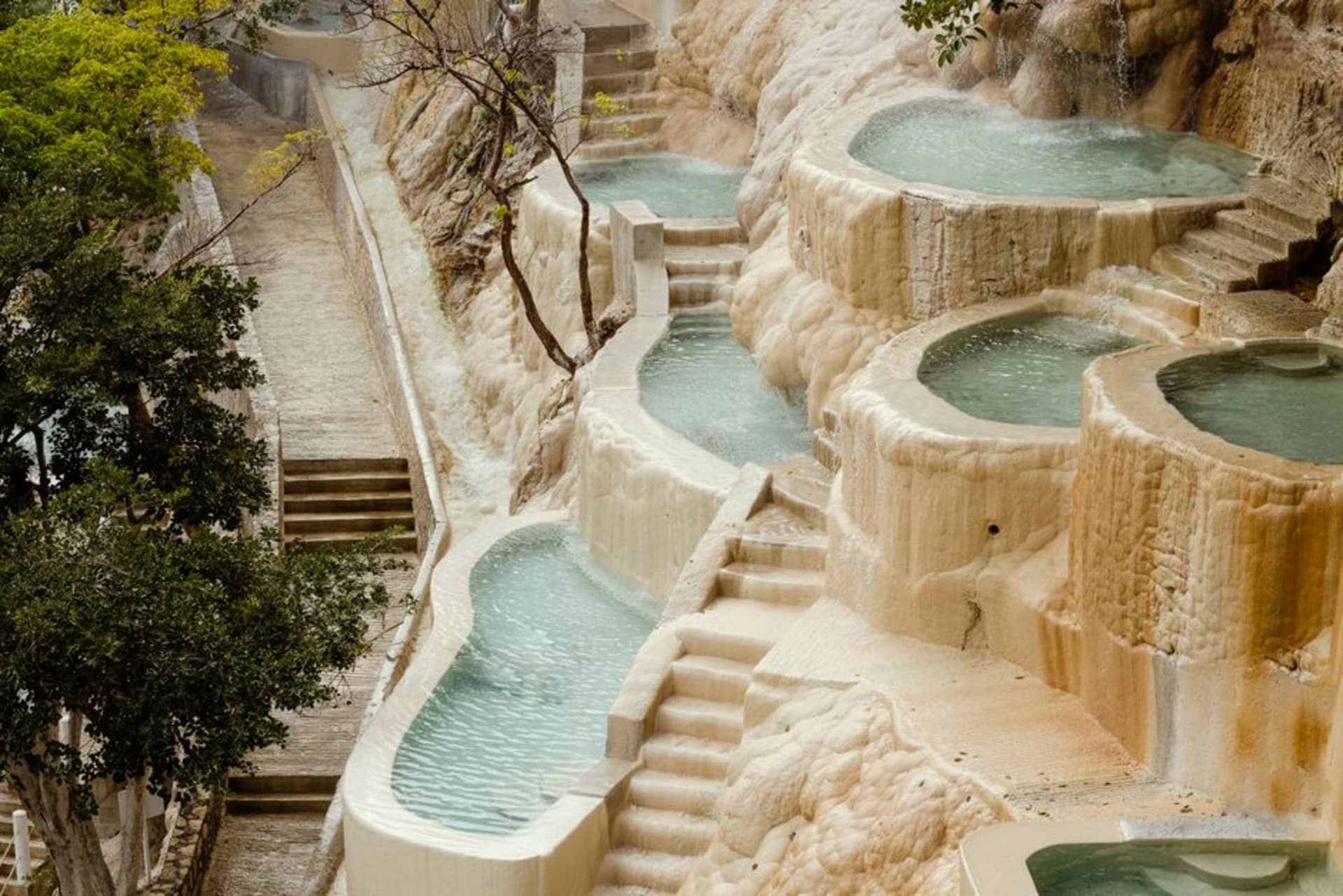
The water comes up from underground at around 38 degrees Celsius, mineral-heavy and faintly sulfurous in the way that makes you feel vaguely medicinal. The main pool at the Balneario Municipal is a long rectangle under a corrugated roof, with concrete benches along the edges and a small shrine tucked into the corner wall. On a Tuesday in March there were four other people in the water — an older couple from Morelia, two teenagers on their phones. That was it. You can feel the warmest current when you drift toward the inlet where the source feeds in. The pool is opaque, slightly greenish, and through a gap in the roof panels the bell tower of San Pedro is visible, backlit by late-afternoon sky. I had planned on twenty minutes. I stayed for ninety.
The Archaeological Zone
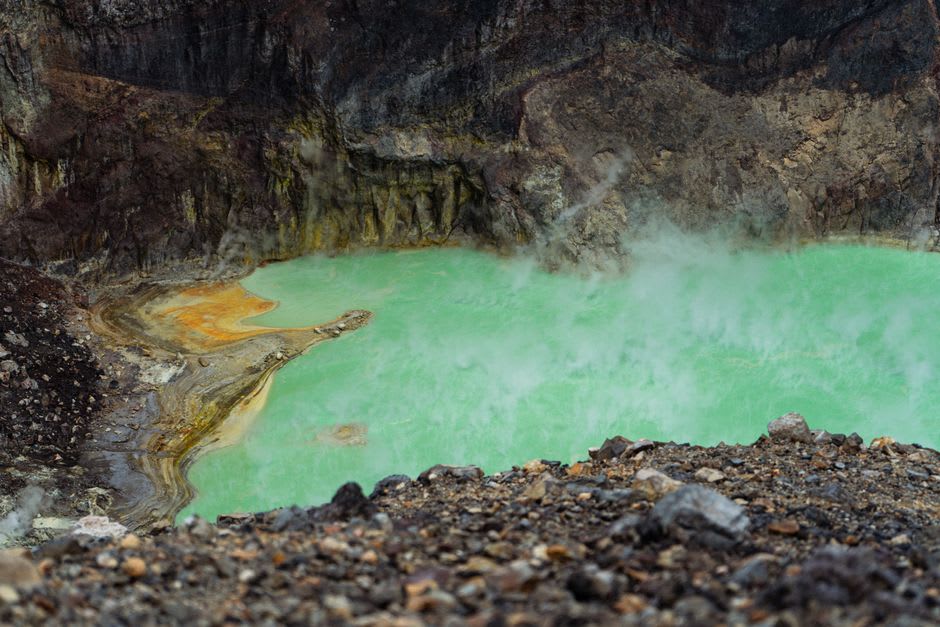
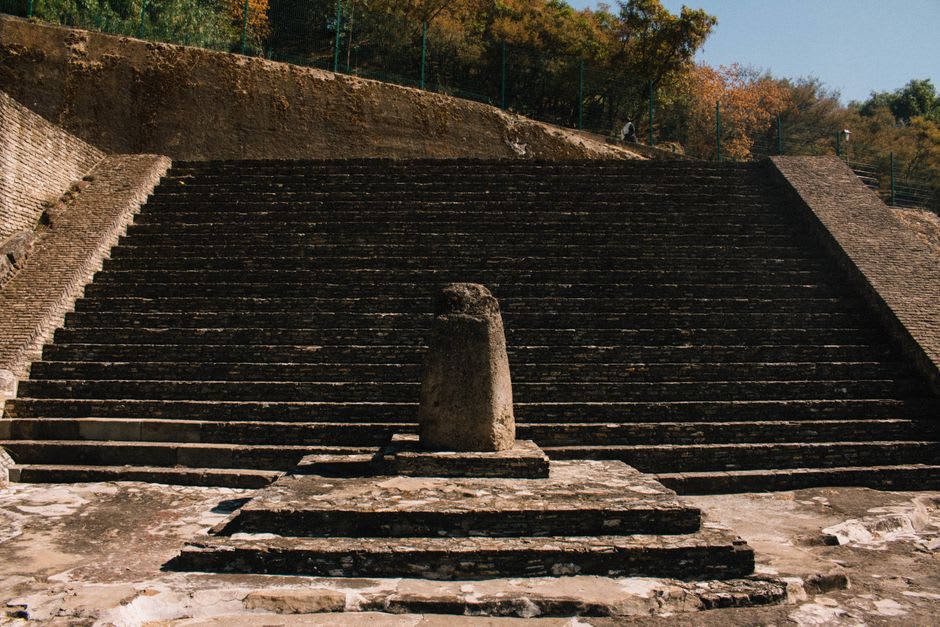
The ruins are ten minutes on foot from the balneario, signposted poorly enough that I walked past the entrance the first time. The zone is Purépecha — the civilization that held most of Michoacán before the Spanish arrived — and it consists of a series of structural platforms on a low hillside above town. The grass is trimmed with the tidy care of a public park, which gives the site an odd domestic quality: ancient stonework at the scale of a community garden. A caretaker unlocked the gate, nodded, and returned to his thermos of coffee. I had the platforms to myself for nearly an hour. There is something that happens when you are at a pre-Hispanic site without other footsteps around you — the place starts to read differently, less like an exhibit and more like a place where people actually lived.
Town, Food, Late Afternoon
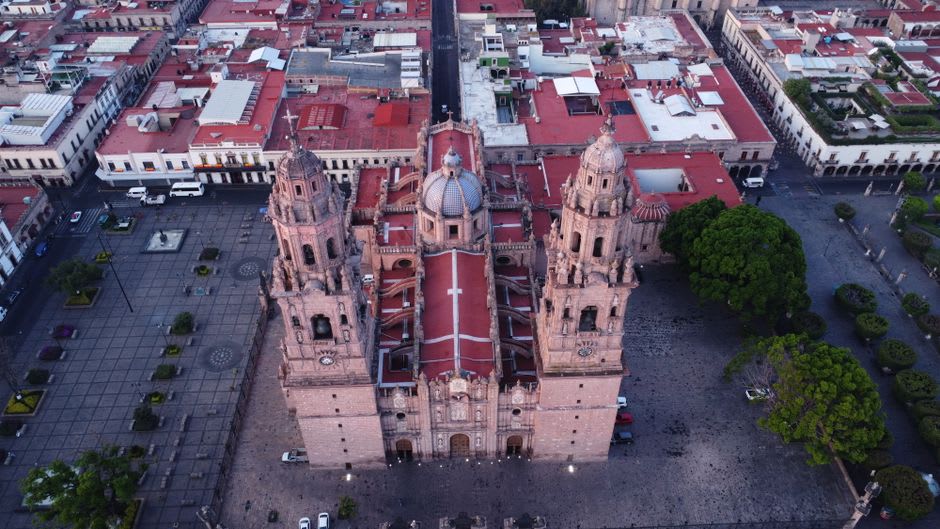
After the ruins and the baths, Huandacareo itself rewards a slow loop. On Calle Hidalgo there are a handful of comedores where the midday comida corrida means carnitas michoacanas — properly braised pork, rice, beans, and tortillas made while you watch — for around sixty pesos. The Templo de San Pedro holds the zócalo with the heavy limestone authority typical of colonial Michoacán; at four in the afternoon the facade goes almost orange in the western light. There is nothing programmatic about an afternoon here, which is either a problem or precisely the point, depending on what you came looking for.
Getting There
Huandacareo is roughly 50 kilometers north of Morelia via the highway toward Salamanca. From Morelia’s main terminal, local buses and collectivos toward Cuitzeo pass the junction — ask specifically for the Huandacareo deviation. By car it is a straightforward 45-minute drive. Nearly everyone treats it as a half-day from Morelia, which is the right call.