Cuitzeo
"The lake reflects the sky so completely that for a few seconds you can't tell which is which."
The approach to Cuitzeo along the causeway is one of the more disorienting drives in central Mexico. The road crosses Lago de Cuitzeo on a narrow raised path through water that in the dry season is shallow enough to see the bottom — flat, pale silver, almost perfectly still in the early morning. The sky reflects in the water. The water reflects the sky. The causeway stretches in both directions: the only fixed reference in a geometry of reflections. Lia said it felt like driving through a painting. I said it felt like driving through the negative of a painting. Both things seemed true simultaneously.
Lago de Cuitzeo is Mexico’s second-largest lake — larger than Lake Chapala in surface area, though much shallower — and almost nobody outside of Michoacán has heard of it. It sits north of Morelia in the central highland plateau, surrounded by agricultural land and the small towns that have organized themselves along its shores since the pre-Columbian period. Cuitzeo, on the south shore, is the principal town, distinguished by a single monument of exceptional importance: the Convento Agustino de Santa María Magdalena, one of the finest 16th-century Augustinian religious complexes in Mexico.
The Augustinians arrived in New Spain in 1533 and built some of the most ambitious churches and convents in the country during the following century. Their house style tended toward the monumental — large open chapels for outdoor mass, elaborate plateresque and early baroque façades, cloisters with arched walks on two levels. The convent at Cuitzeo was founded in 1550 and completed around 1575, and it is exceptional even by Augustinian standards. It sits at the very edge of the lake. Standing in the courtyard, you can see the water.
The Convent
The open chapel — the capilla abierta — at the entrance to the complex is one of the largest in Mexico, built to accommodate the outdoor masses that the early missionaries held for indigenous populations too numerous to fit inside. The space retains a quality of scale and proportion that European religious architecture rarely achieves in the open air: genuinely monumental without feeling cold, open without feeling exposed.
The church interior is single-nave and solemn, the decoration restrained by Augustinian standards, the altarpieces in varying states of preservation. What matters here is the architecture: the vault, the geometry of the walls, the proportion of the openings. The sacristy contains colonial paintings of reasonable quality. The real draw is the cloister.
The cloister at Cuitzeo is the finest architectural space in the building and one of the finest colonial spaces in Michoacán. Two stories of arched walks surround a square garden where a stone cross stands in the center of a quadrant pattern. The upper arcade is lighter than the lower, the proportions shifting between the two levels in a way that demonstrates the Augustinian masons’ understanding of visual weight. The carved column capitals mix pre-Hispanic and European motifs — a characteristic of 16th-century mendicant architecture throughout Mexico that becomes more legible the more of these convents you visit.
I sat in the lower arcade for the better part of an hour, reading and occasionally watching pigeons navigate the stone cross in the garden. Two local schoolchildren were working through a disagreement on the upper level involving a notebook and considerable gesticulation. The silence was the specific silence of a space that has been tending toward quiet for four hundred and fifty years.
The Lake and the Market
After the convent, the town. Cuitzeo is small — a grid of a few blocks around the convent and a central market that operates with the same logic as every Mexican municipal market: produce in one section, prepared food in another, goods in a third.
The covered market, which sits on the south side of the main plaza, has a colonnade on the lake side where you can eat carnitas from a clay cazuela while looking out at the water. This is where I had the best meal of the day on our visit — Lia ordered the carnitas surtidos (mixed cuts), I ordered the maciza (lean), and we ate with tortillas from the comal nearby, green salsa, and an agua de Jamaica so large it came in a liter jar. The lake was visible through the colonnade arches, a strip of silver between the column bases. It was eleven in the morning and we were the only non-local people in the market.
The lake fishing remains active — Cuitzeo’s fishing families have been taking carp, charales (small sardine-like fish), and acociles (freshwater shrimp) from the water for centuries. Charales fried and salted are a regional snack available from market stalls, and while they are an acquired texture — small, crunchy, and complete with head — they are the specific taste of this lake. I ate them the first time with a certain amount of hesitation. I would eat them again immediately.
The lake also supports a significant bird population: herons, egrets, black-necked stilts, and during migration season, large flocks of migratory ducks and shorebirds using the shallow water as a stopover. The birders who come to Cuitzeo are a completely different cohort from the architectural-history visitors, and they occupy different hours of the morning. Both groups seem satisfied.
Getting There and Back
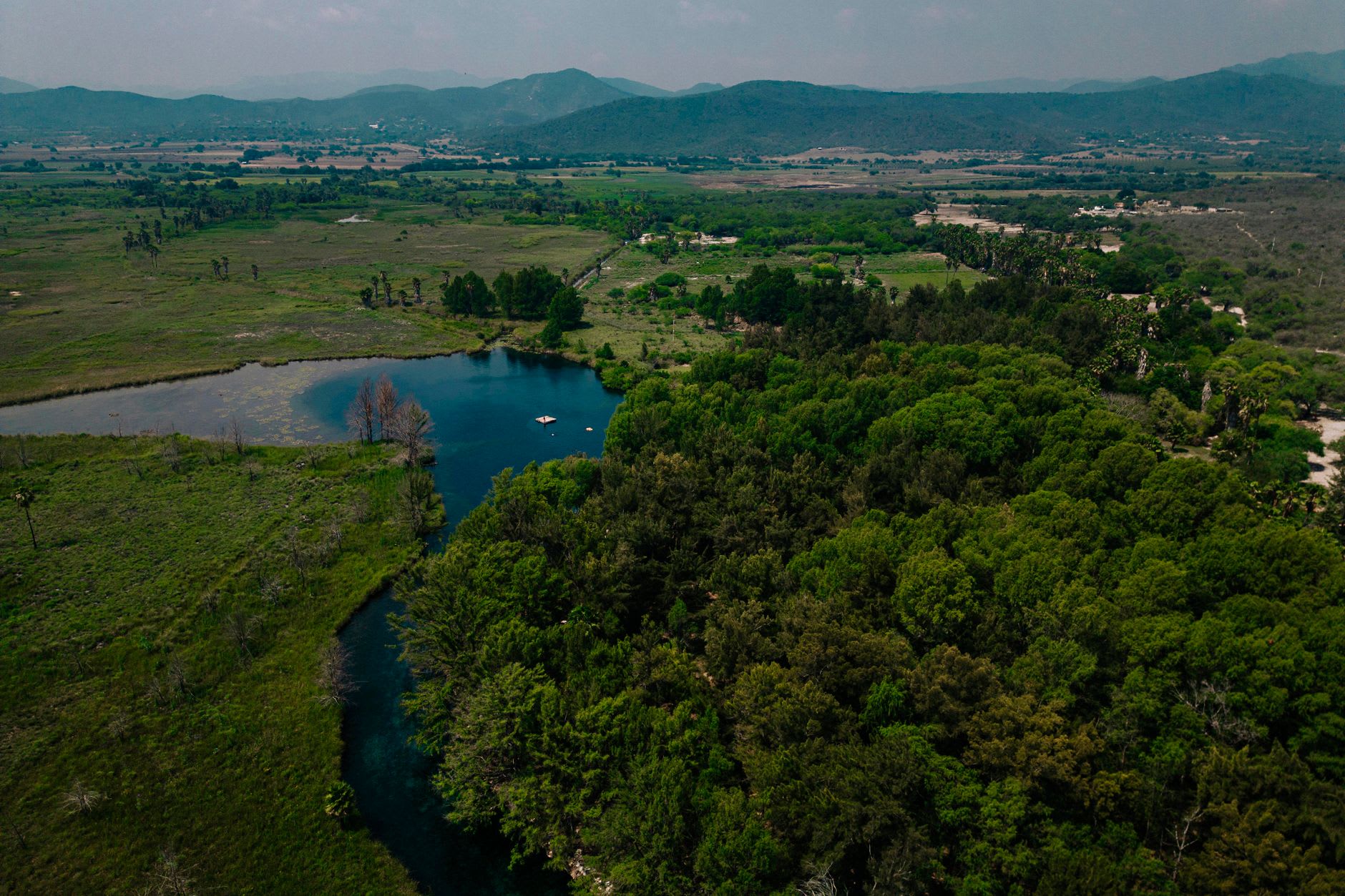
Cuitzeo works best as a day trip from Morelia, forty-five kilometers south. Colectivos from Morelia’s second-class bus station run regularly and the journey takes about forty minutes. The causeway crossing is an experience in itself — if you are driving, take it slowly and preferably in early morning or late afternoon when the light on the water is at its most extreme. In the dry season the shallows turn silver-white; in the wet season after summer rains they deepen to gray-green and the lake doubles its surface area.
The logical combination is Cuitzeo with the broader Morelia itinerary — the city itself is one of the finest colonial cities in Mexico, and the Michoacán highland circuit (Pátzcuaro, Santa Clara del Cobre, Tzintzuntzan, Cuitzeo) can be done in two or three days with Morelia as a base.
When to go: November and December are dry and pleasant, and the Day of the Dead period infuses the entire Michoacán region with a specific intensity. February-March can see low water in the lake, which changes the causeway crossing dramatically — the exposed lakebed in the dry season has a particular bleached quality that is beautiful in its own austere way. The convent is open daily; the market is most active on weekday mornings when the local provisioning is at full volume.