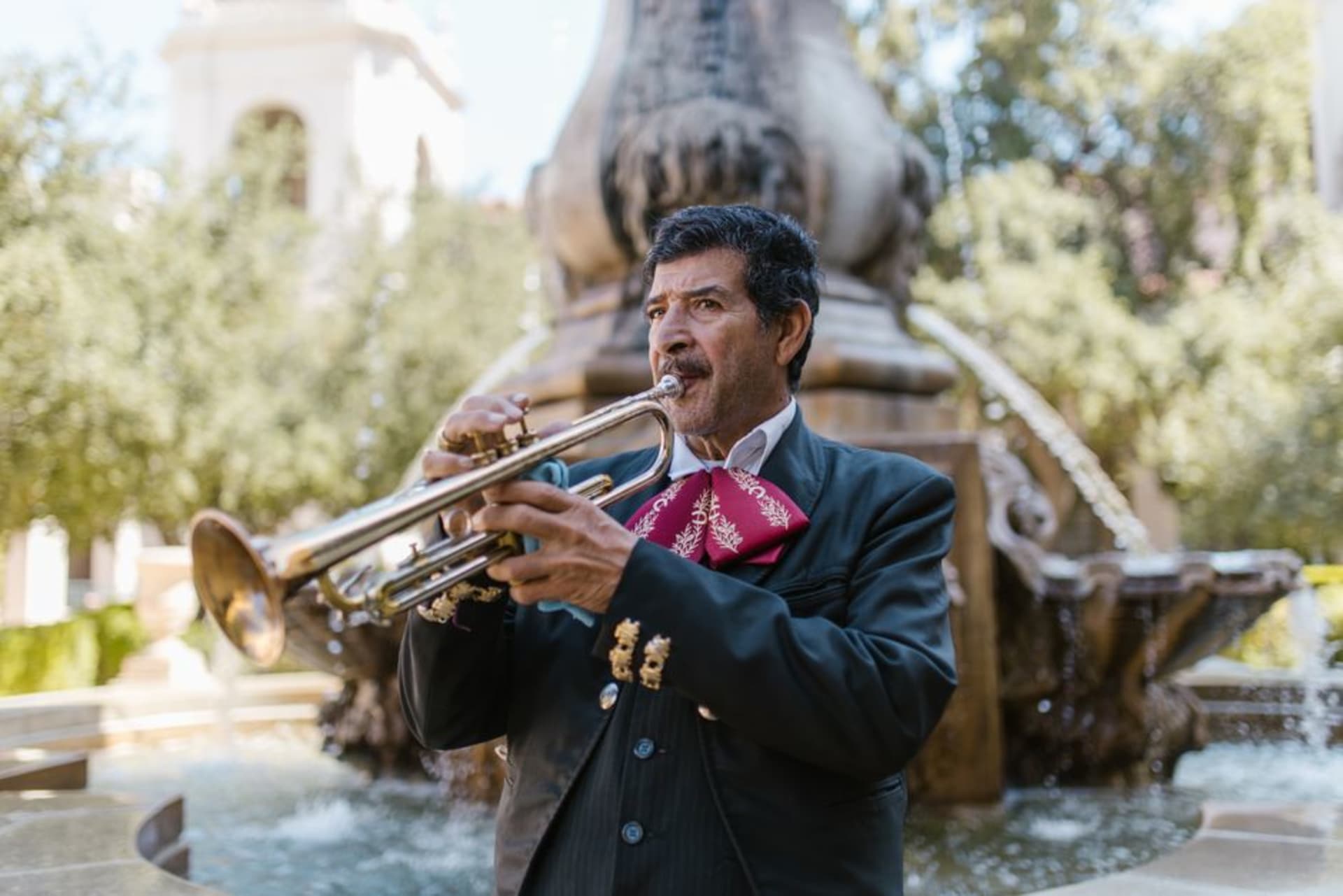
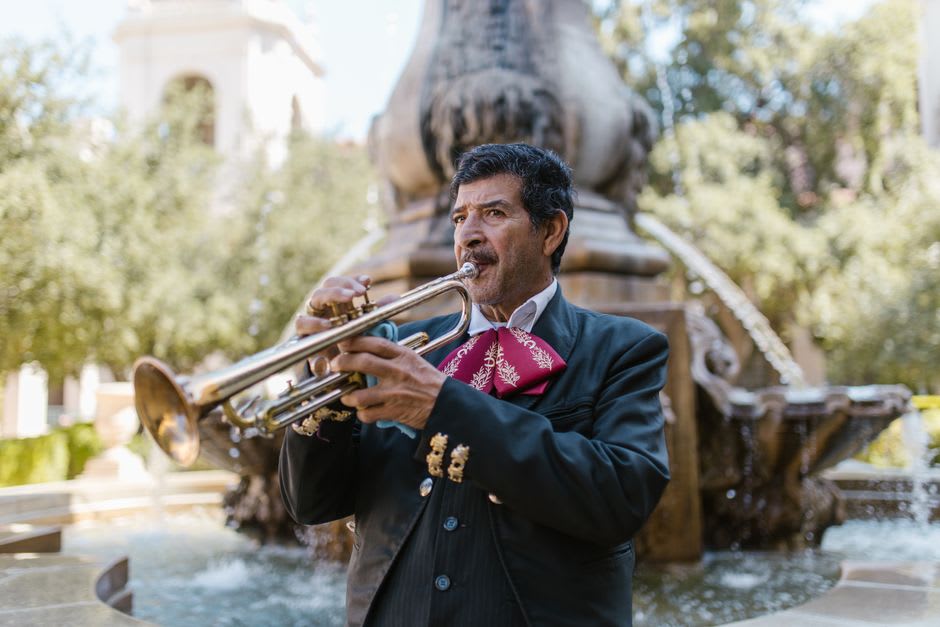
Plaza Garibaldi
"The trumpets were still going at 3am when I left, and I had the feeling they never really stop."
I arrived at Plaza Garibaldi at 11pm on a Tuesday, which felt late until I realized I was early. The plaza was already thick with trumpet smoke — that particular combination of brass resonance and cigarette haze I have never encountered anywhere else — and the musicians were still trickling in, adjusting sombreros, negotiating rates in clusters near the central fountain. Someone to my left was crying quietly into a michelada. Someone to my right was bargaining down the price of a corrido. I stood there for a long moment, unable to tell whether I was watching theater or just a Tuesday.
The Hiring Economy of Heartbreak
The business model of Plaza Garibaldi is simple and very old: you come with a feeling too large for ordinary language and you hire someone to sing it — at a lover, at a window, at whatever requires musical confrontation. The mariachis work in ensembles of eight to twelve, clustered by band, and will quote you anywhere from 80 to 200 pesos per song depending on the composition and, I suspect, how desperate you appear. By 1am the plaza holds several hundred musicians simultaneously, which means the sound is not music so much as competing music — three different songs from three different directions, the trumpets cutting through everything.
What surprised me was the professionalism beneath the chaos. These are not buskers. The men and women in embroidered charro suits have often spent decades learning the canon — Cielito Lindo, La Bikina, El Rey, Sabor a Mí — and they take commissions with the seriousness of craftsmen. The plaza is the chaos. The music is not.
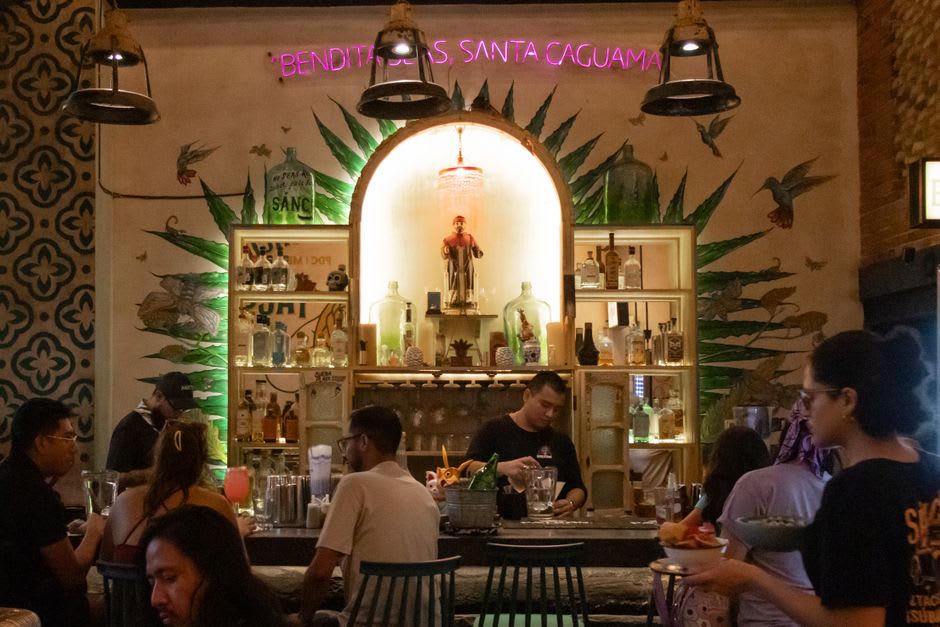
Pulque and the Tiled Bar
The pulquerías ringing the plaza have the same clientele they have always had — older men, deliberate drinkers, people who have been coming since before the metro was built — and essentially the same product: pulque, the fermented sap of the maguey agave, slightly viscous, mildly sour, tasting of something between yogurt and fresh hay in a way that sounds unpleasant until it isn’t. La Hermosa Hortensia, just off the plaza’s northeast edge, still uses its original tiled bar. I ordered a curado de guayaba — pulque blended with guava — for 35 pesos and the man beside me did not look up from his own glass. Nobody performs at the pulquerías. It’s where you go when the scene outside becomes too much, which it will.
What to Know Before You Go
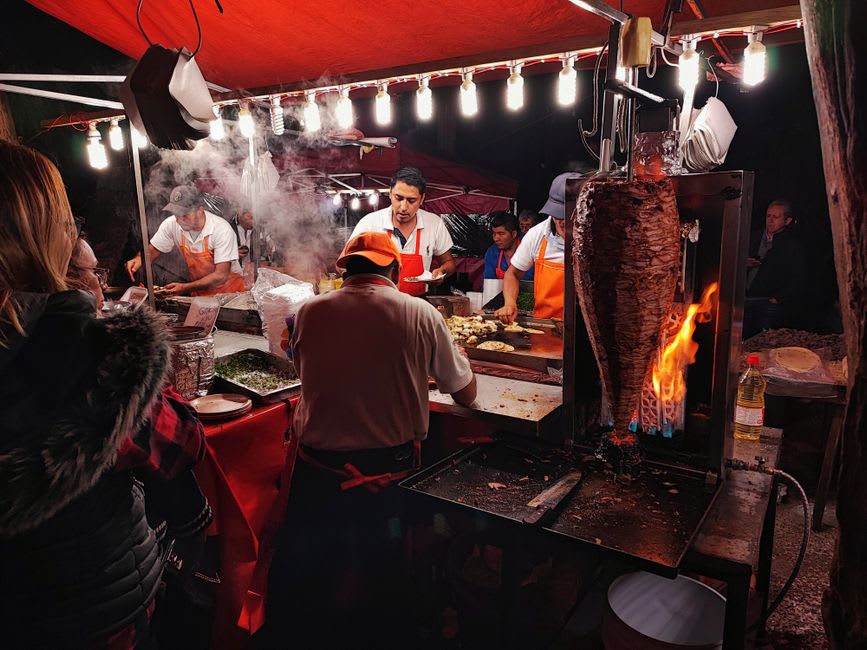
Come after midnight. Before 11pm the plaza is a tourist facsimile of itself; after midnight it becomes the actual thing, which is louder and considerably more honest. Eat beforehand — the tostadas de pata sold from carts around the perimeter are decent, but this is not a dinner destination. If you commission a song, agree on the price before the first note. And when a band approaches your table and begins playing without asking, that is not rudeness but commerce — you can wave them off or let it happen, and both responses are understood.
Getting There
Plaza Garibaldi sits in CDMX’s historic center, a fifteen-minute walk from the Zócalo and directly served by Metro Line 8 at Garibaldi-Lagunilla station. From Puerto Escondido, fly into the capital or take the overnight ADO — the plaza tends to appear on any CDMX itinerary whether planned or not. Stay aware of the surrounding streets after 3am; the neighborhood changes when the crowds thin and the music finally, briefly, pauses.