Ciudad Universitaria
"The library is covered floor-to-ceiling in a Rivera mosaic retelling all of human history — and on the other side of the building, students are sleeping on the grass in the afternoon sun."
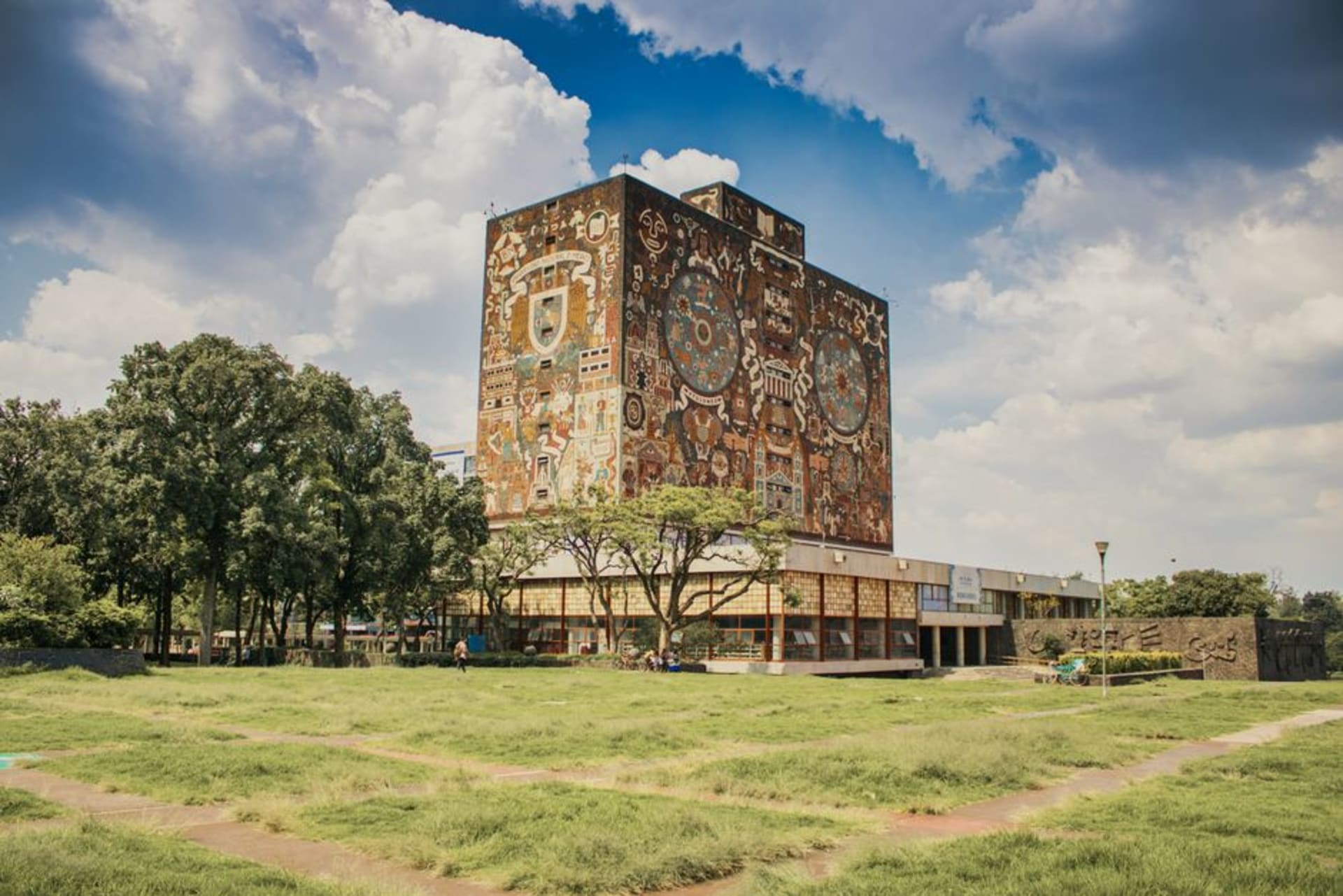
I came out of the Copilco metro exit on a Tuesday morning in October and walked south into the campus not quite knowing what to expect. UNAM is enormous — 40,000 students, more than three square kilometers of grounds — but statistics don’t prepare you for the first sight of the Biblioteca Central. Diego Rivera covered it in a mosaic so large you can’t take it in from close up. You have to back away across the open esplanade until the whole thing resolves: pre-Hispanic cosmology, colonial history, the modern university, rendered in colored stone across four stories of a building that is, functionally, a library.
The Mosaic That Will Not Let You Go
Rivera designed the Biblioteca Central mosaic in the early 1950s as a compressed history of Mexico, reading from the base — pre-Columbian figures, calendars, deities — upward through the colonial period, independence, and into modernity, with the university’s coat of arms occupying the south face. The scale is one thing; the density of image is another. You keep finding new figures embedded in the stone. There is a jaguar here, a telescope there, the eagle devouring the serpent worked into a composition that somehow also has to accommodate the windows — and does.
What strikes me is how much the building remains simply a library. Students walk past without looking up. A group had set up a study session on the steps with laptops and takeaway coffee from one of the campus stands. Someone was sleeping against the east wall. The mosaic asks enormous questions about history, knowledge, and civilization, and the students treat it, affectionately, as furniture. This is either a tragedy or the highest possible compliment to a public building. I keep landing on compliment.
Siqueiros, the Stadium, and the Lava Field
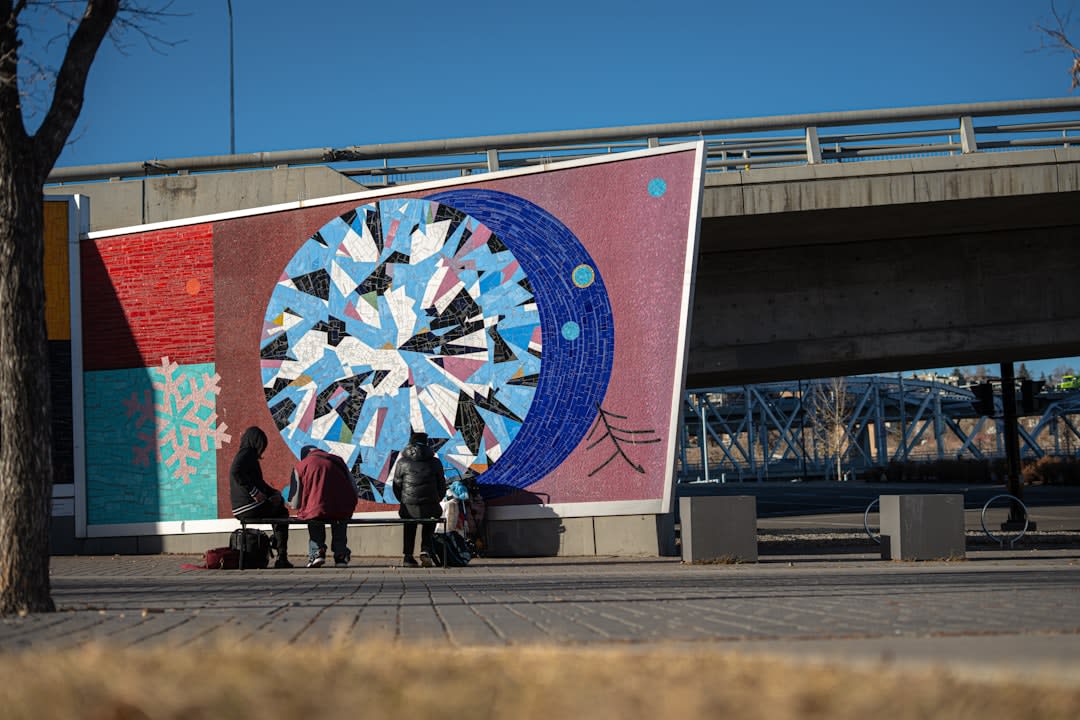
The Rectoría building is three minutes from the Biblioteca and holds a Siqueiros mural on its south face that uses three-dimensional relief to create forced perspective — it is meant to be seen from below, at the angle of a student walking up the approach road, and from that position the figures lean out of the wall toward you. Siqueiros called the technique esculto-pintura, sculpture-painting, and it works in a way that photographs consistently fail to capture. You need to be there, at the right distance, at the right angle.
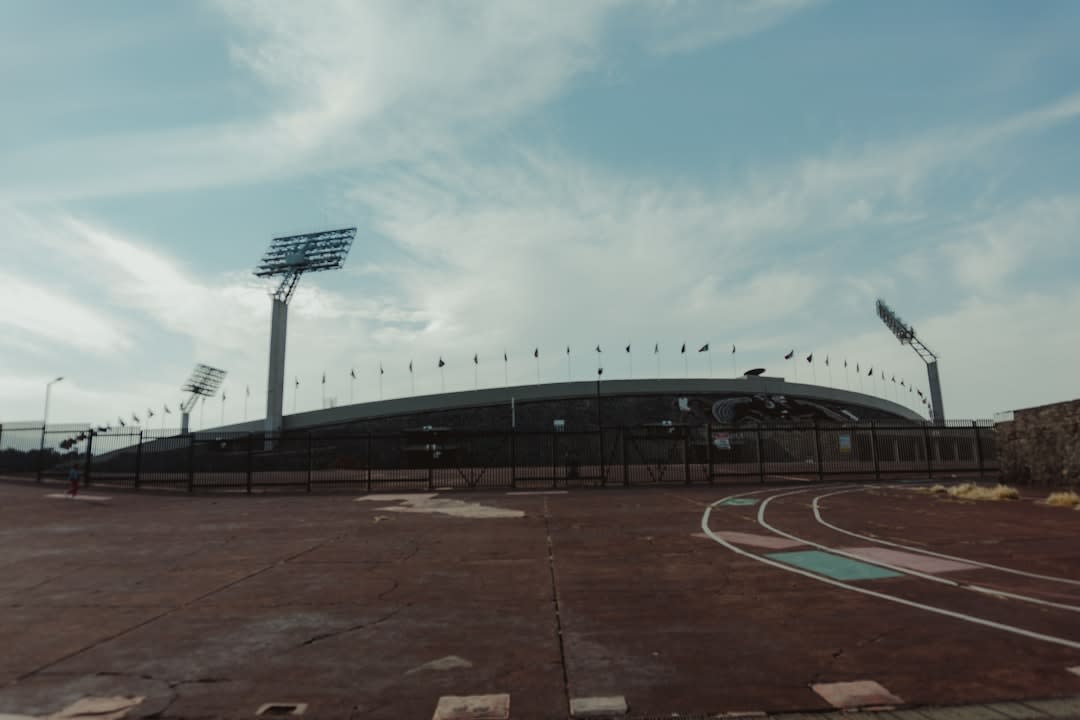
The Estadio Olímpico Universitario is another Rivera piece, a mosaic over the main entrance depicting athletic traditions across Mexican history. The stadium is still in use — I could hear a football match from the esplanade below without being able to see the pitch.
On the eastern edge of campus, the Espacio Escultórico is a volcanic lava field ringed with monumental works by six Mexican artists, including Federico Silva and Mathias Goeritz. It requires a twenty-minute walk from the central esplanade — longer if you take the wrong turning, which I did — but the pedregal, the raw black lava the sculptures emerge from, justifies the detour on its own.
A Few Things Worth Knowing
Go on a weekday morning. The esplanade functions as an outdoor living room for students eating breakfast before nine, and the mosaic catches the light at a better angle before midday. By early afternoon the central areas fill up and the contemplative quality mostly dissolves, which is fine but different.
The Centro Cultural Universitario on the western side of campus houses the Museo Universitario Arte Contemporáneo — MUAC — which is one of the more serious contemporary art institutions in the city. Block an extra hour if you are going. The Jardín Botánico is free and the cacti sections alone are extensive enough to be worth the walk.
Bring water. The campus is larger than it reads on a map and the volcanic stone radiates heat through the middle of the day.
Getting There
Metro Line 3 — the olive-green line — to Copilco or Universidad. Copilco drops you at the north end of campus, close to the Biblioteca Central; Universidad brings you in from the south near the Estadio. From Centro Histórico the journey is around 45 minutes including the walk from the exit. The campus is free to enter and open every day.