
Barrio Chino
"It takes twenty minutes to walk through. I ended up staying three hours eating."
I came to Dolores Street expecting something between a tourist trap and a mild disappointment. Mexico City’s Chinatown is, by any spatial reckoning, not much: one block, a paifang gate at each end, a dozen or so restaurants and shops compressed into a stretch you could cover at a brisk walk in four minutes. I did that first lap in four minutes. Then I stopped in front of Salón Fong’s, read the menu chalked on the window, and decided that whatever I had planned for the next two hours could wait. That is more or less how Barrio Chino works.
The Food, Which Is the Point
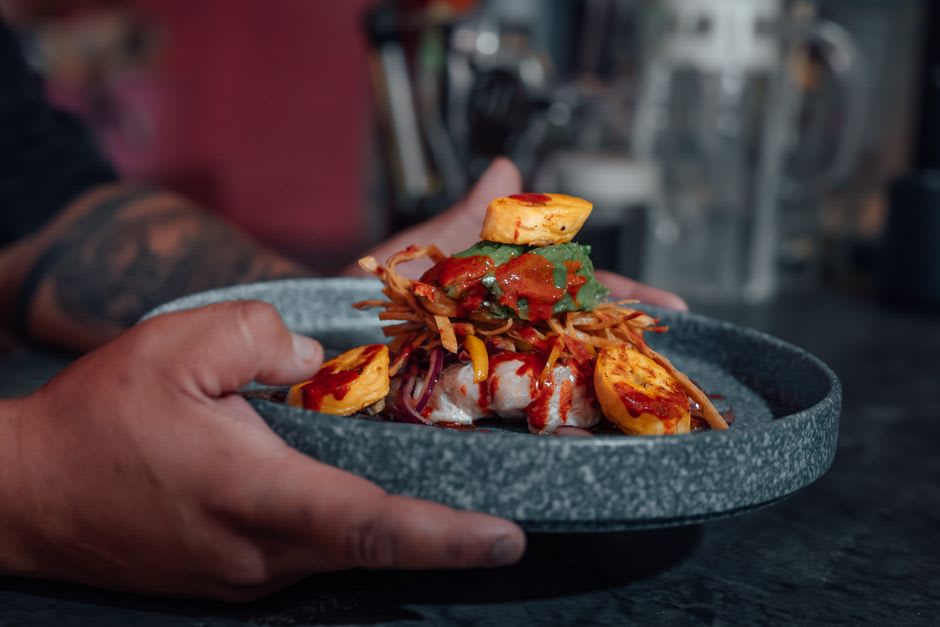
Salón Fong’s has been on Dolores since 1956, which means it has been doing Mexican-Cantonese fusion before anyone called it that. The wonton soup arrives in a broth that has clearly spent time with chile de árbol. The arroz frito comes studded with epazote and chipotle alongside egg and scallion, and it works in a way that seems obvious once you taste it and inexplicable before. Down the block, the smaller spots serve dim sum-adjacent plates that have drifted further from the original: steamed dumplings filled with picadillo spiced with cumin and clove, things that exist nowhere else on earth. I ordered a plate of char siu pork at one counter and it came with a ramekin of salsa verde on the side, which I used without irony, and which made complete sense. This is what a hundred years of immigration does to a cuisine — not replacement, not dilution, but genuine negotiation between two culinary vocabularies that had no reason to work together and found a way anyway.

How a Single Block Held On
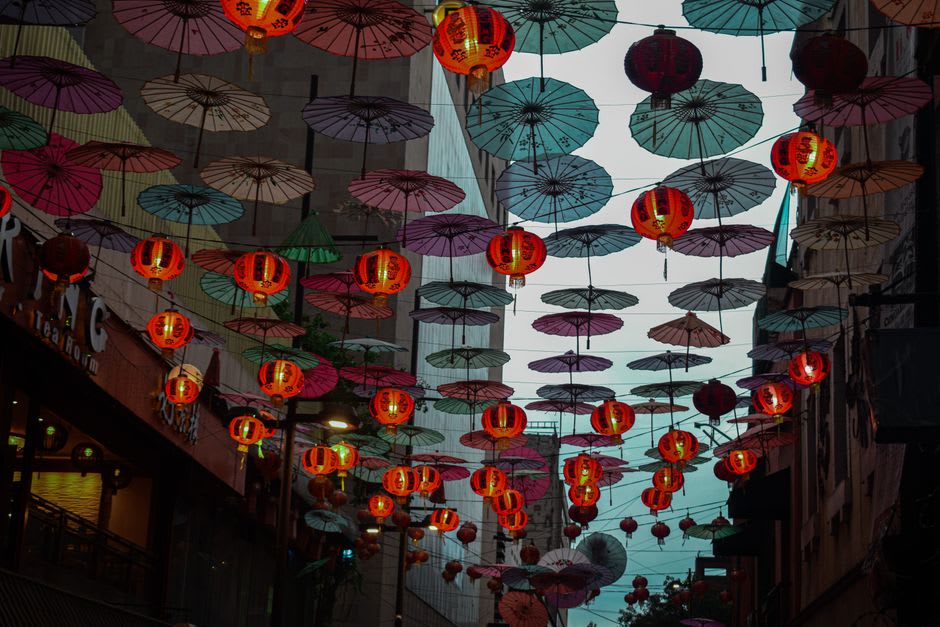
The Chinese community in Mexico arrived in waves — railroad laborers in Sonora during the Porfiriato, merchants who later settled in the capital and concentrated along Dolores Street, which had been a commercial corridor since the colonial era. At peak, the community sustained social clubs, a newspaper, a school. Then came the anti-Chinese campaigns of the 1930s, expelling or pressuring most of the population out of the country entirely. What remained in Mexico City became smaller, quieter, more insular — but it remained. The Barrio Chino that exists today is partly reconstruction, partly genuine continuity. The families running these restaurants are often fourth or fifth generation, carrying surnames that read as Chinese to the eye and Mexican Spanish to the ear. The gate, the red lanterns, the dragon murals — some of that is theatrical, and I won’t pretend otherwise. The people behind the counters are not.
How I Would Actually Do It
Go on a weekday morning, before noon. The restaurants are quieter and the kitchen is still in that focused mode where everything comes out correctly. Order the wonton soup at Fong’s regardless of the season — it is the dish that most clearly shows you what this cuisine actually is. Walk the full block twice: once to read every menu and window, once to eat. The shops selling preserved ginger, dried mushrooms, and packaged goods are worth stepping into even if you buy nothing; the smell alone is information. Avoid going on Chinese New Year unless you specifically want the spectacle, which is genuine and crowded in equal measure. The Mercado San Juan is four minutes north; pairing the two makes for a concentrated few hours of eating that Centro Histórico does better than almost anywhere else in the city.
Getting There
Barrio Chino sits on Calle Dolores between Independencia and Artículo 123 in the Centro Histórico. The closest metro stations are Hidalgo (Lines 2 and 3) and Bellas Artes (Lines 2 and 8), each about a ten-minute walk. From the Zócalo it is a twenty-minute walk west. Street parking in Centro is a calculated frustration; metro or on foot are the practical options.