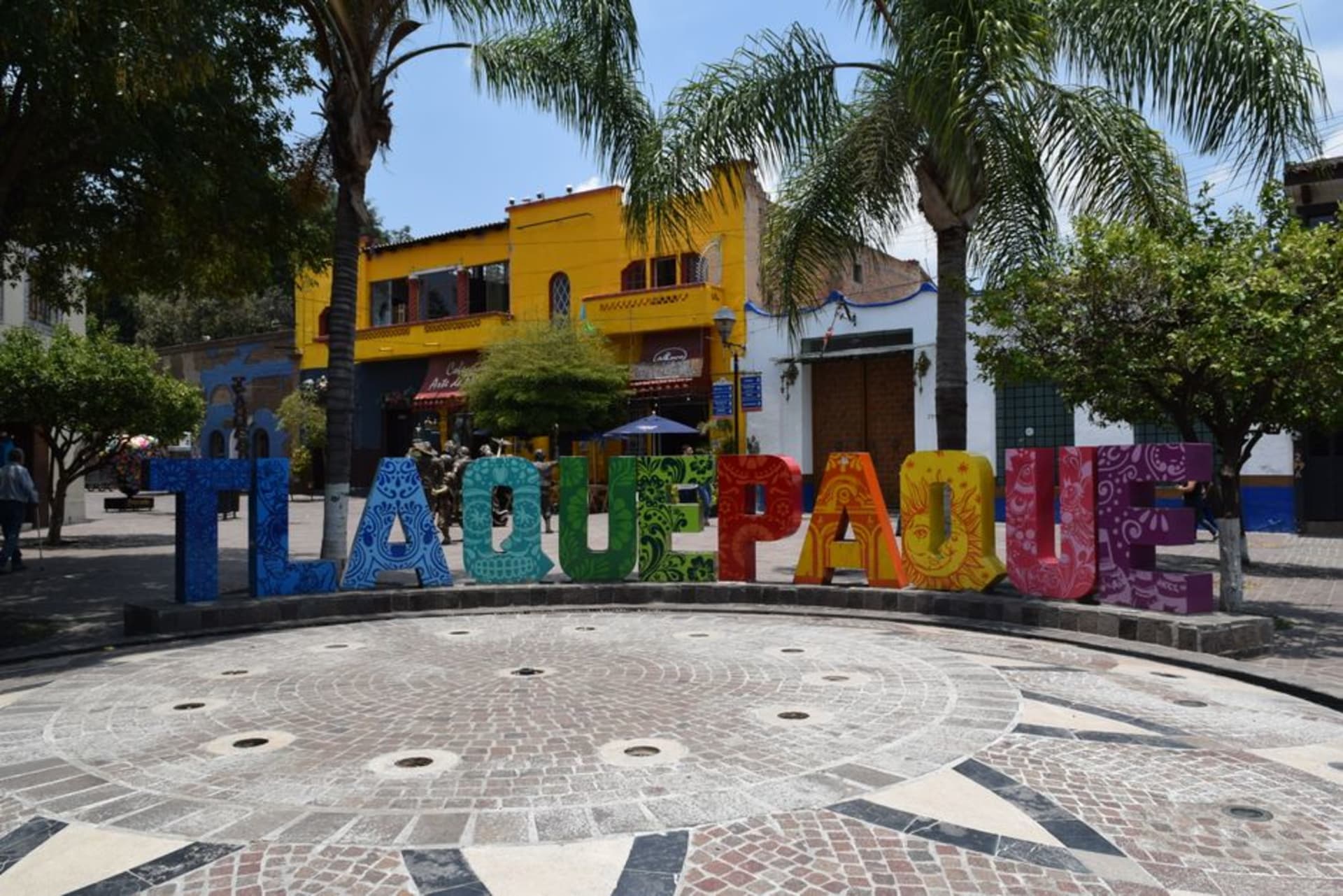
Tlaquepaque
"The glassblower works barefoot. The molds have been in his family since 1940. The piece he made in four minutes took me twenty minutes to carry to the car without breaking it."
Tlaquepaque is nominally a suburb of Guadalajara — the maps show it absorbed into the metropolitan area about thirty years ago — but the village identity has survived the annexation. The cobblestoned pedestrian street of El Independencia still runs the length of the old colonial center, the studio workshops still open their street-facing doors to show the work in process, and the quality of craft production here — blown glass, Talavera-style majolica, carved wood furniture, metalwork — is the highest concentration of traditional Mexican craft in one place that I know of.
I came here for a morning and stayed for two days.
The Craft Tradition
Tlaquepaque’s artisan identity dates from the 17th century, when families of indigenous and mestizo craftspeople established workshops in what was then a village separate from Guadalajara. The traditions they developed — particularly in glass and ceramics — have been passed within families and studios for generations. The current generation of artisans is the inheritor of techniques that existed before industrialization and has largely chosen not to modernize them.
Vidrio soplado (blown glass) is the most dramatic production to watch. The Gorky González studio on Calle Independencia is one of several where the glassblowers work in open furnace rooms visible from the street. The glass here — produced in the colors specific to the Jalisco tradition, including a deep cobalt and a translucent amber — is shaped by mouth-blown air into the molds that the studio has used for generations. The speed of the work is astonishing: a finished piece in under five minutes, the result identical to the one before it despite no apparent measuring.
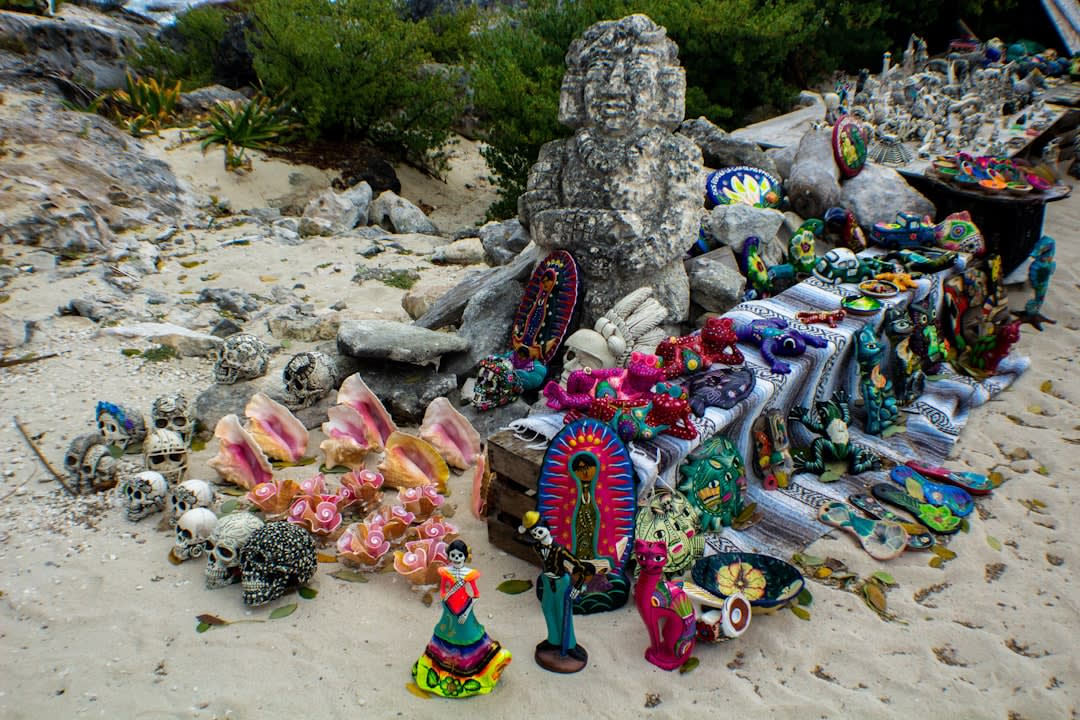
Cerámica Talavera-style — the majolica tradition that came from Puebla and was adapted in Jalisco with a slightly different palette and decorative vocabulary — is sold in the galleries along Independencia and produced in workshops in the surrounding streets. The distinction between hand-painted and stenciled pieces is visible on close examination and significant in price; the hand-painted pieces are worth the premium.
Huichol (Wixáritari) art — the beaded yarn paintings produced by the indigenous Wixáritari people of the Jalisco and Nayarit sierra — appears in several galleries on Calle Independencia. The pieces use glass seed beads pressed into beeswax on a wooden support to create images of extraordinary intricacy: deer, peyote, serpents, fire — the symbols of the Wixáritari cosmological system rendered in colors so saturated they appear to generate their own light. The large pieces take months to make and are priced accordingly; the smaller pieces are the best affordable souvenirs in Mexico.
El Parián
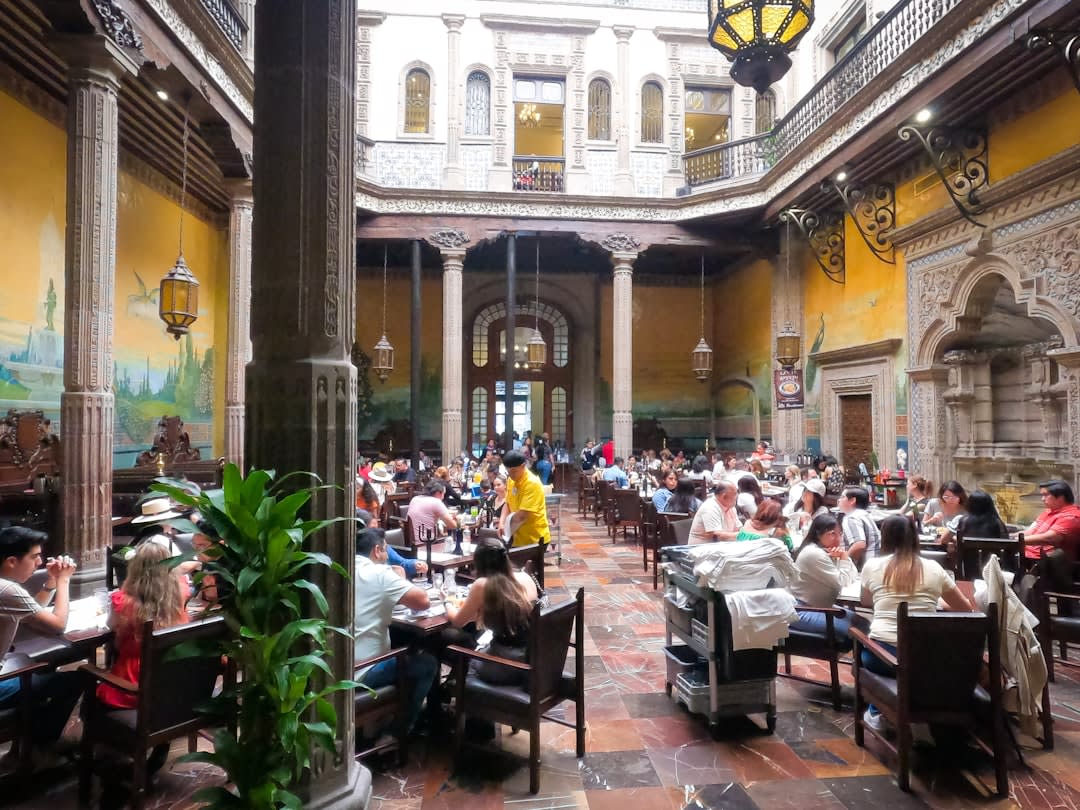
The central landmark of Tlaquepaque is El Parián — a colonial-era building that originally served as a market and is now a complex of mariachi bars arranged around a central courtyard. On weekend afternoons and evenings, multiple mariachi groups play simultaneously from different corners of the courtyard while patrons eat birria and drink tequila at long communal tables.
This is the most authentically Mexican thing in Tlaquepaque, which is saying something. The mariachis here are not performing for tourists; they are performing for the families from Guadalajara who have been coming here on Sundays for generations. The acoustics of the courtyard mean that the sound of three simultaneous groups overlaps in a way that should be cacophonous and is instead exhilarating.
Birria — the Jalisco goat or beef stew, braised with chiles and spices until the meat falls apart, served in its own consommé with tortillas — is the food of El Parián and of Guadalajara generally. The version here, made in the traditional clay pots and served in the same courtyard where it’s been served for decades, is the correct introduction.
What to Buy
The browsing strategy that works in Tlaquepaque: walk the full length of Independencia first without buying anything, identify the three or four pieces that genuinely stop you, then return for them. The temptation to buy everything in the first gallery is real and should be resisted.
Glass and ceramics travel better than they look like they will — the Mexican craftsmen wrap their pieces in paper and cardboard with the confidence of people who have been shipping internationally for decades. The larger pieces can be shipped to anywhere with a mailing address through the studios’ own logistics.
Getting there: 7 kilometers southeast of central Guadalajara. Uber from the historic center takes fifteen to twenty minutes and costs the equivalent of a market lunch. Bus route 275 from Avenida 16 de Septiembre reaches the center. The Saturday Guadalajara flea market at San Juan de Dios is worth combining.
When to go: Tlaquepaque is open year-round. The Festival de los Artesanos in late September draws craftspeople from across Jalisco and Nayarit. Sundays are the most atmospheric but also the most crowded; weekday mornings let you see the studios without competition.