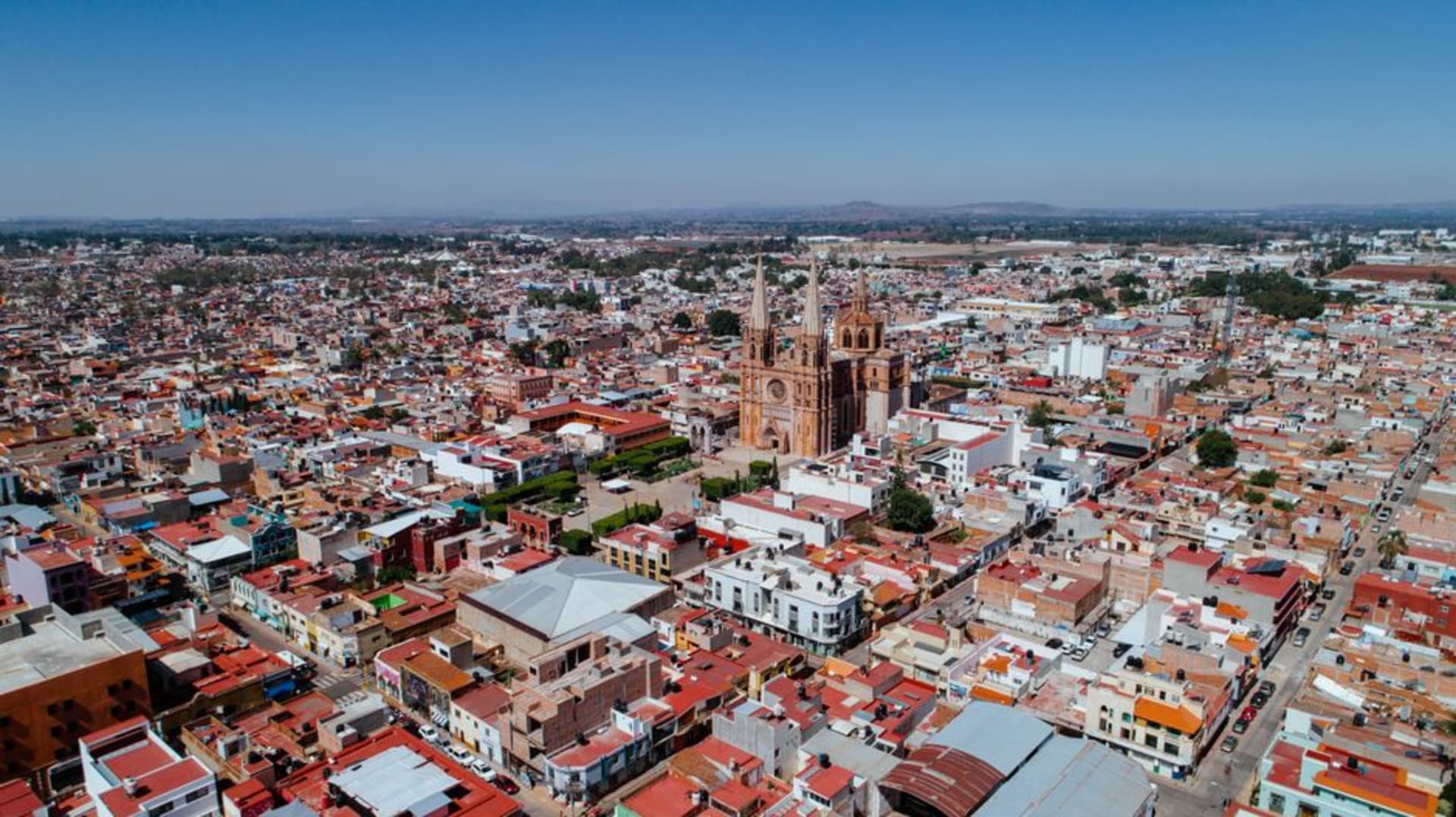
Tepatitlán de Morelos
"Come for the birria, stay for the landscape — Los Altos rolls out in every direction like a painting of what rural Mexico used to look like everywhere."
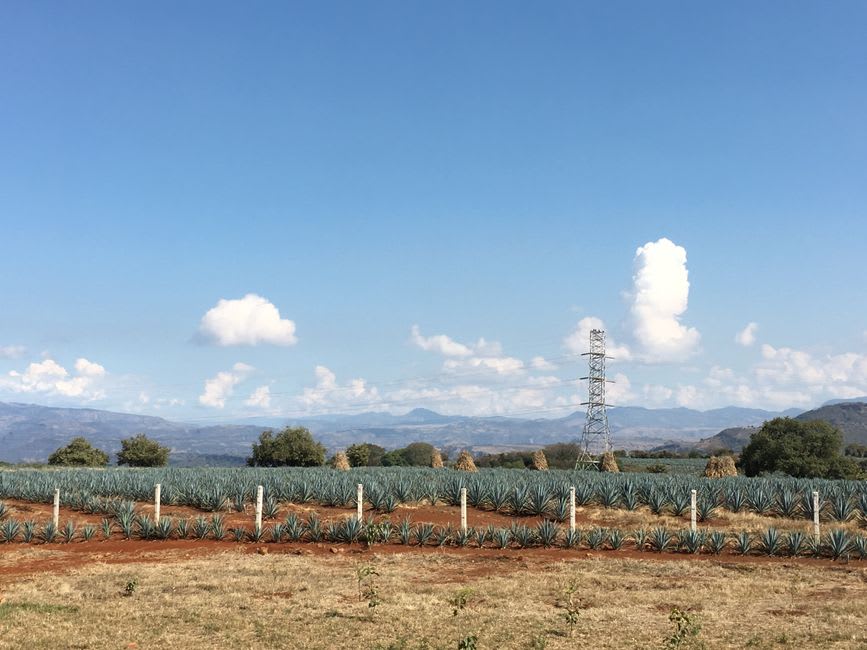
The thing about Los Altos de Jalisco is that the landscape earns your attention before any town does — red earth, agave planted in careful rows, a horizon wider than you expect for a country that usually measures things in mountains. I arrived in Tepatitlán on a Wednesday morning, which turned out to be exactly the right time: the Mercado Municipal on Avenida Hidalgo was still assembling its outer ring of stalls, and somewhere in that direction, the smell of slow-cooked beef and dried guajillo had already taken over the street. I hadn’t found the plaza yet, and I was already staying an extra day.
The Birria That Started the Conversation
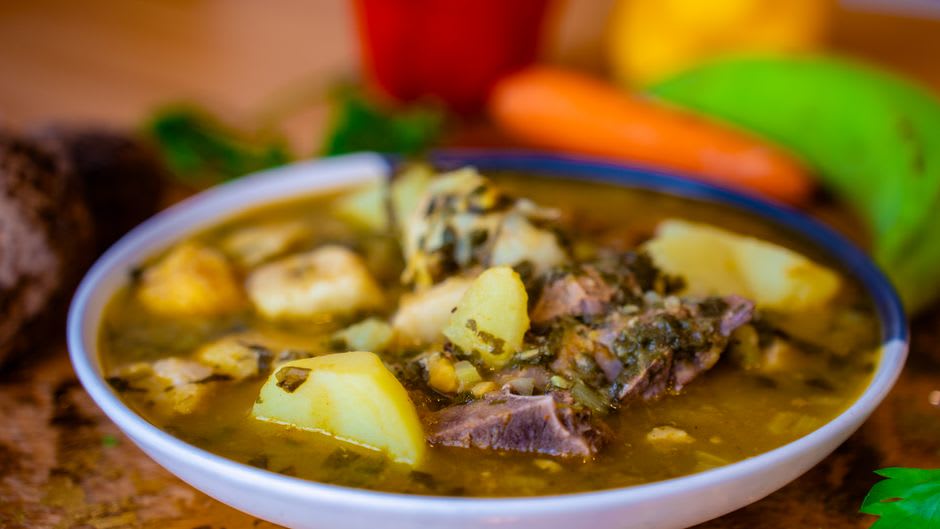
In Mexico City, birria has had its Instagram era. You know the version — pulled beef in a taco, consomé in a small cup for dipping, a geotag ready before the first bite. Tepatitlán is where that dish comes from, and eating it here is a lesson in what gets lost in translation.
The birrierías clustered around the Mercado Municipal have been doing this since before it was a trend, and doing it with beef — res, not goat — a distinction that matters in Los Altos, where cattle ranching is older than the state’s name. The meat is slow-cooked overnight in brick ovens with dried chiles, bay, and cumin, then served on the bone or pulled into a consomé so dark and layered that you stop treating it as a side and start treating it as the point. Order the consomé first. Eat slowly. The place two blocks south of the plaza that opens at seven in the morning, with the handwritten menu on cardboard and no chairs to spare, is the one to find.
Red Earth and Tuesday Mass
The country around Tepatitlán is cattle country, agave country, and — quietly — tequila country. The blue agave that grows in the highlands of Jalisco is distinct from what you find in the lowland valleys, and the big distilleries have been sourcing from these slopes for decades. That part of the story is easy enough to find elsewhere. What is harder to see, unless you walk out past the edge of town early in the morning, is the texture of the place: the red clay road that goes nowhere in particular, the Sierra de los Altos visible on clear days to the north, the sense that the land has been worked at the same pace for a long time without much urgency about changing.
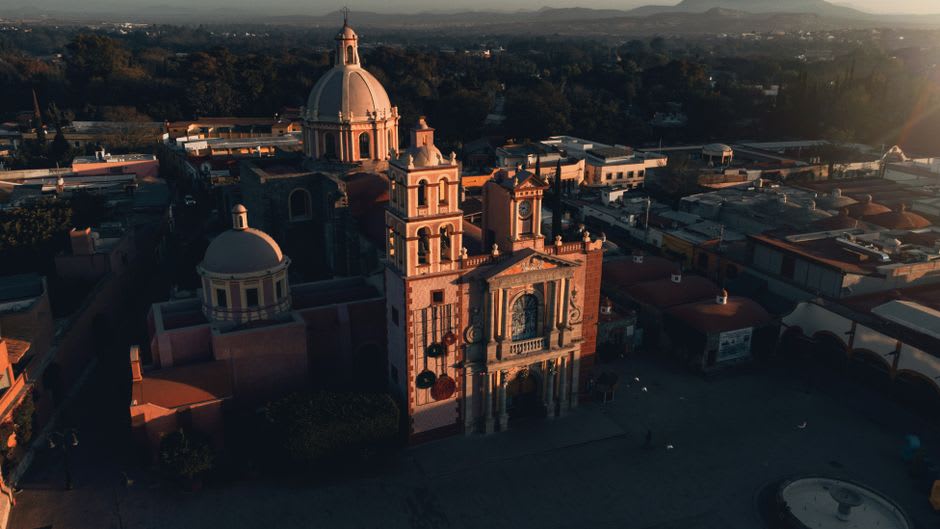
The Catholicism here is also worth noting — not as spectacle, but as fact. The Parroquia de San Francisco de Asís on the Plaza de Armas fills for Tuesday morning mass in a way that most Mexican cities reserve for Sunday. There is something in that consistency that tells you exactly where you are, more accurately than any signpost.
A Day at the Right Speed
Stay in the centro if you can — the hotels near the Plaza de Armas don’t require advance booking unless you arrive on a Saturday. Spend the morning at the Mercado Municipal before it reaches full volume; the produce section runs along the interior arcade, and near the cheese stalls there is usually someone selling jocoque, the fermented dairy product traditional to Los Altos, that you will not find with the same quality anywhere on the coast. Walk out toward the edge of town in the late afternoon when the light goes copper and the rooftops flatten into the landscape.
Tepatitlán has no famous ruins, no curated artisan quarter. It has proportion — a place that functions at a scale that still makes sense on foot — and that is harder to find than you might think.
Getting There
From Guadalajara, buses to Tepatitlán depart from the Central de Autobuses de Tonalá or the Nueva Central Camionera and take roughly an hour and a half through Zapotlanejo. There is no train connection. Most visitors come from Guadalajara for the day, which works fine — though arriving the night before gives you the morning market and the early birria window, which is the only window that matters.