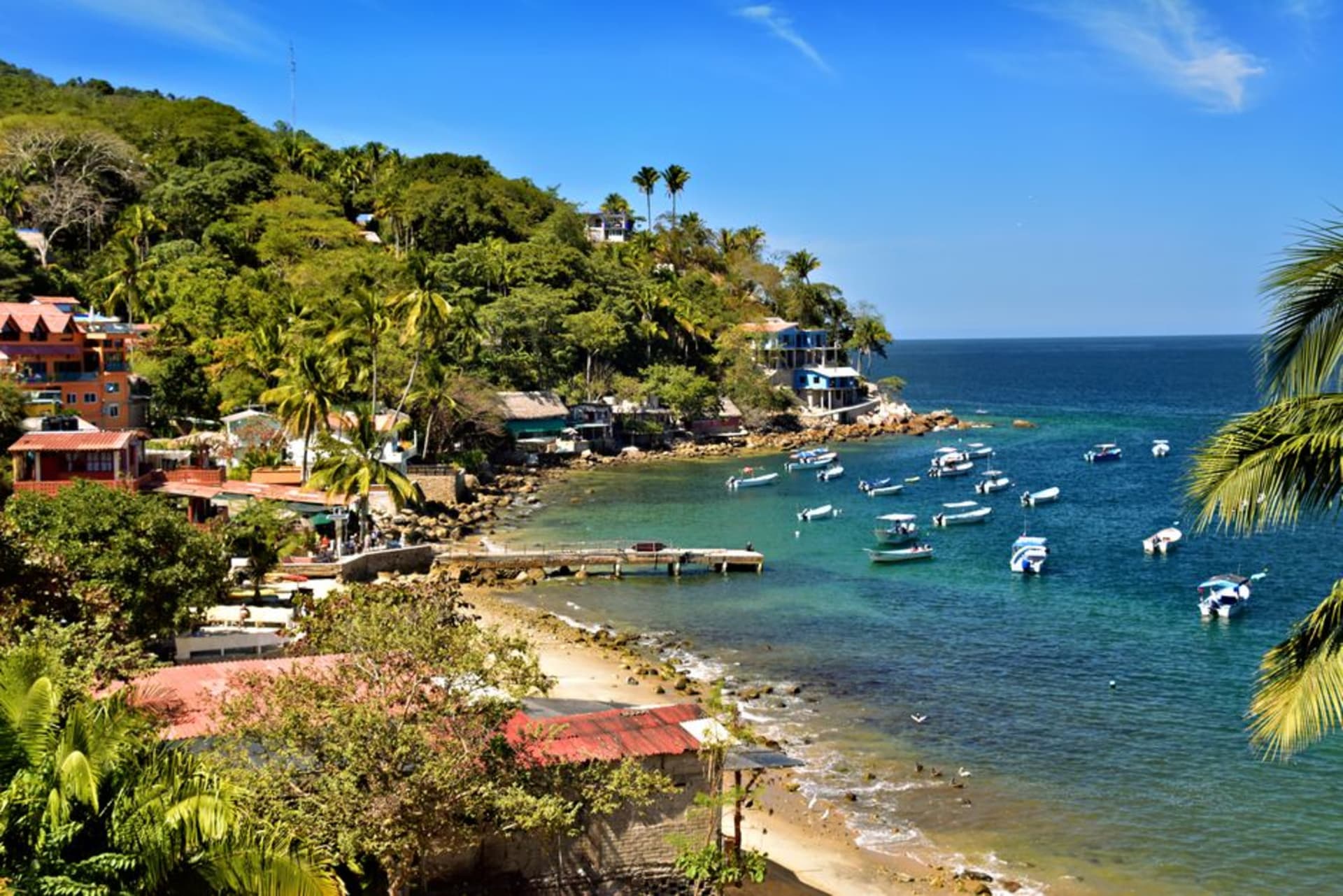
La Manzanilla
"You don't end up in La Manzanilla by accident — and that is precisely what makes it feel like a secret still worth keeping."
I found La Manzanilla the way most people find it — on a faded blog post, the kind where the photos are 800×600 pixels and the author promises the place hasn’t changed since their visit in 2009. I drove down from Barra de Navidad on a Wednesday morning, took the turnoff from Highway 200 onto a road that narrows convincingly enough to suggest you’ve made a wrong turn, and arrived to find the blog was right. One main street, fishermen hauling nets, a dog asleep in the middle of the road with total confidence. Nothing had changed, which is either a miracle or a warning, depending on what you came for.
The Lagoon and Its Permanent Residents
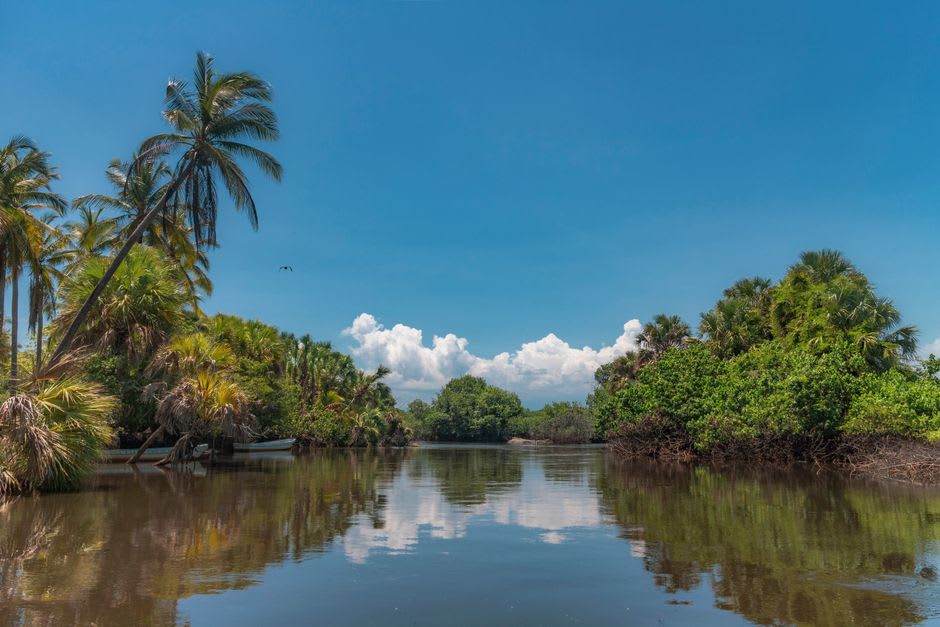
Laguna de La Manzanilla runs parallel to the beach behind a curtain of red mangroves, and it is home to a population of American crocodiles that the locals treat with the casual familiarity most people reserve for neighborhood cats. The numbers vary by season but I counted four visible from the wooden footbridge on my first afternoon — one large enough to give you genuine pause — and a group of children was swimming maybe forty meters away, which no one seemed to find remarkable. The crocodiles are real, the children are real, and the gap between those two facts is something you either recalibrate to quickly or you don’t. Tour operators from Barra de Navidad run boat trips into the lagoon at dusk, when the crocs are more active and their eyes catch the flashlight beam from the surface. I went alone in the morning and rented a kayak for two hours from a man at the edge of the water, then paddled into the mangroves until it was quiet enough to hear frigate birds working overhead.
A Single Street and What It Serves
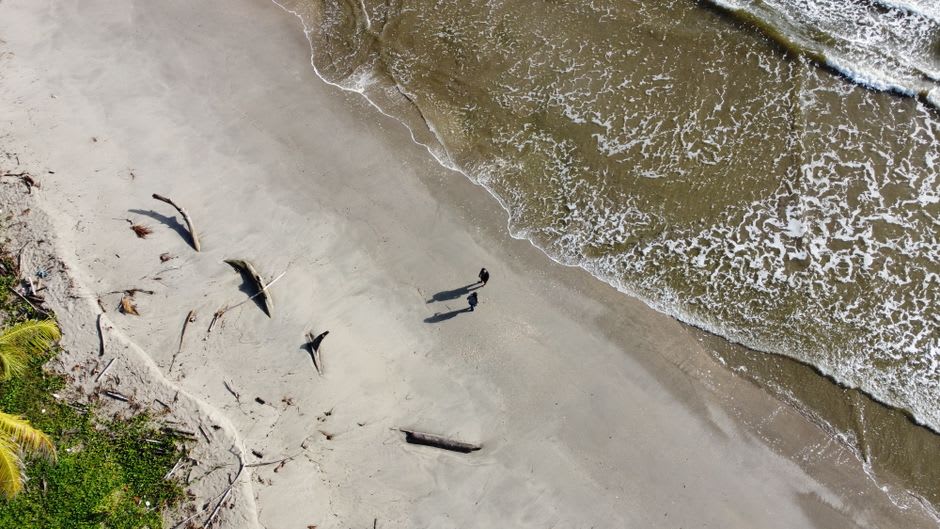
La Manzanilla’s food situation is exactly what the geography suggests: fresh fish, cooked simply, twenty meters from where it came out of the water. The main street has a handful of seafood palapas operating out of open-front shacks, most of them serving tostadas de atún with chipotle and crema, ceviche verde made with sierra, and whole grilled huachinango with rice, pickled jalapeños, and tortillas that arrive in a basket wrapped in a paper napkin. I ate at El Dorado two mornings in a row for no better reason than that the owner brought coffee without being asked and the pescado zarandeado was the best I’d had since a beach north of Puerto Escondido whose name I’ve never managed to spell correctly. Prices are low. Expectations should be high.
The Bay in the Hours That Count
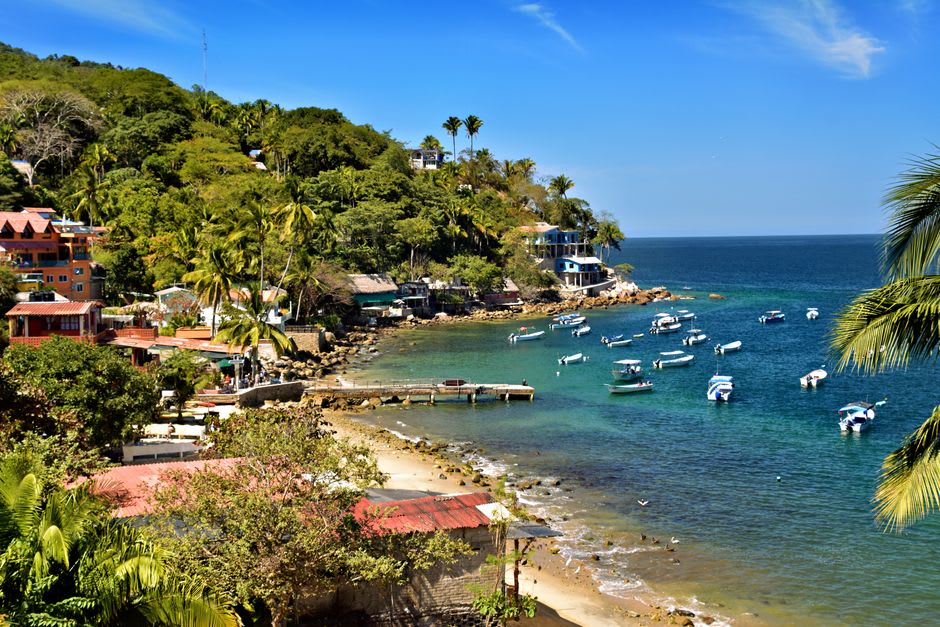
The bay is a wide crescent — more sheltered than the exposed beaches south toward Tenacatita — with a consistent left-hand break that works best before the onshore wind arrives around eleven. Surfers come, but not many; the location filters for commitment. I am not a surfer, but I swam every morning at first light when the water was flat enough to see the bottom and the only other people out were two local men doing laps in parallel, as unhurried as the place itself. By afternoon the beach fills with families from Guadalajara on long weekends, the palapas drag out their plastic chairs, and someone will inevitably park a speaker facing the water. It is not a pristine silence. But the morning belongs to you completely.
Getting There
La Manzanilla sits on the Costa Alegre roughly 20 kilometers north of Barra de Navidad on Highway 200 — look for the signed turnoff and follow the road down to the coast. From Guadalajara the drive runs around three and a half hours. No bus enters the village directly, but colectivos run from Barra de Navidad with reasonable frequency. There are no ATMs in town; bring cash.