Tula
"The Aztecs believed civilization began in Tula. They came here on pilgrimage. They took stones from these buildings back to Tenochtitlan to use in their own temples."
Tula de Allende sits in the Hidalgo highlands 90 kilometers north of Mexico City, and the archaeological site on the ridge above the modern town is one of the most undervisited major pre-Columbian sites in Mexico. This is partially a geographic accident (Tula is close enough to Mexico City that it attracts day-trippers but far enough that casual tourists skip it for Teotihuacán, which is more accessible) and partially a scale accident (Tula is smaller and less visually overwhelming than the great sites of Yucatán or central Oaxaca). Neither explains the oversight adequately.
Tula was the capital of the Toltec empire (900-1150 CE) — the civilization whose art, architecture, and mythology the later Aztecs venerated as the source of all civilization and from whose legendary ruler Quetzalcóatl (the feathered serpent, who the Toltecs called Ce Acatl Topiltzin Quetzalcóatl) multiple Mesoamerican civilizations claimed descent.
The Warriors
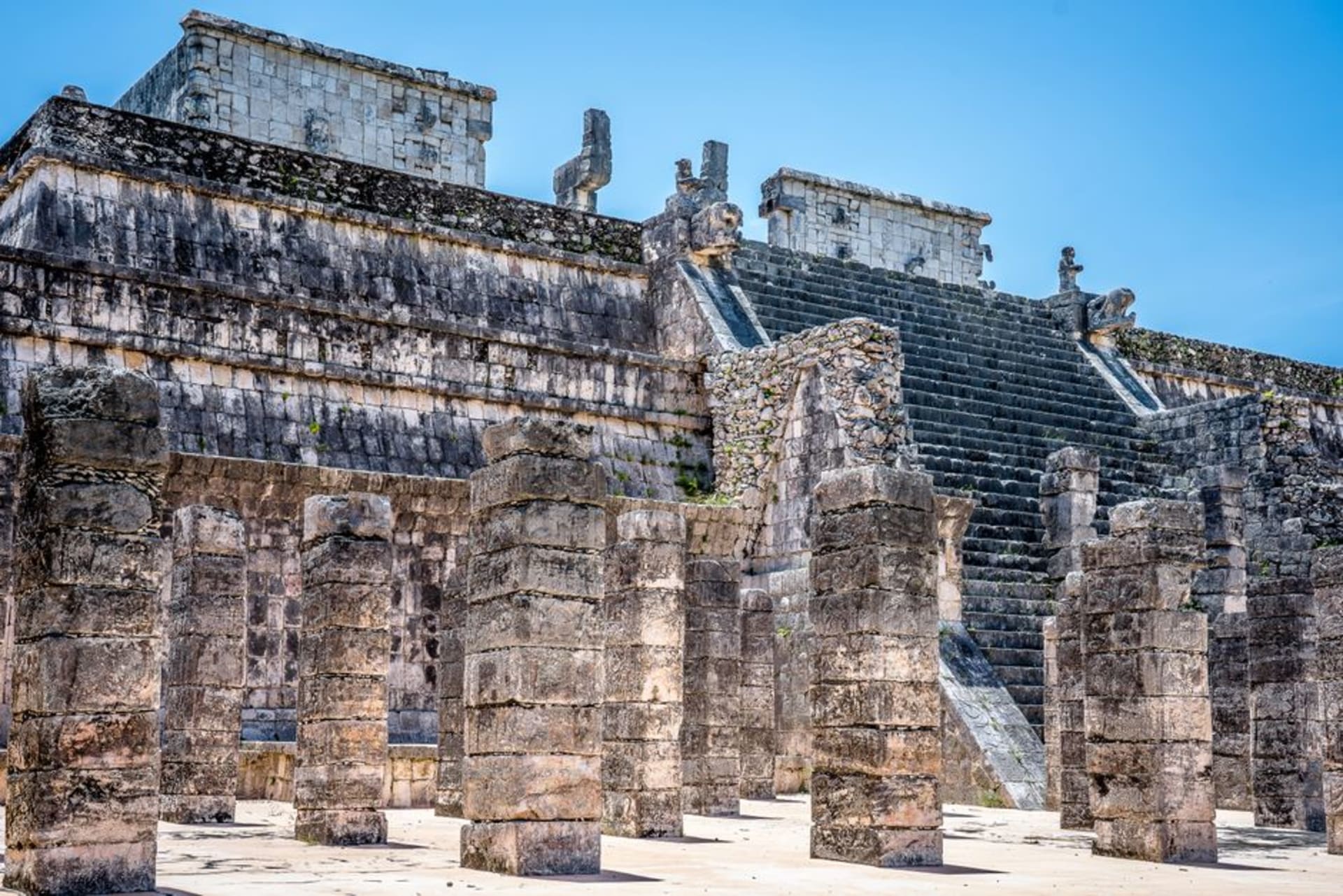
The signature monument of Tula is the four Atlantean warrior columns that stand on top of Pyramid B (the Pyramid of Quetzalcóatl) — basalt figures of six meters each, originally supporting the roof of a temple structure that has since collapsed. The warriors wear the military dress of the Toltec warrior elite: butterfly pectorals (the butterfly was the symbol of the warrior class), feather-duster headdresses, back mirrors, and sandals. Their faces stare north with the particular expression of stone figures that have been looking at the same horizon for a thousand years.
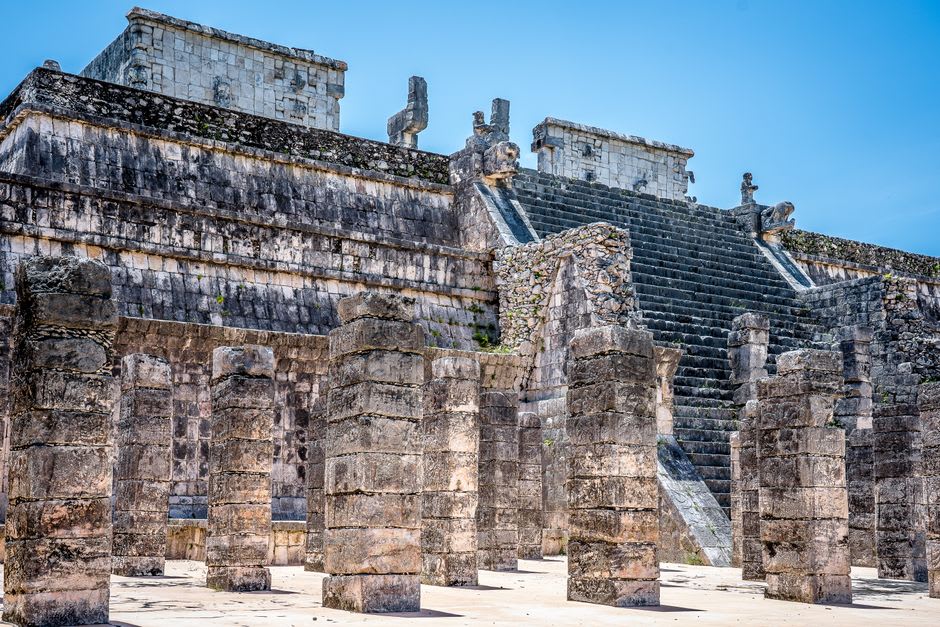
The warriors are remarkable for a reason beyond their size: they are the direct template for the similar warrior columns at Chichén Itzá in Yucatán, where identical figures appear as part of the Temple of the Warriors complex. The connection between Tula and Chichén Itzá — the two sites share an almost identical ceremonial vocabulary, including the warrior columns, the feathered serpent motif, the chacmool sculptures, and the ballcourt design — has been debated for a century. Current scholarship suggests a Toltec diaspora that brought the Tula ceremonial complex to Yucatán and influenced or replaced the existing Maya governance structures.
Standing at the base of Pyramid B, looking up at the four warrior columns against the Hidalgo sky: this is where the visual vocabulary that eventually appeared in Chichén Itzá was created. The original is always stranger than the famous version.
The Coatepantli and the Ballcourt
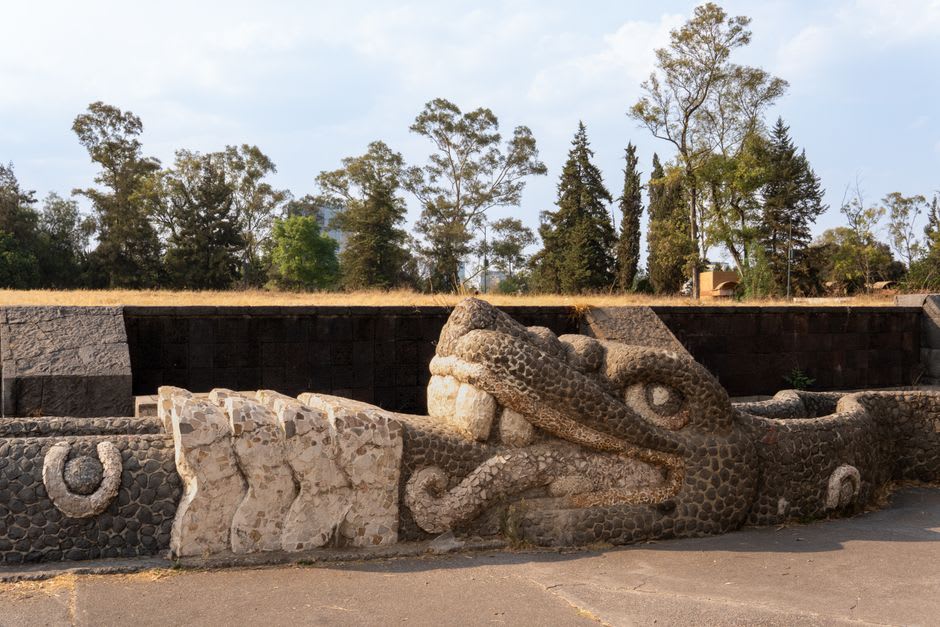
The Coatepantli (serpent wall) that borders the north side of the main plaza is the best-preserved example of Toltec decorative architecture at the site: a low wall covered in carved limestone panels showing serpents consuming human skulls, the motif repeated in a continuous band of approximately forty meters. The iconography is death-adjacent in the way that Toltec warrior culture required — this is the imagery of a society that ritualized human sacrifice as political theater in ways that the subsequent Aztec empire amplified but did not invent.
The ballcourt at Tula is one of the largest in central Mexico — 67 meters long — and shows the same design as the great ballcourts of Chichén Itzá (vertical walls, stone rings at mid-court, the ball-game markers). The stone ring at Tula is one of the earliest surviving examples of the through-the-ring version of the ballgame; the design was copied at Chichén Itzá and then across the Mesoamerican world.
The Chacmool sculpture at the entrance to Pyramid B — a reclining figure with its head turned ninety degrees, the vessel on its stomach intended for sacrificial offerings — is the most emotionally affecting object at Tula. This exact figure type appears at Chichén Itzá, at Tenochtitlán, and at sites across Mesoamerica; this one at Tula is the prototype, possibly the original.
The Site Museum
The site museum contains the sculptures removed from outdoor exposure for preservation, including some of the original carved panels from the Coatepantli and a collection of small Toltec objects — carved jade ear spools, obsidian blades, clay figures — that provide the human scale missing from the massive outdoor monuments.
Getting there: Direct buses from Mexico City’s Terminal Norte (Autobuses del Norte line, 2h). The bus arrives in the modern city of Tula de Allende; the archaeological site is 3 kilometers north, accessible by local bus or taxi. A day trip from Mexico City is entirely feasible.
When to go: Year-round. Tula has no shade structure over the site; morning visits (the site opens at 9am) are best avoided on hot days in summer. The site is emptiest on weekdays, when it is often possible to have the warrior columns to oneself for extended periods.