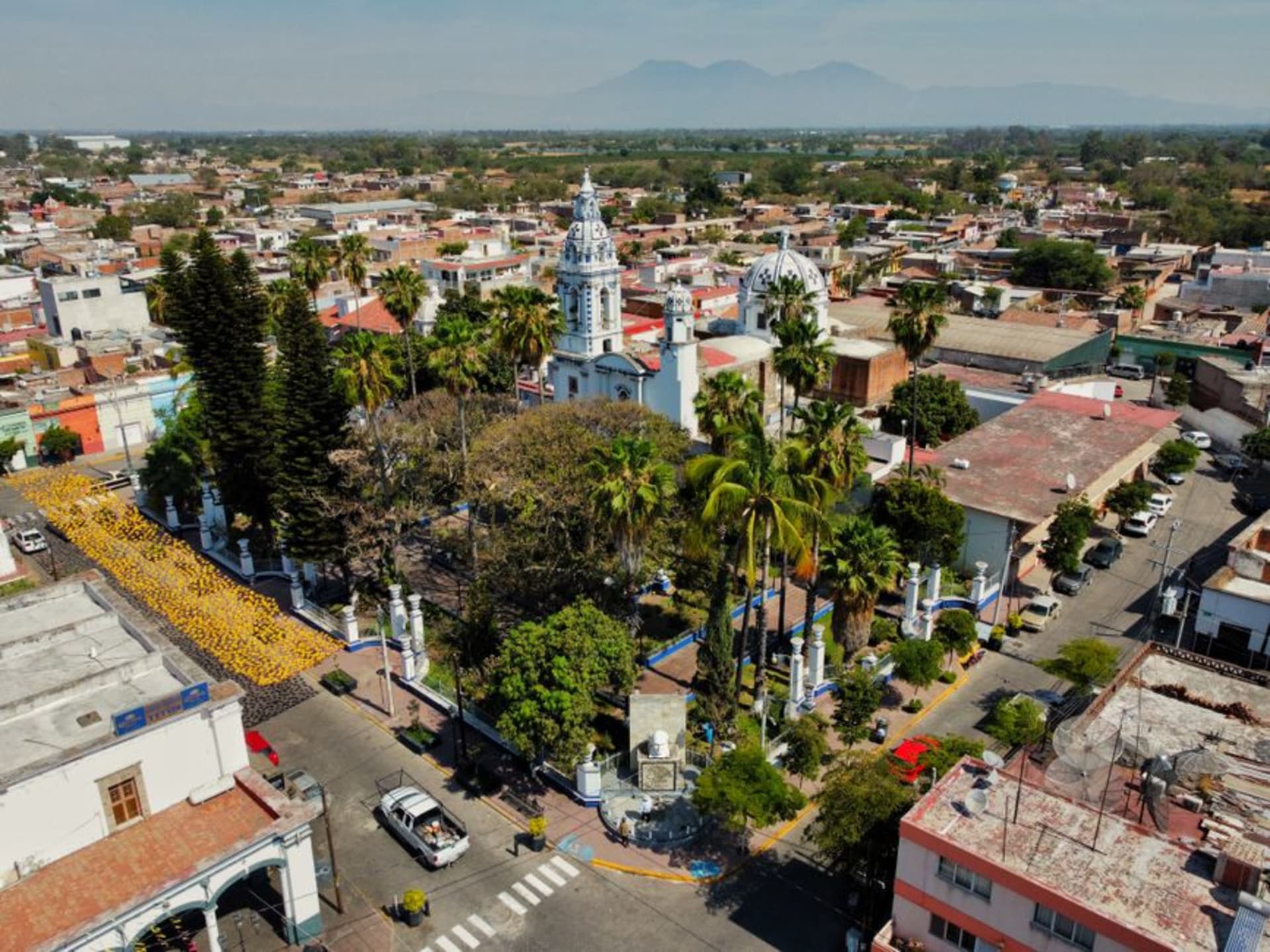
Tenango de Doria
"Every piece of fabric here tells a story. I bought three and still felt I left empty-handed."
The bus from Tulancingo left me at a junction I wasn’t sure was the right one. It was. Tenango de Doria announced itself not with a sign but with a woman sitting on a plastic stool outside her house, a length of bright cloth pinned to her knees, needle moving through it in small deliberate arcs. I stood there longer than was probably polite. This is how the place works — it catches you before you’re ready for it.
The Tenangos
These embroidered panels — tenangos — are the reason people make the trip north from Pachuca or Tulancingo, and they earn it. They are not decorative crafts in the sense of something produced to fill a souvenir shelf. They are narrative objects. Each panel tells a story drawn from the natural world: deer leaping through stylized forest, herons perched on flowering branches, human figures mid-harvest or mid-ceremony. The color palette is dense and deliberate — deep reds, electric greens, oranges you don’t encounter elsewhere.
The women of the village, most of them Otomí speakers, have been producing these panels for generations. The style was formalized in the 1960s when local artisans began selling to a wider market, but the visual grammar is older, rooted in bark paper manuscripts and cosmologies that predate the colonial period. What looks like pattern is closer to record-keeping.
In the market, smaller pieces run a few hundred pesos. The large panels — the ones that take weeks to complete — cost considerably more, and are worth it. I asked one artisan how long her current piece had taken. She looked at it a moment and said, simply, “Still going.” She did not appear troubled by this.
Cloud Forest, Wet Stone, a Waterfall
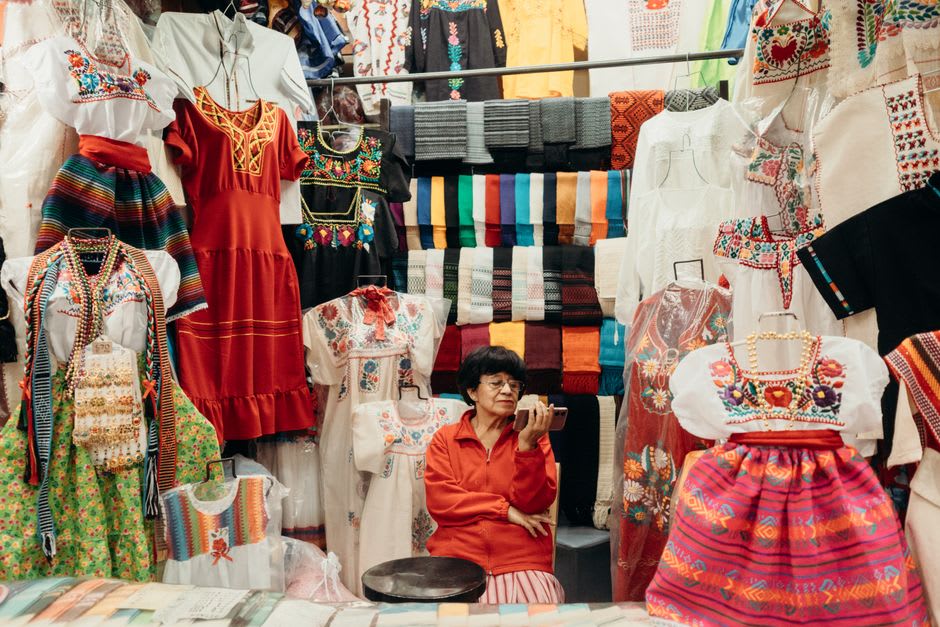
The Sierra Otomí-Tepehua has the soft, damp quality of places where cloud is a permanent condition. The hills stay green in a way that the drier central valleys of Hidalgo do not. A short walk from the plaza — locals will point you in the right direction without needing to be asked twice — follows a path through shade trees and agricultural terraces to a waterfall that drops maybe fifteen meters into a pool you can sit beside without ceremony or an entrance fee.
I went in the late morning, after the mist had mostly cleared. The sound of water reaches you before the fall does. It is not dramatic in scale, but the quiet around it is the kind that is becoming harder to find. I ate a torta I’d bought from a woman near the church and stayed longer than I’d intended. Some places offer spectacle. This one offers stillness, which I needed more.
Eating Around the Market
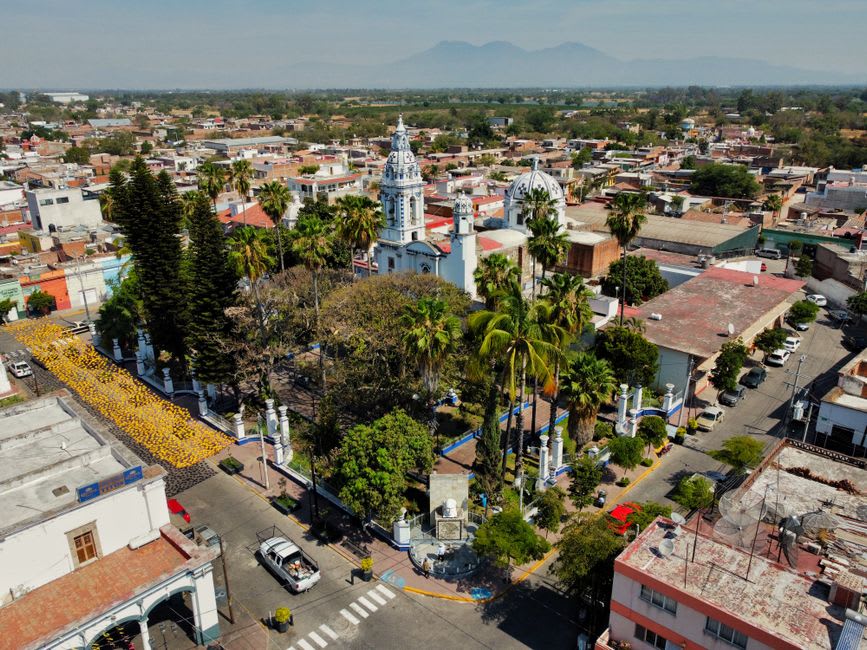
The food options in Tenango are modest and entirely correct for the setting. Near the market, women sell enfrijoladas and gorditas de frijoles eaten standing up — the only dignified way. There is a faint sweetness to the local masa I couldn’t identify, possibly a regional corn variety, possibly something else. Coffee comes strong, black, and in small ceramic cups.
If you are here to buy fabric, go early on a Sunday when the market is most active, and do not rush. The artisans are not salespeople. They will let you look for as long as you need, answer questions directly, and if you ask about the animals depicted in a specific panel, the explanation will be more interesting than anything printed on a card. Bring cash, bring patience, and clear space in your bag beforehand.
Getting There
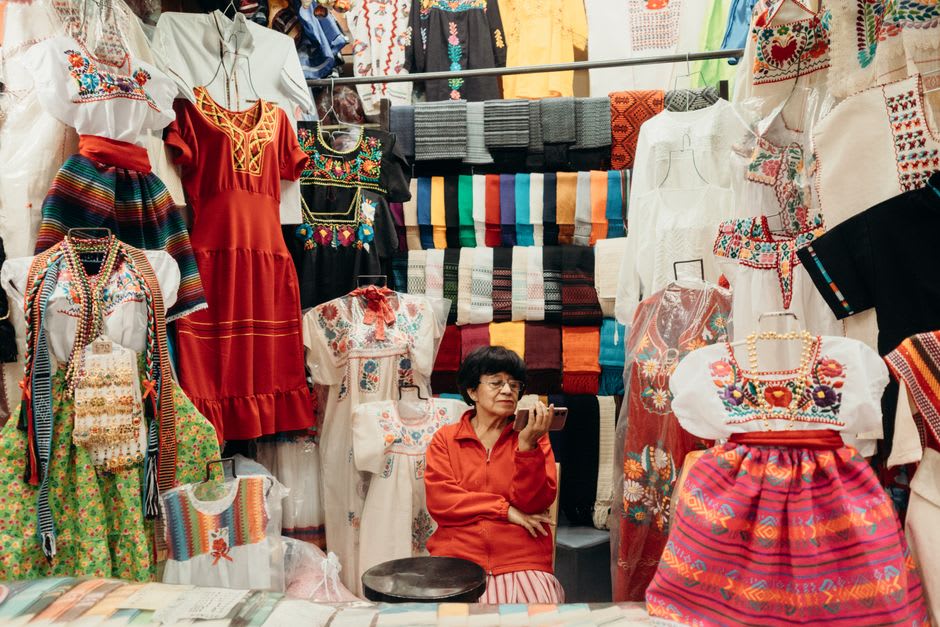
From Mexico City, take a first-class bus to Tulancingo — roughly two hours from TAPO or the Terminal Norte — then a local bus or colectivo northeast toward Tenango de Doria, another hour on winding but passable roads. Most people visit as a day trip from Tulancingo or Pachuca. There is a small posada in the village for those who want to arrive the night before and catch the Sunday market without the early start.